English
 Czech
Czech
 German
 French
 Italian
 Japanese
 Polish
 Spanish
 7 min read
Key Takeaways
- Modern SCADA platforms support more than monitoring and control. Organizations increasingly rely on SCADA to connect information, improve visibility, support analytics, and deliver operational insight.
- The greatest value often comes from existing operational data. Organizations are placing more emphasis on transforming information into actionable insight that supports better operational and business decisions.
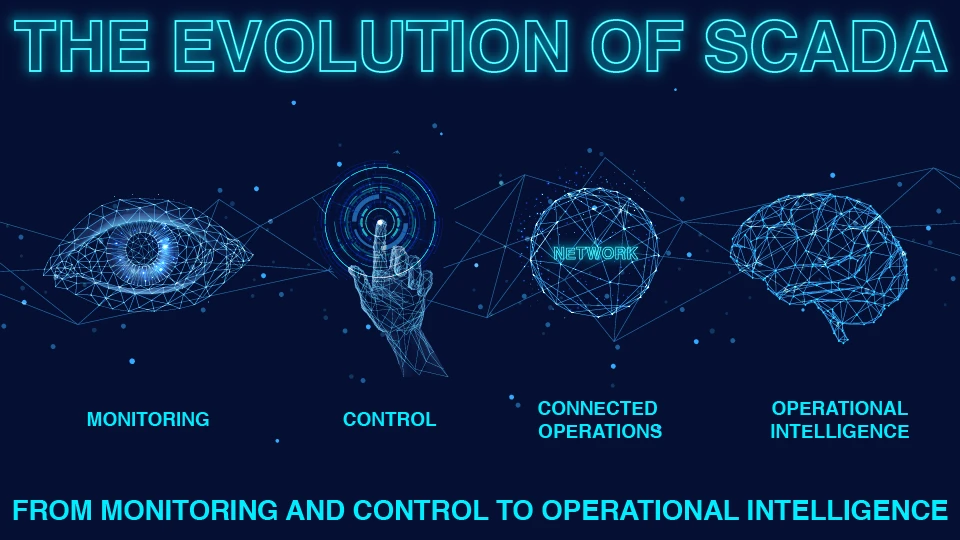
- SCADA is evolving through three stages: monitoring and control, connected operations, and operational intelligence.
- Connected operations enable organizations to integrate information across OT, IT, and IIoT environments, reducing data silos and improving visibility across systems, facilities, and teams.
- The Returpack AB real world application demonstrates how intelligent SCADA can support modernization initiatives by improving operational visibility, enabling secure mobile and multi-user access, strengthening analytics capabilities, and providing a scalable foundation for future growth.
Why SCADA Is Evolving Beyond Monitoring and Control
For decades, SCADA systems have served as the operational nerve center of industrial facilities. Operators rely on SCADA platforms to visualize and monitor processes, manage alarms and assets, and maintain situational awareness across complex environments. Those capabilities remain essential.
Organizations, however, are asking more from operational technology than visibility and control. Engineers, maintenance teams, plant managers, executives, and business stakeholders increasingly rely on operational information to support decisions that occur outside of the traditional SCADA realm and affect productivity, reliability, sustainability, and business performance.
At the same time, organizations are connecting more systems, generating more data, and pursuing initiatives such as industrial analytics, predictive maintenance, enterprise-wide visibility, and digital transformation. Many SCADA platforms were not originally designed to support these broader requirements.
As a result, the role of SCADA is evolving. Organizations are looking beyond monitoring and control toward platforms that can meet these new challenges. SCADA is expected to connect disparate information, provide context, support analytics, and transform operational data into actionable intelligence.
Organizations already possess vast amounts of operational data. The opportunity and value lie in transforming that information into meaningful insights that support better operational and business decisions, improve performance, and drive stronger business outcomes.
The Evolution of SCADA
The role of SCADA has expanded significantly as organizations seek greater visibility, connectivity, and operational insight from their industrial systems. This evolution can be understood through three distinct stages: monitoring and control, connected operations, and operational intelligence.
Stage 1: Monitoring and Control
For many years, SCADA systems were primarily evaluated on their ability to provide real-time operational visibility and control.
Operators needed to monitor equipment, manage alarms, visualize processes, and respond quickly to operational issues. SCADA platforms became the central interface between people and industrial processes and infrastructure, providing the situational awareness necessary to keep facilities running safely and efficiently. These capabilities remain fundamental to industrial operations today.
However, operational environments have become significantly more complex. Organizations now manage larger volumes of data, more connected assets, distributed operations, and growing expectations for performance, sustainability, and operational efficiency. As a result, the role of SCADA has expanded.
Stage 2: Connected Operations
Many organizations are no longer looking for visibility into individual assets or processes alone. Horizontal integration across systems, facilities, and teams is becoming a strategic requirement as organizations seek broader visibility and coordination across operations.
- Operations teams need access to information from multiple data sources.
- Engineers require broader operational context when troubleshooting issues.
- Managers need visibility into performance trends, utilization, energy consumption, and production metrics.
- Business stakeholders increasingly rely on operational information to support strategic planning and investment decisions.
Meeting these evolving demands requires more than traditional monitoring and control. Connected operations depend on highly interoperable platforms that integrate information from OT, IT, and IIoT environments while making that information accessible across the organization.
Stage 3: Operational Intelligence
The next stage in SCADA evolution focuses on turning operational information into actionable intelligence. Organizations are seeking answers to questions such as:
- Why is performance changing?
- Where are operational inefficiencies occurring?
- Which assets require attention?
- How can energy consumption be reduced?
- What opportunities exist to improve utilization and productivity?
Answering these questions requires more than collecting data. Operational intelligence depends on contextualized information, integrated analytics, historical insights, and the ability to make operational information accessible to the people responsible for improving performance.
This shift is changing how organizations evaluate SCADA platforms and the role those platforms play within broader digital transformation strategies. The following customer success story provides a practical example of how these evolving requirements are shaping SCADA modernization initiatives.
Returpack: A Practical Example of SCADA Evolution
Returpack AB operates Sweden's national deposit return system for beverage packaging and manages high-throughput recycling operations that support the country's circular economy. As modernization initiatives accelerated across the facility, the organization needed a platform capable of supporting evolving operational requirements while providing a foundation for long-term growth.
The existing SCADA environment had reached end of life and could no longer meet the organization's requirements for scalability, cybersecurity, operational visibility, and future growth. Returpack also required secure multi-user access, mobile accessibility, and stronger support for data-driven operational decision-making.
Rather than replacing an aging SCADA system with another traditional monitoring and control platform, Returpack selected GENESIS, the intelligent SCADA by Mitsubishi Electric Iconics Digital Solutions, to establish a secure and scalable digital platform that supports advanced monitoring, visualization, historization, trending, analytics, and future automation initiatives.
The benefits extended well beyond the core SCADA monitoring and control functionality:
- Smooth deployment and transition, completed over a single weekend following thorough preparation and testing
- Simplified daily operations through an intuitive interface that operators adopted quickly with minimal training requirements
- Broader system accessibility for plant-floor and office users through browser-based and mobile access
- Improved operator responsiveness through real-time monitoring and basic control from mobile devices
- Expanded analytical capabilities through historization and trending that support deeper operational insight and data-driven decision-making
- Improved readiness for future energy monitoring, reporting, and efficiency initiatives
- Scalable foundation for future capabilities such as plant utilization analysis, vibration monitoring, online weight measurement, flow control, and production statistics
Returpack's experience reflects the ongoing evolution of industrial operations. Organizations are investing in SCADA platforms not only to monitor operations, but also to establish a digital foundation that supports visibility, analytics, operational efficiency, and continuous improvement.
Read the full Returpack success story here.
Why SCADA Is Evolving into an Operational Intelligence Platform
Industrial organizations already generate enormous volumes of operational information. Competitive advantage depends on how effectively that information is transformed into meaningful operational and business insight.
The ability to connect systems, create context, identify trends, and deliver relevant information to the right people can improve decision-making across operations, engineering, maintenance, sustainability, and business leadership teams.
As industrial environments become more connected, organizations are looking beyond data collection alone. More attention is being directed toward understanding why events occur, identifying opportunities for improvement, anticipating potential issues, and supporting more informed operational and business decisions.
As a result, operational intelligence is emerging as a critical capability within digital transformation initiatives. Organizations that can transform operational data into meaningful insight are better positioned to:
- Improve performance
- Optimize resources
- Support sustainability objectives
- Respond more effectively to changing business requirements
The Future of SCADA
SCADA will always play a critical role in monitoring and controlling industrial operations. However, the expectations surrounding SCADA continue to evolve. Organizations now require intelligent platforms that can connect information across environments, support enterprise visibility, enable analytics initiatives, and provide the intelligence required to improve operational and business performance.
The evolution of SCADA is expanding the role of operational technology from monitoring systems to operational intelligence platforms.
Ready to evolve from industrial monitoring to operational intelligence?
Modern industrial operations require more than monitoring and control. Organizations need intelligent platforms that can connect information, improve visibility, support analytics, and transform operational data into meaningful business insight.
Discover how GENESIS, the SCADA software from Mitsubishi Electric Iconics Digital Solutions, helps organizations modernize operations, improve decision-making, and build a foundation for connected operations and operational intelligence.
Frequently Asked Questions
Organizations evaluating SCADA modernization initiatives often have questions about connected operations, operational intelligence, interoperability, and digital transformation. The following FAQs address some of the most common considerations.
What is SCADA?
SCADA (Supervisory Control and Data Acquisition) is a system used to monitor, control, and manage industrial processes and infrastructure. SCADA platforms provide operators with real-time visibility into equipment, processes, alarms, and operational performance.
How is SCADA evolving?
SCADA is evolving from traditional monitoring and control systems into platforms that support connected operations, analytics, enterprise visibility, and operational intelligence. Organizations increasingly rely on SCADA platforms to help transform operational data into meaningful insight that supports better decision-making.
What are connected industrial operations?
Connected operations refer to the integration of information across OT, IT, and IIoT environments, enabling organizations to access, share, and use operational information more effectively across teams, facilities, and business functions.
What is industrial operational intelligence?
Operational intelligence is the ability to transform operational data into contextualized information and insight that support better operational and business decisions. It helps organizations identify trends, improve performance, optimize resources, and respond more effectively to changing conditions.
Why is interoperability important in modern SCADA platforms?
Interoperability enables SCADA platforms to connect information from multiple systems, devices, applications, and data sources. This capability helps eliminate data silos, improve visibility, and support more informed decision-making across the organization.
How does intelligent SCADA support industrial digital transformation?
Intelligent SCADA platforms provide the visibility, connectivity, analytics, and contextual information required to support initiatives such as predictive maintenance, enterprise visibility, sustainability programs, operational optimization, and digital transformation.
How did Returpack benefit from SCADA modernization?
By implementing GENESIS, Returpack improved operational visibility, enabled secure multi-user and mobile access, strengthened analytics capabilities, and established a scalable foundation for future operational and monitoring initiatives.
What should organizations look for in an intelligent SCADA platform?
Organizations should evaluate SCADA platforms based on interoperability, scalability, cybersecurity, analytics capabilities, mobile accessibility, operational visibility, and their ability to support connected operations and long-term business objectives.

Written By:
Recent Posts
What Is a Data Historian in OT? Definition, Architecture, and Applications
What Is a Digital Workplace? Definition, Components, and Benefits

The High-Performance Office: Turning Data, AI and Smart Tech into Measurable Asset Value
Why Master Systems Integrators and Digital Enablement Decide Whether a “Smart” Building Is Actually Smart