English
 Czech
Czech
 German
 French
 Italian
 Japanese
 Polish
 Spanish
 8 min read
What You’ll Learn in This Blog/Key Points
By reading this blog, you will learn how industrial manufacturers can begin or accelerate their digital transformation journey. Specifically, you will understand:
- How a single operational challenge can spark a broader digitalization strategy
- Why a textile manufacturer chose to modernize its monitoring and reporting systems
- How the right system integrator supports smooth deployment and successful outcomes
- Why the automation and digitalization platform GENESIS, from Mitsubishi Electric Iconics Digital Solutions, served as a unifying operational platform
- How real-time monitoring, centralized visualization, and automated reporting, delivered by GENESIS, positively impact day-to-day operations
- How the Smart Manufacturing Kaizen Level (SMKL) method from Mitsubishi Electric helps organizations identify their own transformation starting point
- What practical steps manufacturers can take to replicate similar results
How SÖKTAŞ, an Industrial Manufacturer, Began Its Digital Transformation
Many organizations begin industrial digital transformation with a single critical process that requires better visibility, stronger reliability, or smarter control. A focused improvement often becomes the catalyst that unlocks a new level of operational performance. That first step turns digitalization from a long-term ambition into a practical, achievable path toward smarter operations.
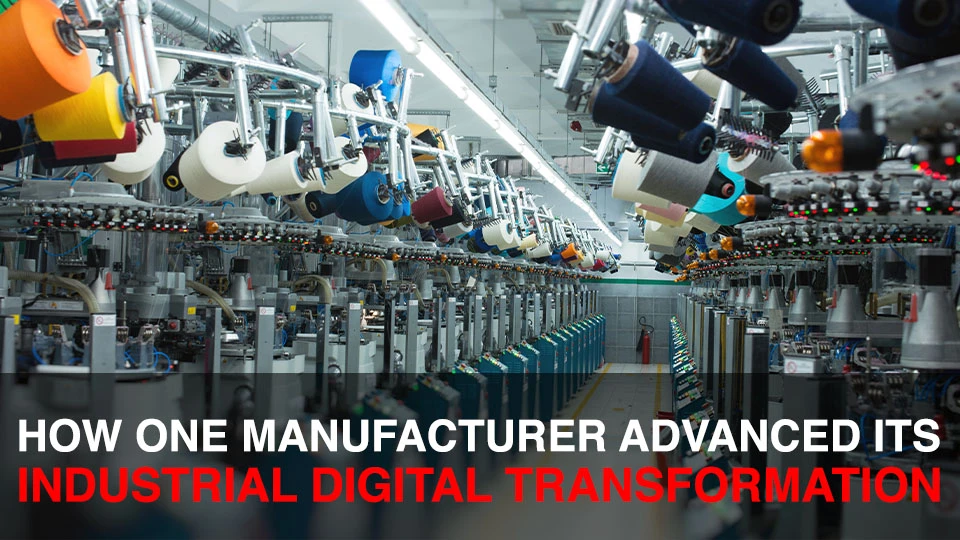
One manufacturer’s journey illustrates how a targeted operational need can evolve into a full-scale digital transformation. SÖKTAŞ, headquartered in Söke, Turkey, is a leading textile manufacturer with more than 50 years of production expertise and more than a century of cotton-farming heritage. The company manages the full value chain from cotton cultivation to fabric manufacturing and supplies high-quality, technologically advanced fabrics to the global apparel and fashion sectors.
As SÖKTAŞ continued to pursue operational excellence, leadership recognized the need for a single source of operational truth: a centralized way to see, understand, and optimize essential processes in real time. That goal became the catalyst for their industrial digital transformation.
The following sections explore the operational challenges SÖKTAŞ needed to solve, the system integrator selected, and the automation and digitalization solution deployed. These insights also illustrate how organizations can identify their own starting point using the Smart Manufacturing Kaizen Level (SMKL) method from Mitsubishi Electric to assess digital transformation goals and map a clear path forward.
The Operational Challenges Holding SÖKTAŞ Back
Before the project, SÖKTAŞ operated outdated and separate systems to monitor water usage and heat recovery exchangers in their production processes. These systems operated independently, making centralized monitoring impossible and reporting highly inefficient.
The legacy setup relied on two PCs and disparate software, which made adapting or modifying interfaces difficult. Reports had to be generated manually, consuming significant time and increasing the likelihood of human error.
Because water usage and heat exchanger performance are critical to textile operations, SÖKTAŞ required a modern system capable of real-time monitoring, standardized reporting, and future scalability. Specifically, they needed visibility into:
- Real-time water usage metrics
- Heat exchanger performance
- Alarms and notifications for anomalies or maintenance needs
With these challenges clearly defined, the next step involved finding a partner capable of delivering a unified, future-ready solution.
Selecting the Right System Integrator
SÖKTAŞ selected ÇOLBAN Elektrik Otomasyon as its system integrator because of the company’s:
- Extensive expertise in SCADA automation system design and deployment
- Deep, hands-on knowledge of Mitsubishi Electric automation technologies
- Proven success delivering previous automation projects for SÖKTAŞ
These strengths gave SÖKTAŞ confidence that the project would be engineered on solid technical foundations and delivered with the reliability their operations required. Once the integrator was confirmed, the next step involved identifying a software platform capable of consolidating data, standardizing reporting, and delivering real-time operational visibility across critical processes.
The GENESIS Solution
The GENESIS automation and digitalization software, from Mitsubishi Electric Iconics Digital Solutions, was chosen for its flexibility, advanced features, and ability to integrate seamlessly with the wider automation solution delivered by ÇOLBAN.
The project deployed:
- GENESIS for real-time visualization, monitoring, control, and reporting
- Mitsubishi Electric controllers and automation components to ensure reliable and seamless system operation
Together, the GENESIS platform and Mitsubishi Electric automation components enabled:
- Integrated real-time monitoring and control of water usage and heat exchanger systems
- Centralized visualization that replaced previously disconnected systems
- Automated daily, weekly, and monthly email reporting
- Earlier detection of leaks and anomalies through real-time data visualization
The unified solution also provided scalability for future enhancements and modifications. Early use revealed immediate operational gains that expanded as the platform became part of daily operations.
Realized Operational Benefits: Measurable Results
The deployment of GENESIS resulted in significant operational improvements that directly addressed SÖKTAŞ’s challenges.
Real-time visibility:
Graphical visualization gave operators immediate visibility into system behavior. Instead of relying on delayed or manually compiled information, staff could observe performance as it happened, supporting earlier detection of leaks, anomalies, and irregularities.
Centralized data access:
With all operational data consolidated in one place, users were no longer required to navigate multiple PCs or separate software tools. A unified data environment improved reliability, continuity, and confidence in decision making.
Automated reporting:
Automated daily, weekly, and monthly reports replaced time-consuming manual compilation. Reports were delivered consistently and in a standardized format, reducing errors and freeing staff to focus on higher-value activities.
Scalable foundation:
Because GENESIS could be modified and expanded, SÖKTAŞ was no longer constrained by disconnected equipment or rigid interfaces. The platform supported current needs while enabling future digital enhancements.
These improvements strengthened how SÖKTAŞ monitored, reported on, and responded to essential operational processes.
For a deeper look at the project’s scope and results, read the full SÖKTAŞ case study.
What Other Manufacturers Can Learn from This Success: Key Takeaways
SÖKTAŞ’s project offers practical insights for organizations seeking to advance their industrial digital transformation efforts:
- Centralizing data strengthens operational awareness.
Disconnected systems make it difficult to identify issues or track patterns. A unified platform improves visibility and responsiveness. - Automating reporting reduces manual effort and errors.
Manual reporting introduces risk and consumes time. Automation ensures consistency and frees teams to focus on improvements. - Partnering with proven experts simplifies deployment.
Working with an experienced system integrator, especially one familiar with your environment and technologies, supports smoother implementation and stronger results. - Scalable platforms support long-term flexibility.
Solutions that can evolve over time enable organizations to meet current needs while preparing for future requirements and enhancements.
These takeaways highlight that industrial digital transformation is not only about upgrading systems but also about building a more stable, reliable, and adaptable operational environment.
From Insight to Action: Identifying Your Starting Point
The SÖKTAŞ results naturally raise a practical question for any manufacturer: How do you achieve similar outcomes and determine where your own transformation should begin?
Identifying that starting point can be difficult without a structured approach. The Smart Manufacturing Kaizen Level (SMKL) method from Mitsubishi Electric helps organizations define a clear, actionable path forward.
Designed to guide manufacturers through their digital transformation journey, the SMKL method offers a practical framework for assessing digital maturity and determining where digitalization will deliver the greatest immediate impact. The method enables teams to evaluate current capabilities and plan next steps in a logical, phased, and achievable manner.
How SMKL Works
The SMKL method organizes digital transformation planning into four focused activities:
- Assess Current Digital Maturity – Understand the strengths and gaps in existing processes and systems.
- Identify High-Impact Opportunities – Determine which improvements will create the fastest and most meaningful results.
- Align with Business and Operational Goals – Ensure digital efforts directly support the organization’s strategic objectives.
- Build a Phased Roadmap – Develop a clear path that balances short-term wins with long-term scalability.
Why SMKL Matters
Manufacturers often face competing priorities, limited resources, and pressure to generate quick results. SMKL brings structure to that complexity by offering a repeatable way to:
- Establish clarity and shared direction
- Reduce uncertainty during planning
- Focus efforts where they create measurable value
- Support long-term, scalable growth
This structured approach enables manufacturers to prioritize effectively, reduce risk, and focus resources on initiatives that deliver measurable and sustained value.
How SMKL Relates to SÖKTAŞ
Although SÖKTAŞ did not formally apply the SMKL method, their journey reflects its core principles. They:
- Identified a specific, high-impact operational challenge
- Selected digital tools capable of delivering immediate value
- Built a scalable foundation for ongoing enhancements
The SMKL approach helps other organizations follow a similarly strategic path: starting small, solving the most pressing issues, and expanding digitalization over time.
Putting SMKL Into Practice
Organizations evaluating their digital transformation options can use SMKL to:
- Clarify their current digital maturity
- Define a realistic and effective starting point
- Build a roadmap tailored to operational needs and long-term goals
SMKL provides a clear and repeatable framework that helps manufacturers move forward with confidence, aligning priorities with measurable outcomes and long-term operational goals.
Building a Clear Path Toward Digital Maturity
SÖKTAŞ’s experience shows that meaningful digital transformation often begins with a single, well-defined operational need. By modernizing critical processes and unifying real-time data, the company strengthened decision-making, improved reliability, and created a foundation for long-term scalability.
Many manufacturers share the same starting point but are unsure how to identify their first step. The SMKL method provides a structured, repeatable way to evaluate digital maturity, prioritize improvements, and build a roadmap that balances immediate impact with future growth. Organizations that follow this approach can move forward with confidence, knowing their efforts are grounded in clear operational priorities and practical next steps.
Frequently Asked Questions
The questions below address common points organizations consider when exploring similar modernization efforts.
Why did SÖKTAŞ need to replace its existing systems?
SÖKTAŞ relied on disconnected PCs and standalone software tools that offered no centralized visibility. Manual reporting, limited scalability, and the risk of human error made modernization necessary for stronger operational control.
Why was working with a system integrator essential?
A skilled integrator ensured the project was engineered correctly from the start. ÇOLBAN Elektrik Otomasyon brought SCADA expertise, deep knowledge of Mitsubishi Electric technologies, and previous success with SÖKTAŞ, factors that helped accelerate deployment and reduce risk.
What role did GENESIS play in the transformation?
GENESIS provided real-time visualization, monitoring, control, and reporting. It unified previously disconnected systems into a single operational view, enabling faster detection of issues, automated reporting, and scalability for future enhancements.
What operational benefits did SÖKTAŞ gain after deployment?
The organization achieved real-time insight into system behavior, automated reporting workflows, centralized data access, earlier anomaly detection, and a scalable platform capable of supporting future modernization.
Can smaller manufacturers benefit from GENESIS and SMKL?
Yes. GENESIS is flexible enough for facilities of any size, and SMKL provides a structured way to identify an appropriate project starting point, regardless of an organization’s digital maturity.
How does the SMKL method help manufacturers begin their transformation?
SMKL enables organizations to assess current capabilities, identify high-impact improvement areas, align with business goals, and build a phased roadmap that supports confident decision-making.
Does SMKL require an organization to replace all existing systems?
No. SMKL helps determine what should be improved first. Many organizations begin with one process, one system, or one operational constraint that offers the greatest immediate return.
What should manufacturers do after reading this blog?
Manufacturers should review the SMKL framework, assess their digital maturity, and identify a realistic starting point. Downloading the white paper provides deeper guidance, and the additional case study illustrates how other organizations successfully deployed GENESIS.
Learn More and Explore Additional Case Studies
Organizations ready to take the next step can explore the following resources to gain deeper guidance and see how other manufacturers have advanced their digital transformation efforts. These materials offer practical frameworks, real-world examples, and actionable insights you can apply immediately.
- White Paper: A Practical Guide to Assessing Your Digital Transformation Needs
Learn how to assess digital maturity, identify high-impact opportunities, and build a phased roadmap using the SMKL method. - Case Study: Drago Forneria Genovese
See how another industrial manufacturer modernized critical processes using GENESIS.

Written By:
Recent Posts
What Is a Data Historian in OT? Definition, Architecture, and Applications
What Is a Digital Workplace? Definition, Components, and Benefits
The High-Performance Office: Turning Data, AI and Smart Tech into Measurable Asset Value
Why Master Systems Integrators and Digital Enablement Decide Whether a “Smart” Building Is Actually Smart