
 English
 Czech
Czech
 German
 French
 Italian
 Japanese
 Polish
 Spanish

Intelligent Automation for Buildings and Facilities Management
Unify HVAC, lighting, security, fire safety, and energy systems with a scalable platform that delivers complete operational visibility, optimizes energy consumption, and ensures occupant comfort across your building portfolio.
Get in touch with us: +1 508 543 8600 | [email protected]
Future-Proof Your Smart Building Management
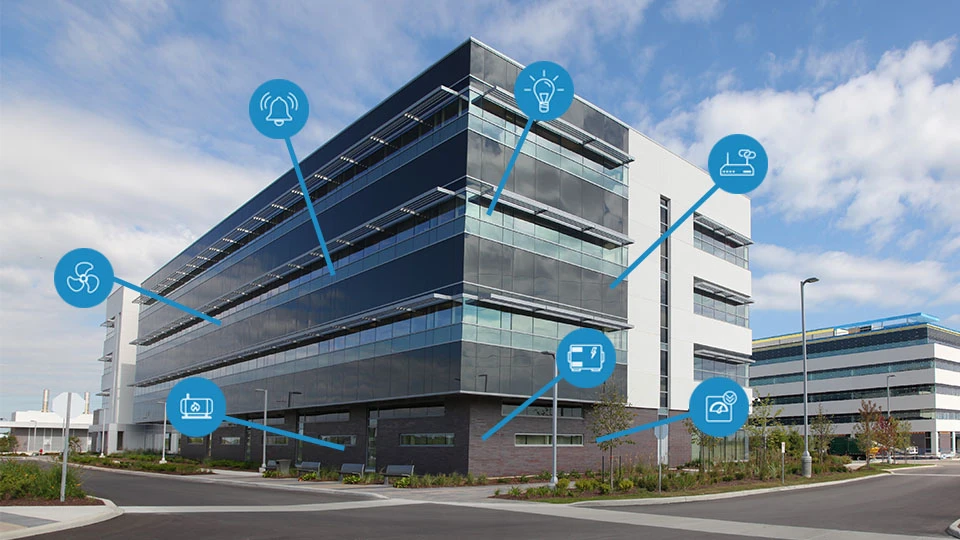
Managing a building, its operations and workplaces, comes with great expectations these days. Meeting these means incorporating disparate IT/OT/IoT technology to bring about a smart building, inside and out.
This makes sense since smart buildings deploy sensors, systems, and software to leverage data for an increased level of monitoring, control, and data-driven decision-making. And the benefits speak for themselves.
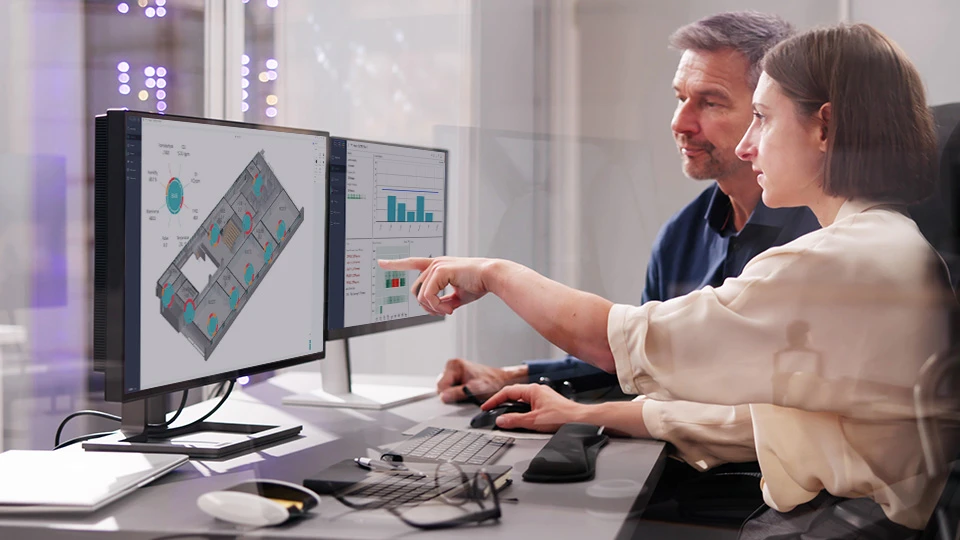
Achieve Building Optimization
With Smart Building Software from Mitsubishi Electric Iconics Digital Solutions, you can implement a smart building infrastructure to get the most out of your building and building experience. Get enhanced benefits such as:
- Energy efficiency and sustainability
- Tenant comfort
- Universal connectivity
- Security and alarm management
- Predictive maintenance
Bring Your Building to Life with Unified Operational Dashboards
With the right tools, you can achieve operational optimization. You can wrangle your data using GENESIS to get quality data that can be used to its fullest potential. Some of the features our smart buildings customers appreciate most include:
Visualize Operations
Our real-time visualization lets you quickly identify inefficiencies to optimize all aspects of your building’s operations. Through data integration and analytics, our software provides the historical and predictive insights you need for enhanced decision making.

Track Energy Usage
GENESIS continuously monitors energy consumption, so you can identify energy-intensive areas and equipment. This information lets you take decisive action to optimize energy and reduce operational costs.

Monitor Indoor Environment
Our software monitors environmental aspects like temperature, humidity, air quality, and lighting, so you can ensure maximum occupant comfort and wellbeing. With such responsive climate control, you can also optimize energy efficiency.

Observe Occupancy
We track space utilization patterns and occupancy trends. With this information, you can optimize space allocation, heating/cooling, and lighting resulting in increased energy and resource efficiency and cost reduction.
Click the gear in the top right to configure
Tackling the Challenges of Operating and Managing Your Smart Building
Our automation software suite is key to ensuring your building is smart and highly functional. With nearly four decades of experience in the industry, Mitsubishi Electric Iconics Digital Solutions, including its Intelligent Building Software Stack (IBSS), provides centralized visualization and control of all operational aspects of your building and digital workplace. No matter what your stake is, our software brings the most to property owners and tenants alike.
Cost Management
Rising operational costs and sustainability concerns make it crucial for buildings to operate efficiently and to maintain the highest level of functionality.
We provide real-time monitoring and control along with energy consumption data based on occupancy and usage patterns. This valuable insight lets you:
- Reduce operational costs by optimizing energy consumption
- Improve resource usage
- Track equipment performance for enhanced maintenance scheduling
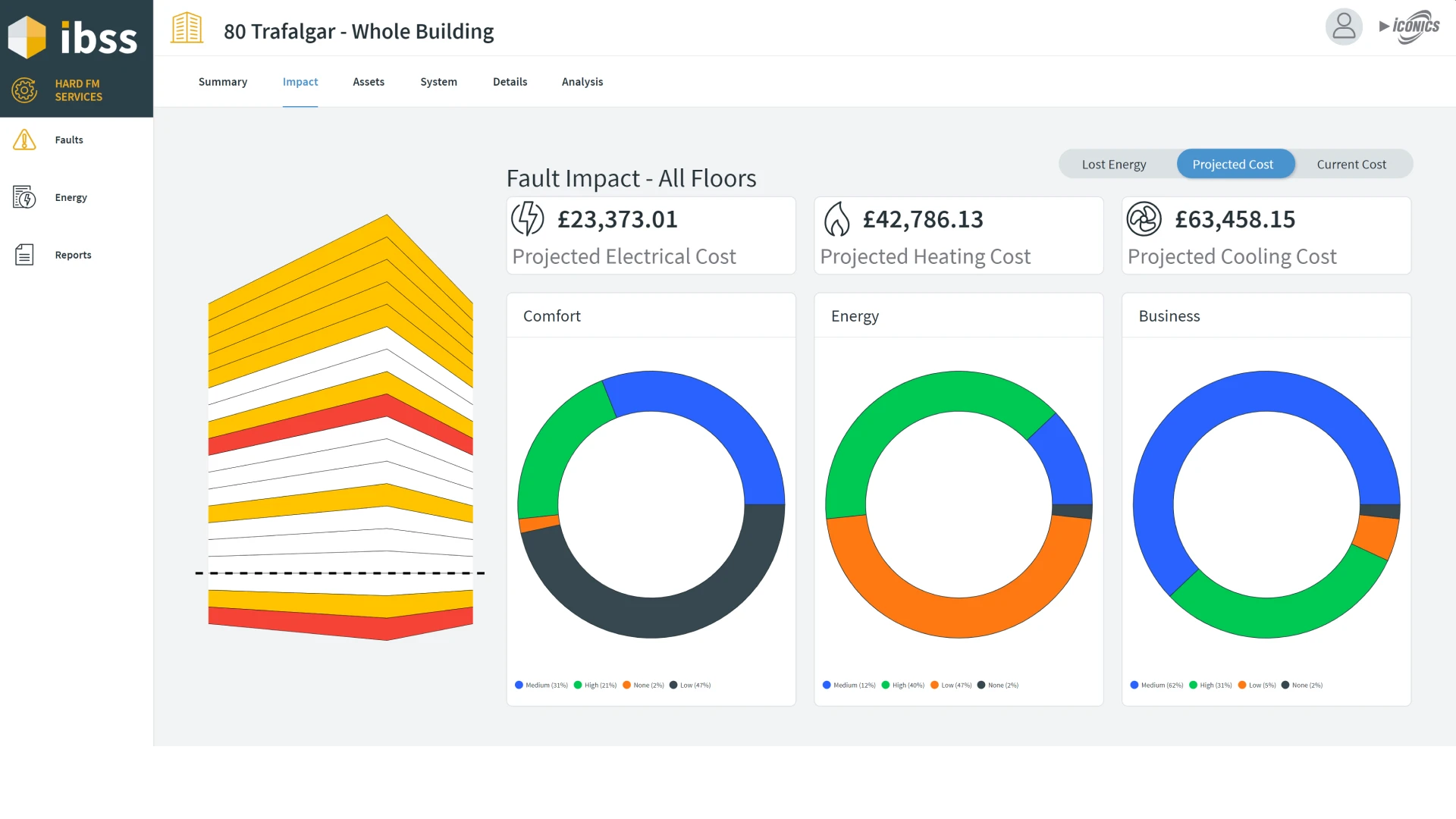

Technological Integration
Operating/managing buildings today often require integrating various technologies including building management systems (BMS), IoT devices, and smart architecture.
GENESIS has universal connectivity and allows for native implementation of BACnet, OPC, databases, web services, IoT, SNMP, MQTT, OData, and more for highest level of interoperability and integration. You will be able to tie in all the different communication protocols and technologies for smooth building operations.
Tenant Satisfaction
The changing demographics and needs of building management should cater to more flexible sustainable office spaces that prioritize wellbeing, collaboration, and productivity.
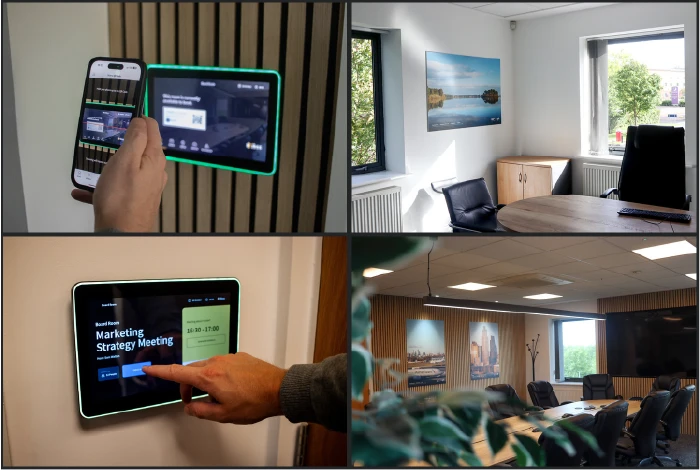
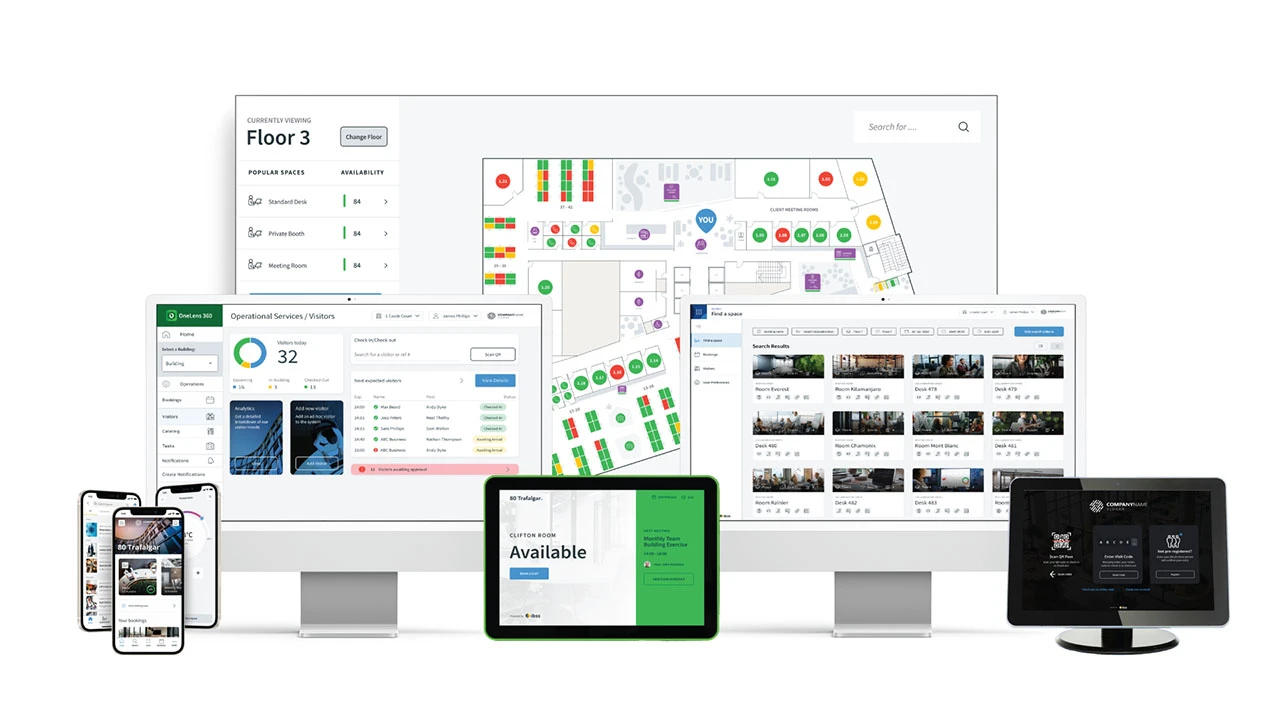
Whether your company is the only tenant or not, ensuring tenant satisfaction is paramount. IBSS allows for ultimate comfort, convenience, and safety through its advanced customizable controls for climate and access and its mobile apps for facility-related services.
Tenant Satisfaction
The changing demographics and needs of building management should cater to more flexible sustainable office spaces that prioritize wellbeing, collaboration, and productivity.
Whether your company is the only tenant or not, ensuring tenant satisfaction is paramount. IBSS allows for ultimate comfort, convenience, and safety through its advanced customizable controls for climate and access and its mobile apps for facility-related services.

Plug & Play Prop-Tech
‘Plug and play’ is a range of existing and emerging technologies built into the IBSS digital twin. Through open APIs, pre-built integrations, and interoperable-only protocols, you are empowered to choose the in-class sensors, systems, and apps that best suit your goals and working style.
Data-Driven Insights
Whether you’re a developer, owner, operator, or tenant, IBSS unifies all of your spatial, static, and live system data into a centralized and secure data digital twin. The IBSS digital twin has apps, workflows, analytics, and visualizations tailored to help you and your colleagues do your best work.

Outcome Orientated Modularity
Even though every building is different, IBSS allows you to deploy modular systems at scale and speed. You can choose the functions, features, and outcomes you want to enable through our tailored marketplace bundles for deployment across your entire portfolio.
Total Factory Automation Solution Supplier
Our future with Mitsubishi Electric as your global automation provider is limitless. Mitsubishi Electric’s complete automation hardware portfolio includes controllers, drives, CNC, and robots, while our comprehensive digital solutions software portfolio allows customers to historize, visualize, and analyze all of their manufacturing data. Together, we will bring you operational optimization, no matter the process or environment.
Learn More About Related Products
GENESIS
GENESIS is a world-class automation software suite that enables organizations to quickly and efficiently deploy a diverse array of digitalization project solutions. Whether it is enterprise-wide intelligent control systems and data historization, situational/operational awareness and notification capabilities, or enterprise analytics, the GENESIS suite makes it all possible.
Intelligent Buildings Software Stack
The Intelligent Buildings Software Stack (IBSS) is a virtual data-driven replication of the physical built world. The cloud-based software stack models the relationships between people, places, and devices into a unique semantic data digital twin.
Facility AnalytiX
Facility AnalytiX® is a complete, ongoing commissioning software solution based on our advanced Fault Detection and Diagnostics (FDD) technology, which significantly reduces costs and improves operational efficiency.
Want to Get Started?
Learn how you can transform your business and get a demonstration from one of our worldwide experts.
Mitsubishi Electric Iconics Digital Solutions is a leading provider of automation software solutions, delivering solutions to customers for nearly four decades.
Get in Touch with Us: +1 508 543 8600 • [email protected]