English
 Czech
Czech
 German
 French
 Italian
 Japanese
 Polish
 Spanish
 7 min read
Key Takeaways
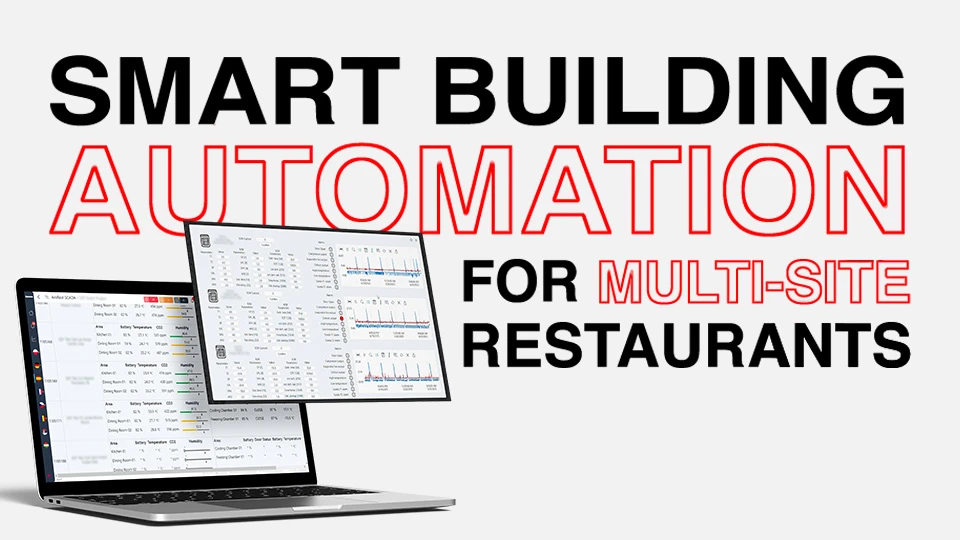
Centralized smart building automation can help multi-site restaurant operators manage growing portfolios more efficiently by connecting facility systems, operational data, and workflows across locations.
- Restaurant portfolio growth does not have to increase operational complexity at the same rate. Centralized facility management allows new restaurant locations and systems to become part of an established operational framework.
- Portfolio-wide visibility supports more proactive facility management. Centralized monitoring, alarms, and remote access give facilities teams greater visibility into HVAC, refrigeration, energy, and other critical systems across restaurant locations.
- Standardized operational data supports better decision-making. Consistent data collection, visualization, and reporting help teams compare restaurant performance, identify recurring issues, and make more informed maintenance and operational decisions.
- Centralized restaurant energy management can improve efficiency and sustainability. Portfolio-wide energy data helps operators compare consumption across locations, identify opportunities to reduce waste, and optimize energy use.
- AmRest demonstrates how centralized smart building automation can support multi-site restaurant operations at scale. GENESIS supports more than 700 restaurants across eight countries, enabling remote facility management, faster issue resolution, standardized data management, optimized energy consumption, and reduced operational costs.
Scaling Multi-Site Restaurant Operations Without Scaling Complexity
One restaurant has an HVAC system, refrigeration equipment, energy consumption, alarms, maintenance requirements, and operational data to manage. Multiply that across hundreds or thousands of locations, different countries, equipment generations, and control systems, and restaurant growth creates an entirely different operational challenge.
For multi-site restaurant operators, expansion does not simply mean managing more locations. Every new restaurant adds another collection of critical systems that must operate reliably and efficiently, while facilities and operations teams need consistent visibility across an increasingly distributed portfolio. Without a common approach to monitoring and managing those systems, operational complexity can grow alongside the business.
The challenge, then, is not simply how to manage more restaurants but how to scale the business without scaling operational complexity at the same rate. Centralized facility management enabled by a smart building platform provides a way to shift from managing individual locations in isolation toward managing infrastructure, operational data, energy, alarms, and maintenance across the restaurant portfolio.
Why Decentralized Facility Management Becomes Harder to Scale
Restaurant portfolios rarely expand with identical infrastructure at every location. Different sites may use different generations of HVAC and refrigeration equipment, building management systems, controllers, energy management platforms, and maintenance processes. Expansion into new regions and the addition of new restaurant locations can add further variation. Over time, facilities teams can find themselves managing a collection of individual operational environments rather than a connected portfolio.
Fragmentation limits more than visibility. When operational data remains distributed across separate systems and locations, identifying problems may depend on individual sites reporting issues, troubleshooting can require on-site intervention, and maintenance teams have fewer opportunities to identify patterns across the portfolio. Energy and sustainability teams can also struggle to compare performance consistently across locations, while operations leaders lack a unified view of how facilities are performing at scale.
AmRest, one of Europe’s leading multi-brand restaurant operators, experienced many of these challenges as the company expanded. Individual facilities operated independently using a mix of local BMS platforms, PLC controllers for HVAC and ventilation, separate cold-storage controllers, and an external energy management system. Different platforms collected and stored operational data, while issue resolution typically required on-site visits and maintenance activities were managed separately.
The larger the portfolio becomes, the greater the value of being able to see individual restaurants not simply as separate facilities, but as part of one connected operational environment. That shift creates the foundation for centralized visibility, standardized data, remote management, and more proactive operations across locations.
Moving From Individual Restaurants to Portfolio-Wide Operations
Centralized facility management changes the way multi-site restaurant operators view and manage their physical operations. Instead of relying on separate systems and processes at individual locations, operations and facilities teams can bring data from HVAC, refrigeration, energy, and other critical systems into a common operational environment.
A centralized approach can support:
- Portfolio-wide visibility: Teams can monitor critical facility systems across locations from a common operational environment.
- Faster response to issues: Centralized alarms and remote access help teams identify, investigate, and respond to problems without immediately dispatching personnel to a site.
- More informed decision-making: Standardized data collection and historical trends make it easier to compare performance, identify recurring issues, and support maintenance and operational decisions.
- Greater operational consistency: Common approaches to data, reporting, and workflows help reduce variation in how facilities are managed across the portfolio.
- Scalable operations: New restaurants, systems, and regions can become part of an established operational framework rather than requiring another isolated management process.
How AmRest Centralized Operations Across More Than 700 Restaurants
AmRest’s experience demonstrates how a smart building platform can enable centralized facility management across a large and geographically distributed restaurant portfolio. Working with system integrator Elmark Automation S.A., AmRest deployed GENESIS, the smart building platform from Mitsubishi Electric Iconics Digital Solutions, to create a centralized automation environment connecting critical facility systems and operational data across its restaurant locations.
The solution brings HVAC, refrigeration, energy, and other facility data into a common environment. Today, GENESIS supports more than 700 restaurants across eight countries. Through the deployment, AmRest realized significant operational benefits:
- Standardized data management: Unified data collection, namespace unification, visualization, and reporting provide greater consistency and support insights and process improvements across the portfolio.
- Remote facility management: Operators can monitor and control HVAC, refrigeration, and other critical systems across locations without requiring on-site intervention.
- Faster issue resolution: Real-time alerts enable teams to respond proactively to technical failures before they escalate.
- Optimized energy consumption: Integration with AmRest’s existing energy management system helps reduce energy waste and improve sustainability.
- Reduced operational costs: Improved energy efficiency and automated maintenance workflows have contributed to significant cost savings.
Centralized Operations Create a Scalable Foundation for Growth
For multi-site restaurant operators, scalability depends on more than the ability to add locations. The operational model supporting those locations must also be able to expand without introducing unnecessary complexity. Centralized facility management provides a common framework for bringing new restaurants, systems, and operational data into the broader portfolio.
Standardization plays an important role in that scalability. Consistent approaches to data collection, visualization, reporting, alarms, and operational workflows make it easier to manage locations as part of one connected environment rather than as separate facilities. Portfolio-wide data also allows teams to compare performance across restaurants, identify recurring issues, and apply operational insights more broadly.
As restaurant portfolios continue to grow, centralized operations can help facilities teams manage that growth without increasing operational complexity at the same rate. Instead of simply adding more systems to manage, organizations can extend an established operational framework across new locations, supporting greater consistency, visibility, and control as the business expands.
See Centralized Restaurant Automation in Action
Discover how AmRest used GENESIS to centralize facility management across more than 700 restaurants in eight countries, improving visibility, energy efficiency, maintenance, and operational control while creating a scalable foundation for continued expansion.
Read the AmRest customer success story.
Explore Smarter Building Operations
Discover how smart building solutions can connect building systems and operational data to improve visibility, efficiency, and performance across facilities.
Explore Smart Building Solutions.
Frequently Asked Questions
Multi-site restaurant operators increasingly use centralized smart building automation to improve facility management, energy efficiency, and operational visibility across growing portfolios. The following questions address how these systems support restaurant operations at scale.
What is smart building automation for multi-site restaurants?
Smart building automation connects HVAC, refrigeration, energy management, alarms, and other facility systems within a common operational environment. For multi-site restaurant operators, a centralized smart building platform can provide visibility and management across multiple locations rather than requiring each restaurant to operate as an isolated facility.
What are the benefits of centralized facility management for multi-site restaurants?
Centralized facility management gives operations and facilities teams portfolio-wide visibility into critical building systems and operational data. Centralized monitoring, alarms, remote access, standardized data, and reporting can help teams respond to problems faster, improve maintenance decisions, increase operational consistency, and manage growing restaurant portfolios more efficiently.
How can smart building automation help restaurant operators scale?
Smart building automation provides a common operational framework that can extend across new restaurant locations, systems, and regions. Standardized approaches to monitoring, data collection, reporting, alarms, and workflows can help operators expand their portfolios without creating an entirely separate facility management process for every new location.
How can restaurants centrally monitor HVAC and refrigeration systems?
A centralized smart building platform can connect HVAC, refrigeration, controllers, alarms, and other facility systems across restaurant locations. Facilities teams can monitor equipment performance, receive real-time alerts, review historical data, and remotely investigate issues from a common operational environment.
How can centralized restaurant energy management improve energy efficiency?
Centralized energy management gives restaurant operators greater visibility into energy consumption across locations. Portfolio-wide data can help teams compare performance, identify abnormal consumption or opportunities to reduce waste, and optimize energy use across the restaurant portfolio.
How did AmRest use GENESIS for centralized restaurant facility management?
Working with system integrator Elmark, AmRest deployed GENESIS to centralize facility systems and operational data across its restaurant portfolio. GENESIS now supports more than 700 restaurants across eight countries, enabling remote facility management, faster issue resolution, standardized data management, optimized energy consumption, and reduced operational costs.

Written By:
Recent Posts
What Is a Digital Workplace? Definition, Components, and Benefits
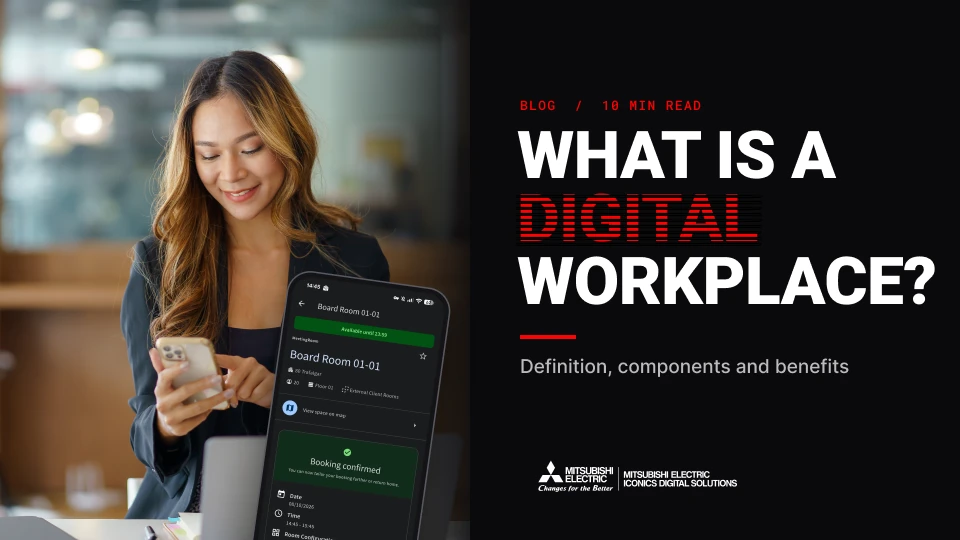
The High-Performance Office: Turning Data, AI and Smart Tech into Measurable Asset Value
Why Master Systems Integrators and Digital Enablement Decide Whether a “Smart” Building Is Actually Smart
The Swim Isn't the Race: Are We Looking at Only Part of AI's Impact?

Water Utility Cybersecurity: Building Operational Resilience Through Integrated SCADA and Controls