English
 Czech
Czech
 German
 French
 Italian
 Japanese
 Polish
 Spanish
 10 min read
Key Takeaways
Water and wastewater utilities are balancing growing operational complexity with increasing cybersecurity demands. An integrated controls and SCADA strategy can help utilities strengthen visibility, decision-making, and operational resilience while supporting a more secure operational environment.
- Water and wastewater cybersecurity is essential to operational resilience. As water utility operations become more integrated, cybersecurity needs to be considered throughout the operational architecture.
- Fragmented systems can create operational blind spots for water and wastewater utilities. Bringing data from equipment, controls, and SCADA systems together gives operators greater context for monitoring conditions, identifying problems, and making informed decisions.
- Integrated SCADA and controls provide greater visibility across water and wastewater operations. VFDs, PLCs, HMIs, and SCADA systems can work together to provide a more complete view of equipment, processes, and distributed facilities.
- Centralized operational data helps water utilities make faster, more informed decisions. Monitoring, analytics, alarms, trends, and reporting can help operators identify abnormal conditions earlier, optimize equipment performance, and manage distributed operations more effectively.
- Secure HMI/SCADA requires multiple layers of cybersecurity protection. Role-based access, secure remote access, network segmentation, secure communications, continuous monitoring, system hardening, and lifecycle security all contribute to protecting critical water infrastructure.
- Intelligent SCADA can strengthen water utility operational resilience. Continuous visibility across distributed operations helps utilities recognize problems, respond more quickly, and maintain safe and reliable water services.
A Wake-Up Call for Water Utilities
In late July 2026, more than 30 community water systems across Minnesota were targeted in what state officials described as a coordinated cyberattack. The incidents unfolded over two days and prompted Minnesota to activate its cybersecurity incident response capabilities, working with federal and private-sector partners to support affected communities and strengthen the security of critical infrastructure.
The immediate impacts were limited or mitigated, and residents were able to continue normal water use. But the incident underscored a much larger reality for water and wastewater utilities: the technology supporting essential infrastructure has become an increasingly important cybersecurity concern.
At the same time, utilities are becoming more connected. Pumps, variable frequency drives (VFDs), programmable logic controllers (PLCs), human-machine interfaces (HMIs), SCADA systems, remote facilities, and enterprise applications increasingly need to exchange data and work together to give operators greater visibility and control across distributed operations.
Greater connectivity creates tremendous operational value but also changes the cybersecurity landscape. For water and wastewater utilities, cybersecurity and operational resilience can no longer be treated as separate challenges. Modern operational environments need to provide greater visibility and control while incorporating security throughout the architecture.
Water Utilities Face Growing Operational and Cybersecurity Pressures
Water and wastewater utilities are operating in an increasingly complex environment. For example, utilities are being asked to maintain reliable, secure operations while managing aging infrastructure, limited resources, and a growing range of operational demands.
Several pressures are converging:
- Aging infrastructure: Utilities must maintain and modernize critical assets while minimizing disruption to essential services.
- Workforce transition and knowledge transfer: As experienced personnel retire, utilities need to capture, preserve, and transfer institutional knowledge while helping smaller teams manage complex operations effectively.
- Distributed operations: Treatment plants, pumping stations, lift stations, and other remote assets require operators to maintain visibility and control across geographically dispersed infrastructure.
- Growing operational complexity: Pumps, drives, control systems, treatment processes, remote stations, and other assets generate increasing volumes of operational data that must be monitored and managed.
- Expanding OT environments: As more operational technologies exchange data across systems and locations, utilities need to manage access, monitoring, system architecture, and cybersecurity more consistently.
- Regulatory and reporting requirements: Utilities need reliable operational data to streamline reporting and support compliance requirements.
- Increasing cybersecurity threats: Cyberattacks targeting water and wastewater infrastructure can disrupt monitoring, control, and essential processes, making cybersecurity critical to maintaining secure and resilient operations.
Meeting these challenges requires more than modernizing individual technologies. Utilities need an operational environment that supports reliability, efficiency, visibility, and security across the entire system.
Achieving that system-wide approach requires automation and SCADA strategies that go beyond monitoring individual processes. These technologies need to help operators understand conditions across distributed operations, respond quickly to abnormal conditions, and maintain resilient control of essential infrastructure.
Disconnected Systems Create Operational Blind Spots
Many water and wastewater utilities have expanded their operational technology over decades, adding equipment and systems as facilities have grown, processes have changed, and new requirements have emerged. The result can be an environment in which pumps, variable frequency drives (VFDs), programmable logic controllers (PLCs), HMIs, SCADA systems, and other assets operate across different systems and locations without providing a unified view of operations.
When operational data remains fragmented across these systems, operators may need to move between multiple interfaces and data sources to understand what is happening across a facility or network. Identifying abnormal conditions, investigating performance issues, and coordinating a response can become more difficult when information is distributed across separate systems.
Fragmented environments can also make consistent cybersecurity practices more difficult to implement and maintain. Different systems may have different access controls, monitoring capabilities, maintenance requirements, and security configurations, making it harder to apply a consistent approach across the operational environment. For utilities managing treatment plants, pumping stations, lift stations, and other remote assets, those challenges can increase as operations expand.
An integrated operational architecture can help address both challenges by bringing operational information into a more unified environment. Operators gain greater context for understanding relationships between assets and processes, identifying abnormal conditions, and maintaining awareness across distributed operations.
Building an Integrated Operational Architecture
Addressing fragmented operations begins by integrating the technologies that monitor, control, and manage water and wastewater processes. Variable frequency drives (VFDs), programmable logic controllers (PLCs), human-machine interfaces (HMIs), and SCADA systems each perform different functions, but the value increases when these systems work together as part of an integrated operational environment.
Within an integrated architecture, each technology plays a distinct role:
- VFDs and other automation technologies help control pumps, motors, and processes while providing operational data on equipment performance.
- PLCs execute control logic and collect information from connected equipment and processes.
- HMIs provide operators with visual interfaces for monitoring equipment and interacting with control systems.
- SCADA systems provide supervisory monitoring and control across processes and distributed assets, bringing operational information together for greater system-wide visibility.
Bringing these technologies together creates a more complete view of equipment status, process conditions, and operational performance across the system. Instead of evaluating equipment and processes in isolation, operators can access operational data within a broader context, helping them understand how individual assets and conditions affect overall system performance.
Mitsubishi Electric combines VFDs and automation and control technologies with GENESIS, the intelligent HMI/SCADA platform from Mitsubishi Electric Iconics Digital Solutions, to support an integrated operational architecture. GENESIS brings operational data together for centralized monitoring, visualization, analysis, and reporting, helping utilities gain greater visibility across facilities and distributed assets.
Turning Connected Data into More Resilient Operations
Connecting operational systems creates value when utilities can turn the resulting data into more informed decisions and faster action. With greater visibility across equipment, processes, and distributed facilities, operators can understand conditions across the system rather than relying on isolated views of individual assets.
Centralized monitoring can help operators identify abnormal conditions earlier and investigate potential problems before they escalate. Pump performance, energy consumption, equipment status, alarms, trends, and other operational information can be viewed together, providing greater context for troubleshooting and day-to-day decision-making.
Access to system-wide operational data can also support more efficient use of equipment and resources. Operators can analyze performance trends, identify opportunities to optimize pumps and other energy-intensive assets, streamline reporting, and use remote monitoring to oversee distributed facilities without requiring personnel to be physically present at every location.
For utilities facing workforce constraints, centralized operations can also help teams manage larger and more complex systems more effectively. Standardized dashboards, workflows, and access to operational information give personnel a consistent way to monitor and respond to conditions across facilities.
As operational systems become increasingly integrated, cybersecurity becomes an equally important consideration.
What Does Secure HMI/SCADA Look Like?
For water and wastewater utilities, cybersecurity needs to be considered throughout the operational environment. Greater connectivity can improve visibility, remote access, and operational decision-making, but every connection also needs to be appropriately managed and protected.
Secure HMI/SCADA is not defined by a single technology or cybersecurity feature. A strong security strategy uses multiple layers of protection to reduce risk while maintaining the availability and reliability required for critical operations.
Key considerations include:
- Role-based access control: Limit system access and functionality according to each user's responsibilities and authorization level.
- Secure remote access: Protect connections used by operators, engineers, vendors, and other authorized personnel accessing systems remotely.
- Network segmentation: Separate critical operational systems and networks where appropriate to help limit unnecessary communication and reduce exposure.
- Secure communications: Protect data exchanged between systems, devices, and applications using appropriate authentication and encryption.
- Continuous monitoring: Maintain visibility into system activity, alarms, events, and potential anomalies that may require investigation.
- System hardening and maintenance: Reduce unnecessary services and access points while keeping systems appropriately configured, maintained, and updated.
- Lifecycle security: Treat cybersecurity as an ongoing process that extends from system design and deployment through operation, maintenance, updates, and eventual modernization.
The Minnesota attacks illustrate why these protections matter. Water infrastructure must remain available and reliable even as the technologies supporting operations become increasingly interconnected. Integration can provide greater visibility and control, but cybersecurity must be intentionally designed into the architecture rather than added after systems are connected.
What does secure HMI/SCADA really look like?
Explore What Secure HMI/SCADA Really Looks Like to learn about the principles and capabilities that support secure industrial operations.
Building More Secure and Resilient Water Operations
The coordinated cyberattacks against more than 30 Minnesota community water systems are a reminder of what is at stake. Water and wastewater utilities provide essential services that communities depend on every day, making both operational resilience and cybersecurity critical priorities.
Greater connectivity does not have to mean sacrificing security. When automation, controls, and intelligent HMI/SCADA are integrated within a cybersecurity-conscious architecture, utilities can manage operations more cohesively while maintaining the safeguards needed to protect critical systems and data.
An intelligent SCADA platform like GENESIS provides operators with continuous visibility into equipment, processes, alarms, trends, and performance across distributed operations. Instead of relying on fragmented information or discovering problems only after they have escalated, teams can identify abnormal conditions earlier, investigate issues with greater context, and respond more effectively.
The result is a stronger operational environment: one where technology helps utilities optimize performance, make better use of limited resources, strengthen cybersecurity practices, and respond more confidently when conditions change.
The Minnesota attacks demonstrate that threats to critical water infrastructure are real and underscore the importance of maintaining visibility and control across operations. With secure, intelligent SCADA providing continuous operational insight, utilities are better equipped to recognize problems, respond quickly, and keep essential water systems operating safely and reliably.
Explore our Water and Wastewater Solution
WEFTEC 2026
We’re heading to WEFTEC 2026 in New Orleans!
Join us September 26–30 at the Ernest N. Morial Convention Center and visit Booth #1000 in the Advanced Technologies Pavilion.
If you’re attending, stop by to talk with our experts Martin Byers, Gary Korht, and Wesley Gulik about your water and wastewater operations and how digital technologies can help you get more from your operational data.
📍 Booth #1000 | Advanced Technologies Pavilion
📅 September 26–30, 2026
Frequently Asked Questions
Water and wastewater utilities evaluating modernization strategies often have questions about how SCADA, automation, cybersecurity, and operational resilience work together. The following answers address some of the key considerations discussed in this article.
What is SCADA in water and wastewater operations?
SCADA, or supervisory control and data acquisition, provides centralized monitoring and supervisory control of water and wastewater processes. SCADA systems give operators visibility into equipment, processes, alarms, trends, and other operational information across treatment plants, pumping stations, lift stations, and distributed assets.
How does SCADA support water utility cybersecurity?
SCADA can support a broader cybersecurity strategy through capabilities and practices such as role-based access control, secure remote access, system monitoring, secure communications, and appropriate system configuration. Cybersecurity does not depend on SCADA alone. Network architecture, segmentation, access management, maintenance, and lifecycle security also play important roles in protecting operational environments.
Why integrate PLCs, VFDs, HMIs, and SCADA systems?
PLCs, VFDs, HMIs, and SCADA systems perform different functions within water and wastewater operations. Integrating these technologies allows operational data to be viewed within a broader system context, helping operators understand relationships between equipment and processes, identify abnormal conditions, and make more informed decisions.
How can SCADA improve operational resilience for water utilities?
SCADA provides operators with centralized visibility into equipment, processes, alarms, trends, and performance across distributed operations. Earlier awareness of abnormal conditions and access to contextual operational information can help teams investigate problems and respond more effectively, supporting the availability and reliability of essential water services.
How can SCADA help utilities manage remote facilities?
SCADA enables operators to monitor distributed assets such as pumping stations, lift stations, and other remote facilities from a centralized environment. Remote monitoring can help smaller teams oversee geographically dispersed infrastructure, identify conditions requiring attention, and reduce the need for personnel to be physically present at every location.
What should utilities consider when securing HMI/SCADA systems?
A secure HMI/SCADA strategy should use multiple layers of protection rather than relying on a single cybersecurity feature. Key considerations include role-based access control, secure remote access, network segmentation, secure communications, continuous monitoring, system hardening and maintenance, and security throughout the system lifecycle.

Written By:
Recent Posts
What Is a Digital Workplace? Definition, Components, and Benefits
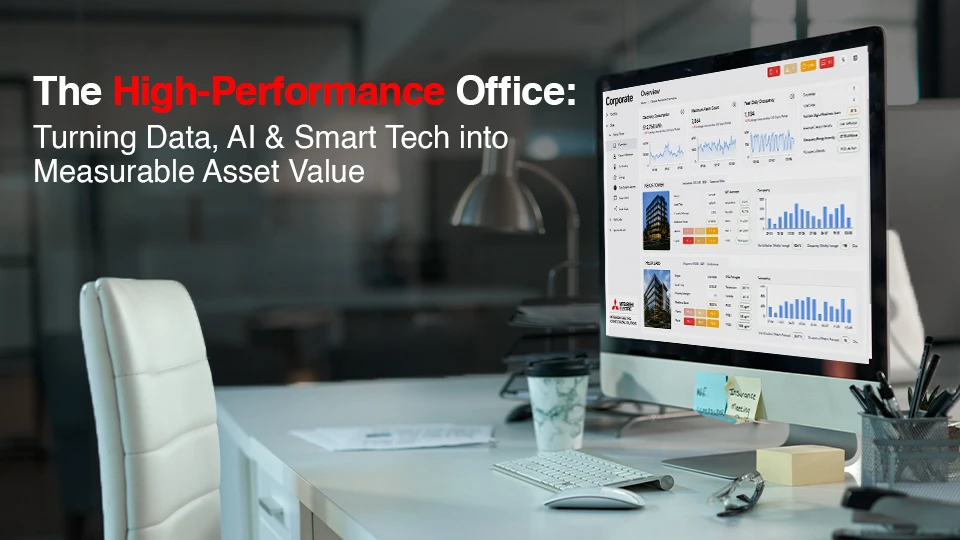
The High-Performance Office: Turning Data, AI and Smart Tech into Measurable Asset Value
Why Master Systems Integrators and Digital Enablement Decide Whether a “Smart” Building Is Actually Smart

The Swim Isn't the Race: Are We Looking at Only Part of AI's Impact?
Smart Building Automation for Multi-Site Restaurants: How Centralized Operations Support Growth