English
 Czech
Czech
 German
 French
 Italian
 Japanese
 Polish
 Spanish
 8 min read
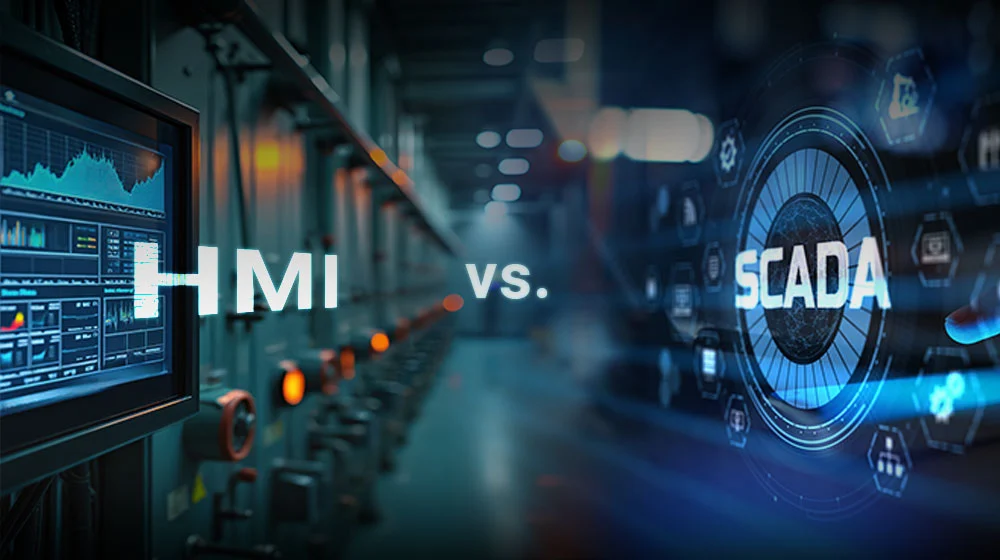
What You'll Learn
- The key differences between HMI and SCADA systems and the role each technology plays in industrial operations
- The role of HMIs in operator interaction, process visualization, and real-time operational awareness
- The role of SCADA systems in supervisory control, monitoring, data acquisition, and centralized operational visibility
- The relationship between HMI and SCADA in modern industrial environments
- The evolution of modern software platforms that unify HMI, SCADA, alarming, historian functionality, reporting, analytics, and connectivity within a single architecture
Why Understanding the Difference Between HMI and SCADA Matters
Understanding the distinction between HMI and SCADA affects more than terminology. Architecture decisions influence how organizations monitor operations, manage data, support remote access, and scale industrial systems over time.
As industrial environments become more connected, organizations increasingly require both localized operator interaction and centralized supervisory visibility. The ability to support both functions becomes especially important in environments involving distributed assets, multi-site operations, energy management, smart manufacturing, and digital transformation initiatives.
Choosing the right architecture helps organizations manage complexity, improve operational visibility, and support long-term growth.
What Is an HMI?
Understanding Human-Machine Interfaces in Industrial Operations
An HMI, or Human-Machine Interface, is the interface layer that allows operators to interact with industrial equipment and processes.
HMIs are designed to:
- Display operational data
- Visualize machine status
- Present alarms and notifications
- Allow operators to monitor equipment in real time
- Enable operators to interact with processes through commands, setpoint changes, and operational controls
Operators typically interact with HMIs through graphical dashboards, process screens, charts, and controls that simplify complex operational information into understandable visual formats.
In industrial environments, HMIs often support:
- Machine-level visibility
- Local process monitoring
- Operational awareness
- Faster operator response
For example, an HMI may display:
- Tank levels
- Pump status
- Motor performance
- Production counts
- Temperature reading
- Alarm conditions.
The primary goal is to help operators quickly understand what is happening within a machine or process and respond appropriately. At the same time, industrial operations often require broader visibility beyond individual machines or local processes. That broader operational layer is where SCADA systems become important.
What Is a SCADA System?
Understanding Supervisory Control and Data Acquisition (SCADA)
SCADA stands for Supervisory Control and Data Acquisition. Unlike an HMI, which typically focuses on operator interaction at the machine or process level, SCADA systems provide centralized supervisory visibility across multiple assets, systems, processes, and locations.
SCADA systems are designed to:
- Collect operational data
- Monitor distributed assets
- Supervise industrial processes
- Manage alarms and events
- Support remote operations
- Provide historical visibility and reporting
A SCADA architecture often includes:
- PLCs and RTUs
- Communication networks
- Historian functionality
- Centralized monitoring applications
- Alarm management
- Visualization layers
SCADAs play an especially important role in environments requiring:
- Multi-site monitoring
- Centralized operations
- Infrastructure visibility
- Remote asset management
- Enterprise-level operational intelligence
SCADA systems also increasingly support integration with operational and business systems, helping organizations share information across production, maintenance, quality, reporting, and other enterprise functions.
For example, a SCADA platform may monitor:
- Multiple manufacturing lines
- Water and wastewater infrastructure
- Energy systems
- Pipelines
- Transportation networks
- Distributed facility operations across large geographic regions
HMI vs. SCADA: What Are the Key Differences?
Although HMI and SCADA are closely connected, both technologies serve different operational purposes.
HMI
- Focuses on operator interaction
- Typically supports local or machine-level visibility
- Provides graphical process visualization
- Allows direct interaction with equipment and controls
- Primarily supports real-time operational awareness
SCADA
- Focuses on supervisory monitoring and control
- Supports centralized visibility across systems and sites
- Collects and aggregates operational data
- Manages alarming, reporting, and historical analysis
- Enables remote monitoring and operational oversight
The most important distinction is scope. HMI helps operators interact with machines and processes. SCADA helps organizations supervise, monitor, and optimize industrial operations at scale. The technologies are not competing systems but rather operate at different layers within industrial environments.
Typical HMI Features vs. SCADA Features
Although HMI and SCADA technologies often work together, each serves a different purpose and includes different capabilities.
Common HMI features include:
- Graphical process displays
- Dashboards and trend charts
- Alarm visualization
- Operator controls and commands
- Machine-level monitoring
Common SCADA features include:
- Data acquisition and aggregation
- Centralized monitoring
- Historian functionality
- Alarm management
- Reporting and analytics
- Remote access and supervision
Do You Need Both HMI and SCADA?
In many modern industrial environments, the answer is yes.
HMI and SCADA technologies solve different operational challenges. An HMI helps operators interact with machines and processes through visualization, controls, alarms, and real-time operational displays.
A SCADA system provides the broader supervisory layer needed to collect data, monitor distributed assets, manage alarms, analyze historical information, and coordinate operations across facilities and locations.
Organizations operating a single machine or standalone process may only require HMI functionality. As operations grow in complexity, however, the need for centralized monitoring, remote visibility, reporting, and operational intelligence often drives the adoption of SCADA capabilities.
Modern industrial platforms increasingly combine both functions within a unified architecture, allowing organizations to support local operator interaction and enterprise-wide supervisory insight from a single environment.
How HMI and SCADA Work Together in Modern Industrial Systems
In modern industrial architectures, HMI and SCADA technologies often work together inside a connected operational environment.
An HMI frequently serves as the visualization layer within a broader SCADA platform. Operators interact with processes through HMI screens, while the SCADA system aggregates, supervises, stores, and distributes operational intelligence across the environment.
Together, HMI and SCADA support:
- Real-time monitoring
- Centralized operations
- Alarm management
- Process visibility
- Remote supervision
- Operational decision-making
For example, operators may use HMI screens to monitor equipment conditions locally, while supervisory teams use SCADA platforms to oversee multiple facilities, analyze historical trends, manage alarms, and coordinate operations across distributed assets.
Modern industrial software platforms increasingly unify both capabilities inside integrated environments that support operational visibility at both the local and enterprise level. This convergence creates new opportunities to improve visibility, coordination, and decision-making across industrial operations.
How HMI and SCADA Support Industrial Digitalization
Understanding the distinction between HMI and SCADA is not simply a terminology exercise. The differences directly affect system architecture, scalability, operational visibility, and long-term digitalization strategy.
Industrial organizations increasingly require:
- Centralized visibility across facilities
- Remote operational awareness
- Integrated alarming and reporting
- Real-time analytics
- Cybersecurity readiness
- Scalable infrastructure capable of supporting future growth
As industrial operations become more connected, organizations need platforms capable of supporting both localized operator interaction and broader supervisory intelligence.
That need becomes especially important in environments involving:
- Distributed infrastructure
- Remote assets
- Multi-site operations
- Energy management
- Smart manufacturing
- Industrial digital transformation initiatives
Choosing the right architecture affects how effectively organizations can scale operations, manage complexity, and support long-term operational performance.
How Modern Platforms Are Changing HMI and SCADA Architecture
Modern industrial software platforms continue reshaping how HMI and SCADA technologies function inside connected operational environments.
Historically, HMI and SCADA systems were often deployed separately with limited interoperability. Today, industrial organizations increasingly expect integrated platforms capable of combining:
- Visualization
- Supervisory control
- Historian functionality
- Alarming
- Analytics
- Reporting
- Mobility
- Connectivity
Platforms such as GENESIS by Mitsubishi Electric Iconics Digital Solutions reflect this evolution. Traditional SCADA architectures often rely on multiple software products to provide visualization, historian functionality, reporting, analytics, and connectivity.
GENESIS takes a new and different approach by bringing these capabilities together within a unified platform designed to simplify architecture, reduce operational complexity, and support modern industrial requirements.
As organizations pursue industrial analytics, operational intelligence, OT-IT integration, and AI-ready data strategies, unified platforms increasingly provide the scalability and flexibility required for long-term digitalization initiatives.
Modern HMI and SCADA environments increasingly support:
- Web-based visualization
- Mobile access
- Cloud connectivity
- Edge computing
- Industrial IoT integration
- Interoperability across systems
- Centralized operational intelligence
The boundaries between visualization, supervisory control, analytics, and operational intelligence continue evolving as industrial digitalization strategies mature.
Today's industrial environments no longer depend solely on isolated monitoring systems. Organizations increasingly require unified software platforms capable of supporting operational visibility, scalability, flexibility, and long-term digital transformation goals.
HMI and SCADA: Building the Foundation for Modern Industrial Operations
HMI helps operators interact with machines and processes in real time. SCADA provides the broader supervisory visibility, operational intelligence, and centralized monitoring needed to manage industrial systems at scale.
Understanding how these technologies work together helps organizations make better architecture decisions, improve operational visibility, support scalability, and prepare for future digitalization initiatives.
As digitalization initiatives expand across industries, many organizations are moving beyond isolated monitoring and control systems toward unified software platforms that combine visualization, supervisory control, alarming, historian functionality, reporting, analytics, and connectivity within a single environment.
Platforms such as GENESIS support this approach by bringing HMI, SCADA, alarming, historian functionality, reporting, analytics, and connectivity together within a scalable architecture designed to support modern industrial operations, distributed assets, enterprise visibility, and long-term digital transformation strategies.
Continue Learning About HMI and SCADA
Understanding the relationship between HMI and SCADA is an important step toward designing industrial systems that support visibility, scalability, operational efficiency, and long-term digitalization goals.
For a deeper look at modern HMI design principles, download our High Performance HMI white paper.
To explore how GENESIS combines HMI, SCADA, alarming, historian, reporting, analytics, and connectivity within a single software platform, download our GENESIS brochure.
Frequently Asked Questions About HMI and SCADA
The following questions address common topics related to HMI and SCADA systems, including architecture, functionality, and modern industrial applications.
What is the difference between HMI and SCADA?
HMI focuses on operator interaction and process visualization, while SCADA focuses on centralized supervisory monitoring, control, data acquisition, alarming, and operational oversight across systems and facilities.
Is HMI part of SCADA?
In many modern industrial environments, HMI functionality operates as part of a broader SCADA platform. The HMI provides the visualization and interaction layer, while the SCADA system manages supervisory monitoring and operational intelligence.
Can SCADA systems work without HMI?
SCADA systems require some form of operator interface to visualize information and interact with processes. Modern SCADA platforms typically include integrated HMI functionality.
What is the difference between HMI, PLC, and SCADA?
PLCs control industrial equipment and processes. HMIs allow operators to interact with those processes visually. SCADA systems supervise, monitor, and manage operational data across broader industrial environments.
Which industries use HMI and SCADA systems?
HMI and SCADA technologies are widely used across manufacturing, water and wastewater, energy, utilities, transportation, infrastructure, pharmaceuticals, food and beverage, oil and gas, and smart building environments.
How do modern platforms combine HMI and SCADA?
Modern industrial platforms often integrate HMI and SCADA capabilities within a single software environment. Operators use HMI screens for visualization and interaction, while SCADA functions provide supervisory monitoring, data management, alarming, analytics, and centralized operational oversight. This unified approach can simplify deployment, improve scalability, and reduce operational complexity.
Are HMI and SCADA still important in Industry 4.0?
Yes. Modern Industry 4.0 environments increasingly depend on HMI and SCADA platforms for real-time visibility, operational intelligence, analytics, connectivity, remote operations, and industrial digitalization.

Written By:
Recent Posts
What Is a Digital Workplace? Definition, Components, and Benefits
The High-Performance Office: Turning Data, AI and Smart Tech into Measurable Asset Value
Why Master Systems Integrators and Digital Enablement Decide Whether a “Smart” Building Is Actually Smart

The Swim Isn't the Race: Are We Looking at Only Part of AI's Impact?

Water Utility Cybersecurity: Building Operational Resilience Through Integrated SCADA and Controls