English
 Czech
 German
 French
 Italian
 Japanese
 Polish
 Spanish
 7 min read
Key Takeaways
- Centralized building supervision improves operational visibility. Bringing building systems, equipment data, and technical alarms into a single platform helps hospital facility teams monitor operations and respond to issues more efficiently.
- Existing infrastructure can support digital modernization. Hôpital Privé du Confluent consolidated two legacy supervision systems and connected more than 100 building automation controllers from multiple manufacturers using GENESIS.
- Real-time monitoring supports more efficient maintenance. Contextualized alarms, equipment documentation, and historical operating data help facility teams diagnose faults and make informed maintenance decisions.
- Data-driven energy management supports operational efficiency. Monitoring energy consumption, temperature conditions, and equipment performance helps hospitals identify opportunities to optimize building operations while maintaining clinical requirements.
- Scalable building management supports healthcare network expansion. Hôpital Privé du Confluent plans to extend GENESIS to a second hospital, creating a unified supervisory environment across both facilities.
Supporting the Environments Where Care Happens
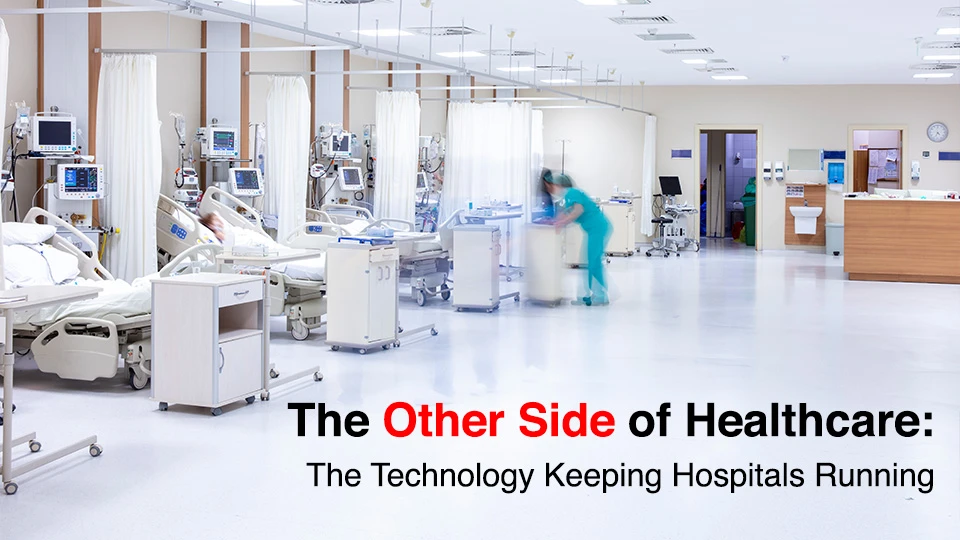
Every weekday, approximately 280 procedures take place in the operating rooms at Hôpital Privé du Confluent, a leading healthcare provider in Nantes, France, serving the Pays de la Loire region. Across more than 50 medical and surgical specialties, physicians, nurses, and healthcare professionals depend on carefully controlled clinical environments to deliver high-quality patient care.
Beyond the operating room, hospital facility teams play an essential, though less visible, role. Maintaining precise temperatures, managing airflow, monitoring equipment performance, and optimizing energy consumption require continuous coordination across complex building infrastructure. Reliable building operations support clinical requirements, patient comfort, and operational efficiency, allowing healthcare professionals to concentrate on delivering care.
At Hôpital Privé du Confluent, improvements in operational visibility, maintenance efficiency, and energy monitoring are helping facility teams manage the hospital's infrastructure more effectively. The hospital's efforts to modernize its building systems demonstrate how smarter building management can support healthcare operations while preparing facilities for future growth.
Bringing Clarity to Complex Hospital Operations
Modern hospitals combine an extensive range of building technologies, from heating, ventilation, and air conditioning (HVAC) to energy management, environmental monitoring, and technical alarm systems. Equipment from different manufacturers often communicates through multiple protocols and operates across separate monitoring platforms, increasing the complexity of facility management.
Centralized building supervision brings operational information into a unified environment, helping healthcare facility teams:
- Improve operational visibility: Monitor equipment status, technical alarms, and building performance through a single interface.
- Streamline maintenance: Identify equipment issues more quickly, investigate operating conditions, and make informed maintenance decisions.
- Optimize energy performance: Use real-time data and historical trends to identify opportunities for improving energy efficiency.
- Support operational continuity: Maintain consistent monitoring of essential building systems across complex healthcare environments.
At Hôpital Privé du Confluent, the modernization project involved consolidating two legacy supervision platforms and integrating more than 100 building automation controllers from multiple manufacturers. Maintaining uninterrupted monitoring of essential building systems throughout implementation was another important requirement.
Working with EQUANS Digital, a global digital systems integrator specializing in automation, information and communication technologies (ICT), and infrastructure performance, Hôpital Privé du Confluent deployed the GENESIS automation and smart building platform from Mitsubishi Electric Iconics Digital Solutions. The platform replaced two legacy Siemens supervision systems, DESIGO CC and DESIGO Insight, and now connects more than 100 building automation controllers from multiple manufacturers through BACnet IP and Modbus IP protocols.
The new platform provides facility teams with several operational capabilities:
- Centralized monitoring and supervision: Facility teams can monitor equipment status, technical operations, and alarms around the clock through a single interface.
- Faster fault diagnosis: Alarms displayed directly on building plans help maintenance personnel locate and diagnose equipment issues quickly.
- Access to technical documentation: Integrated documentation provides relevant equipment information to support maintenance activities.
- Reliable system availability: A redundant server architecture strengthens reliability, while five client workstations enable simultaneous access to monitoring and supervision tools.
- Historical data and trend analysis: Long-term data collection helps facility teams understand equipment performance and make more informed maintenance decisions.
By combining real-time visibility with contextualized operational information, Hôpital Privé du Confluent has established a more efficient and coordinated approach to managing its building infrastructure.
Making Smarter Decisions About Energy and Building Performance
Energy management is a significant consideration for healthcare facilities, where heating, cooling, ventilation, and hot water systems must support demanding clinical requirements around the clock. Improving energy performance requires a clear understanding of consumption patterns, equipment operating conditions, and opportunities to optimize building systems without compromising patient comfort or clinical environments.
At Hôpital Privé du Confluent, facility teams use GENESIS to monitor energy consumption and technical performance across the hospital's infrastructure. Continuous data collection and historical trend analysis provide valuable insights into heating control strategies, temperature management, and equipment operating patterns. Monitoring capabilities also extend to domestic hot water temperatures and other essential building parameters.
Historical performance data helps facility teams evaluate operating conditions over time and identify opportunities to refine heating and temperature control strategies, particularly in sensitive environments such as operating rooms. By combining energy information with operational data, the hospital can make more informed decisions about building performance and resource utilization.
For healthcare organizations, intelligent energy management offers an opportunity to balance operational efficiency, energy optimization, and the environmental conditions required for high-quality patient care.
From Intelligent Buildings to Connected Healthcare Networks
As healthcare organizations expand, centralized building supervision offers opportunities to manage multiple facilities more efficiently. A unified view of building operations across hospital networks can help facility teams coordinate maintenance, monitor energy performance, and maintain consistent operational standards across locations.
Hôpital Privé du Confluent is already preparing for the next phase of its digital transformation. With a second hospital under development in the region, the organization plans to use GENESIS to connect both facilities within a single supervisory environment.
The planned multi-site architecture will enable facility teams to:
- Centralize operational oversight: Monitor building systems, equipment status, and technical alarms across both hospitals through a unified interface.
- Improve maintenance coordination: Access operational information from multiple locations to support faster diagnosis and more efficient maintenance activities.
- Optimize energy performance: Monitor energy performance across both hospitals to identify opportunities for improved efficiency.
- Support future expansion: Integrate additional buildings and technical systems as the healthcare network grows.
By extending building intelligence beyond individual facilities, Hôpital Privé du Confluent is laying the groundwork for more connected, efficient, and scalable healthcare infrastructure.
Supporting the Future of Healthcare
Modern healthcare depends on the coordinated efforts of medical professionals, facility teams, and the sophisticated infrastructure supporting clinical operations. As hospitals become increasingly complex, intelligent building management plays a growing role in maintaining reliable clinical environments, improving operational efficiency, and optimizing energy performance.
Hôpital Privé du Confluent demonstrates how centralized building supervision can help healthcare organizations make better use of existing infrastructure while preparing for future growth. Greater visibility into building operations, more efficient maintenance, and data-driven energy management give facility teams the information needed to support high-performing healthcare environments.
“GENESIS is a monitoring solution renowned for its quality and reliability, particularly suited to projects with high technical requirements.”
— Loann Grelier, Project Manager
Ultimately, smarter building management helps create the conditions healthcare professionals need to focus on what matters most: delivering quality patient care.
Explore the Confluent Success Story
Discover how Hôpital Privé du Confluent modernized building supervision, improved maintenance efficiency, and enhanced energy monitoring across its healthcare facility.
Ready to Optimize Your Healthcare Facilities?
Learn how intelligent building management can help your organization improve operational visibility, optimize energy performance, and manage complex healthcare infrastructure.
Frequently Asked Questions About Smart Hospital Building Management
Centralized building supervision helps healthcare organizations manage complex infrastructure, improve operational efficiency, and maintain the environmental conditions essential for patient care. The following questions explore how intelligent building management supports hospital operations.
How does intelligent building management improve hospital operations?
Intelligent building management brings information from HVAC, energy, environmental monitoring, and other technical systems into a centralized platform. Facility teams gain greater visibility into equipment performance, alarms, and operating conditions, enabling faster fault diagnosis, more efficient maintenance, and better-informed operational decisions.
Can hospitals modernize building management systems without replacing existing equipment?
Yes. Platforms such as GENESIS can integrate equipment and building automation controllers from different manufacturers using industry-standard communication protocols. At Hôpital Privé du Confluent, GENESIS connects more than 100 existing controllers through BACnet IP and Modbus IP, allowing the hospital to modernize supervision while preserving infrastructure investments.
How can building management software help hospitals improve energy efficiency?
Building management software collects and analyzes energy consumption, equipment performance, and environmental data. Facility teams can use real-time monitoring and historical trends to identify opportunities to refine heating, cooling, and temperature control strategies while maintaining the conditions required for clinical operations and patient comfort.
How does centralized monitoring support hospital maintenance teams?
Centralized monitoring gives maintenance teams access to equipment status, technical alarms, historical trends, and supporting documentation through a single interface. At Hôpital Privé du Confluent, alarms displayed on building plans help personnel locate and diagnose equipment issues more quickly.
Can one building management platform monitor multiple hospitals?
Yes. A scalable building management platform can provide centralized oversight of building systems across multiple facilities. Hôpital Privé du Confluent plans to connect its existing hospital and a second facility under development through GENESIS, enabling coordinated monitoring, maintenance, and energy performance analysis across both locations.
Can organizations beyond healthcare benefit from intelligent building management?
Absolutely. Organizations across industries can transform existing facilities into smart buildings by connecting building systems, equipment, and operational data through an intelligent building management platform. Solutions such as GENESIS integrate technologies from different manufacturers, providing centralized monitoring, real-time visibility, and actionable insights. This approach helps organizations improve operational efficiency, optimize energy consumption, streamline maintenance, and extend the value of existing infrastructure without requiring a complete system replacement.

Written By:
Recent Posts
How Industrial IoT Improves Manufacturing Productivity
Smart Buildings: How Landlords and Tenants Can Create Shared Value

How Fault Detection and Diagnostics Help Reduce Building Energy Waste
What Is a Data Historian in OT? Definition, Architecture, and Applications