English
 Czech
Czech
 German
 French
 Italian
 Japanese
 Polish
 Spanish
Category: Utilities and Energy
GPEC Group

Gdańsk, Pomerania, Poland

Category: Utilities and Energy
Gdańsk, Pomerania, Poland

“GENESIS provided us with a scalable SCADA environment with universal access and seamless integration with our systems.”
Headquartered in Gdańsk, Poland, GPEC Group is a dynamic energy and engineering company delivering sustainable heat and power solutions to hundreds of thousands of residents across the Pomorze region. GPEC plays a pivotal role in regional energy infrastructure, operating over 900 km of district heating pipelines across six cities, along with dozens of heat chambers and booster stations equipped with advanced telemetry.
As a multi-entity group including engineering, facility management, network construction, and renewable power generation divisions, GPEC delivers infrastructure services and energy projects throughout Poland.
The company is advancing energy efficiency through smart systems, photovoltaic farms, cogeneration, and small hydroelectric power, while managing innovation toward long-term sustainability and customer satisfaction. GPEC Group brings together deep industry experience, a modern mindset, and a commitment to leading the green transformation of urban energy systems in Poland.
“GENESIS provided us with a scalable SCADA environment with universal access and seamless integration with our systems.”
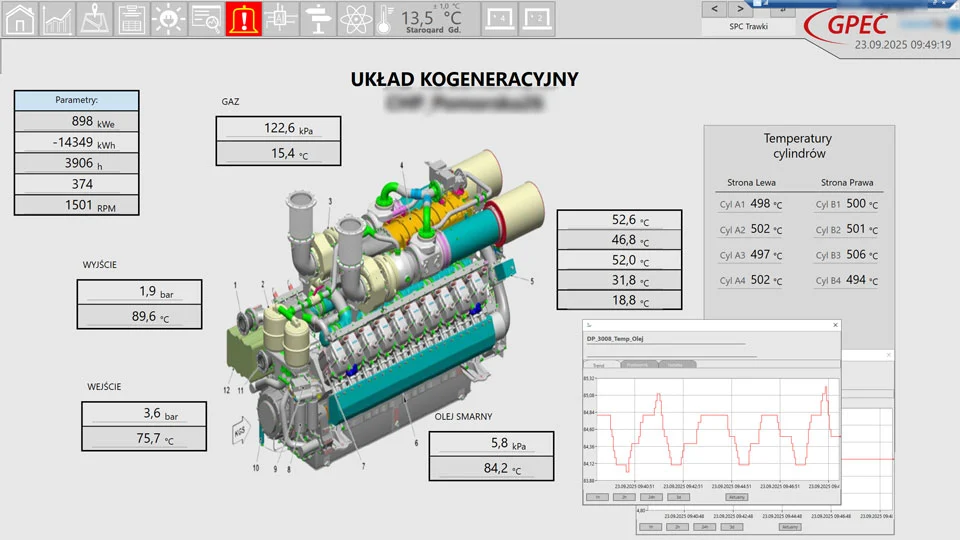 3D Cogeneration System
3D Cogeneration System
3D Cogeneration System
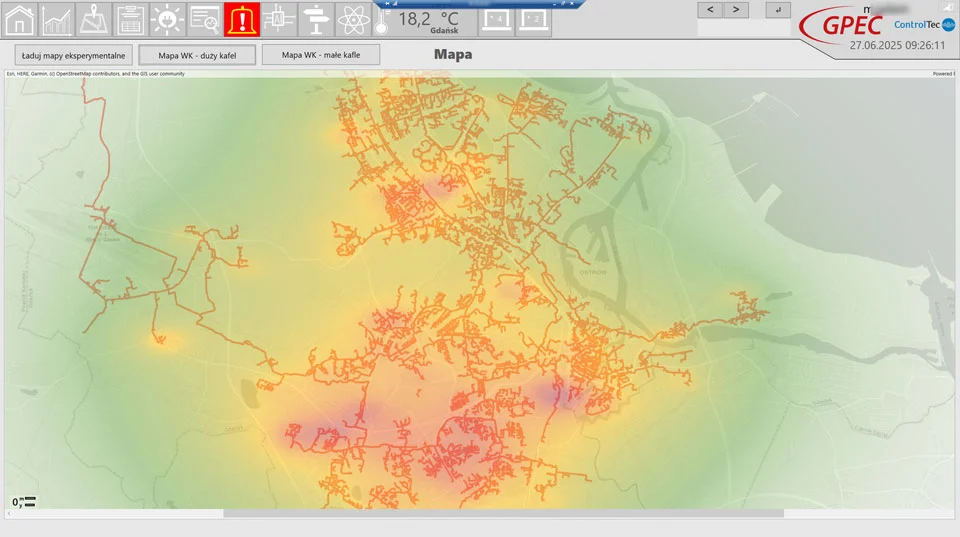 Heat Map
As the pace of technological advancement accelerated, GPEC identified an opportunity to modernize its systems. To stay ahead, the organization launched a comprehensive digital transformation initiative aimed at improving operational efficiency, enhancing data accessibility, and supporting long-term scalability.
The Group needed an automation and digitalization platform that could unify existing systems, deliver intuitive access to critical information, and evolve in step with future technological progress.
To guide this transformation, GPEC outlined clear goals for its next-generation automation and digitalization platform:
Supporting AI integrations and data from closed systems required an expanded integration environment. GENESIS automation and digitalization software was deployed to handle an additional 230,000 historical variables while enabling structured integration of AI algorithms.
The decision to deploy GENESIS was reinforced by its existing presence within the organization. Extending the platform as a dedicated integration layer provided architectural continuity, reduced integration complexity, and supported scalable innovation within a familiar and proven framework.
Heat Map
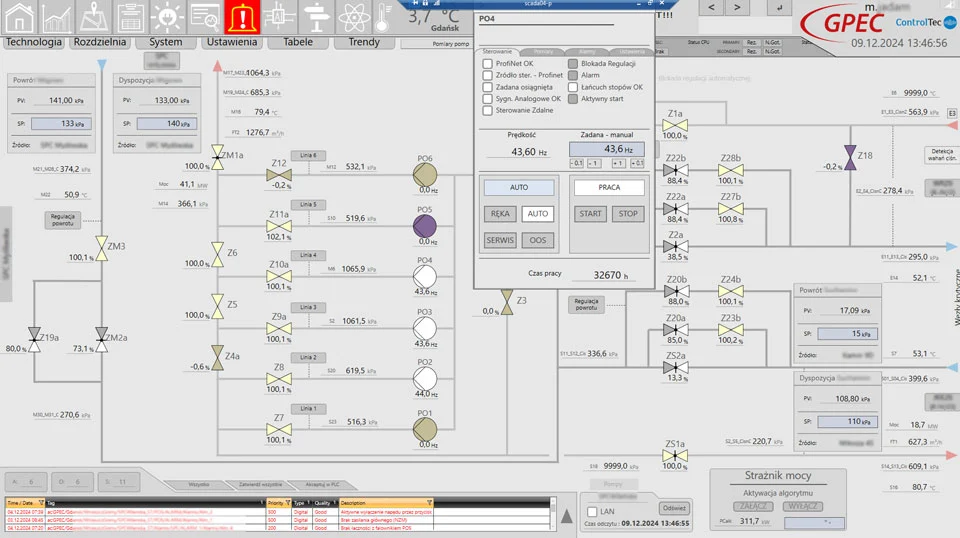 Process Overview
Process Overview
Process Overview
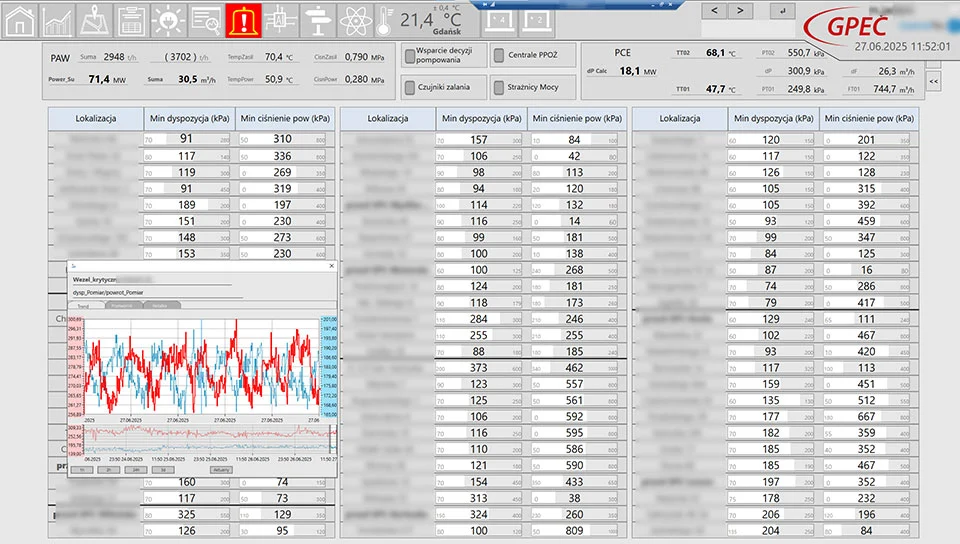 Energy Readings
GPEC realized substantial benefits following the deployment of GENESIS. The system architecture was built around four core instances of the platform:
This modular architecture delivers:
The implementation began with approximately 15,000 monitored variables, including 1,500 historical data points. Just three years later, the system now manages over 100,000 variables—13,000 of which are historical and continuously updated in real time.
The new system has dramatically improved operational visibility, responsiveness, and data accessibility across the company’s district heating network. Designed for flexibility, the system enables seamless data flow across departments, supporting both daily operations and long-term strategic planning.
Realized operational impact:
These benefits not only enhance daily operations but also help GPEC Group confidently adapt to market changes and deliver more efficient, reliable, and sustainable heating services for customers across Poland.
Energy Readings
With the implementation of GENESIS, GPEC Group successfully modernized its automation and digitalization infrastructure, achieving greater efficiency, visibility, and adaptability.
The flexibility of the platform, combined with GPEC’s growing internal expertise, ensures that the system will continue evolving to meet future challenges. As cities pursue greener, more intelligent energy solutions, GPEC Group is leading the way—armed with a future-ready digital foundation.