 English
 Czech
Czech
 German
 French
 Italian
 Japanese
 Polish
 Spanish
Category: Transportation
Beijing Traffic Control Center

Beijing, People’s Republic of China

Category: Transportation
Beijing, People’s Republic of China

“The ease of use, speed of deployment and project management capabilities of Mitsubishi Electric Iconics Digital Solutions’ GENESIS HMI/SCADA suite resulted in a 30% savings on engineering-related costs. This was a major benefit, and enabled us to meet critical deadlines prior to the 2008 Summer Olympics.”
Beijing, the capital of China and its second largest city, has a population of over 22 million people. The host city for the 2008 Summer Olympics, Beijing is also a major transportation hub, with dozens of railways, roads and motorways within its limits.
The Beijing Traffic Control Center (BTCC) was established to monitor a network of Operational Control Centers for the various rail lines operating in the country.
“The ease of use, speed of deployment and project management capabilities of Mitsubishi Electric Iconics Digital Solutions’ GENESIS HMI/SCADA suite resulted in a 30% savings on engineering-related costs. This was a major benefit, and enabled us to meet critical deadlines prior to the 2008 Summer Olympics.”
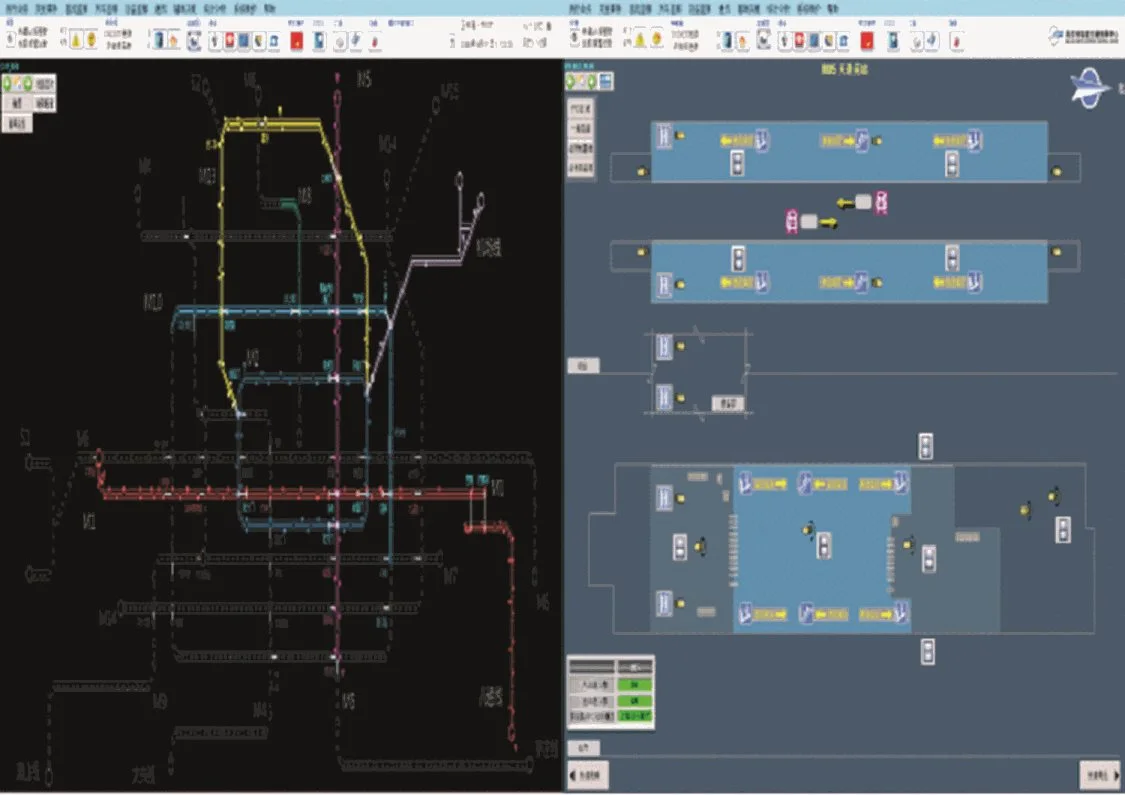 Integrated View of Beijing Rail Line Network
BTCC is using Mitsubishi Electric Iconics Digital Solutions' GraphWorX™, part of GENESIS HMI/SCADA suite, to provide a unified user interface within the monitoring and control center. A total of 50 operator stations are networked together to help monitor the traffic network.
Integrated View of Beijing Rail Line Network
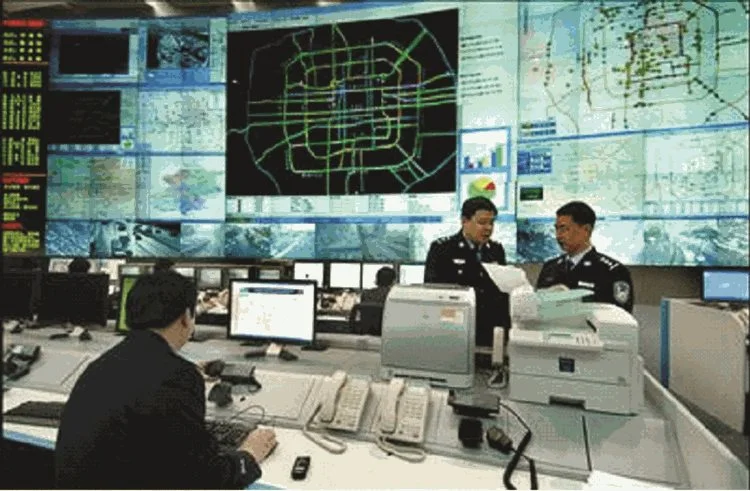 Monitor/Control Room within the Beijing Traffic Control Center
The project was mainly developed and deployed under the supervision of ST Engineering. ST Engineering is one of the largest listed companies on the Singapore Stock Exchange, with a presence in 35 countries around the world. The project requirement was to integrate various systems, with emphasis on having a unified user interface linked to real-time information. These systems include SCADA, operator information, CCTV, passenger information, decision support and incident evaluation. The completed system is linked to receive real-time information from various Operational Control Centers of various rail network lines, while the operators at BTCC are able to share the rail line data, rail line videos and reports. The completed system provides a link to an Incident Evaluation System that triggers automatic or semiautomatic plans based on certain incidents.
The operators generate various reports by following workflow guidance by the system and forward the reports to the BTCC Database. A Decision Support Database system is also available to the operators, to quickly search and retrieve supporting documents for operational work. A connected CCTV system channels live images from train stations to the Operational Control Centers as well as to BTCC operators. Since the Passenger Information System is also integrated, any emergency information can be quickly relayed to affected line passengers and to other lines for general updates.
Monitor/Control Room within the Beijing Traffic Control Center
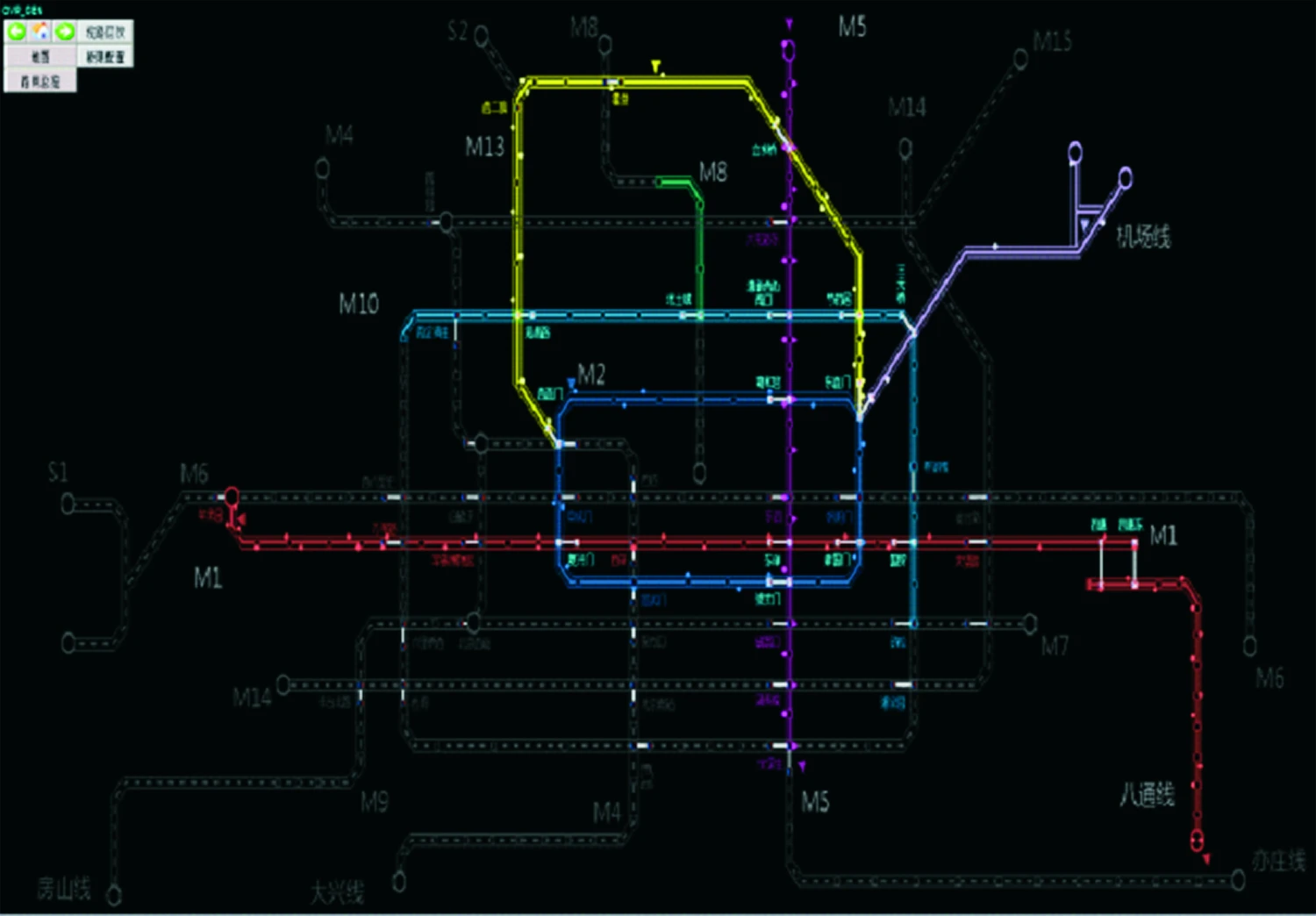 Integrated View of Multiple Rail Lines at the BTCC
With the hybrid nature of various traffic control and monitoring systems, ST Engineering looked for an application that is flexible enough to provide customization, yet has enough built-in features to start with. GraphWorX passed all the tests (stability, flexibility, robustness, longer shelf life) for what the company required. Some of BTCC’s systems were running on a non-Microsoft platform. With OPC and XML technology, those applications were seamlessly integrated into GraphWorX. Powerful automation controls have enabled the system integrator to take their customer’s application to the next level.
ST Engineering has also deployed GraphWorX at various other projects including Singapore Circular Rail and Kaohsiung Rail in Taiwan.
Integrated View of Multiple Rail Lines at the BTCC
GraphWorX provides an easy way to integrate multiple applications and systems together. With its capacity for large amounts of data, the system can handle a virtually unlimited number of data points within a screen. The native features of GraphWorX, such as templates, layers, OPC interface, and VBA controls, fully satisfy the integration needs at the programming level.
ST Engineering has saved a great deal on costs and man hours, and was able to meet the deadline of completing the project before the 2008 Summer Olympics in Beijing.