
 English
 Czech
Czech
 German
 French
 Italian
 Japanese
 Polish
 Spanish
Smart Infrastructure
Connecting Critical Infrastructure for More Resilient Operations
What is Smart Infrastructure?
Smart Infrastructure connects disparate assets, operational technology (OT), enterprise systems, and siloed data across facilities, networks, and geographic regions. For critical infrastructure, where reliable operations and service continuity are essential, bringing these environments together gives operations teams greater visibility into system conditions and performance, helping organizations manage complex infrastructure reliably and efficiently.
Smart Infrastructure can be understood through three interconnected areas: Integrated Systems, Informed Decisions, and Operational Resilience.
Integrated Systems
Connect systems, equipment, field assets, and applications across distributed environments to make operational data available wherever it is needed
Informed Decisions
Bring real-time and historical information together to understand conditions, monitor performance, identify issues, and maintain visibility across facilities and networks.
Operational Resilience
Use operational insight, automation, security, and system redundancy to respond to changing conditions, maintain continuity, and support the reliability of critical systems.
Integrated Systems: Connect Disparate Assets, Systems, and Data
Smart Infrastructure connects to different data sources and provides context. Critical infrastructure environments such as water and wastewater systems, transportation networks, utilities, and data centers can also contain equipment and technologies from different vendors and generations.
Smart infrastructure starts by connecting operational data from across these distributed environments, including:
- Control and automation systems
- Equipment and field assets
- PLCs, RTUs, and other industrial devices
- Sensors and IoT devices
- Legacy and modern systems
- Enterprise and third-party applications
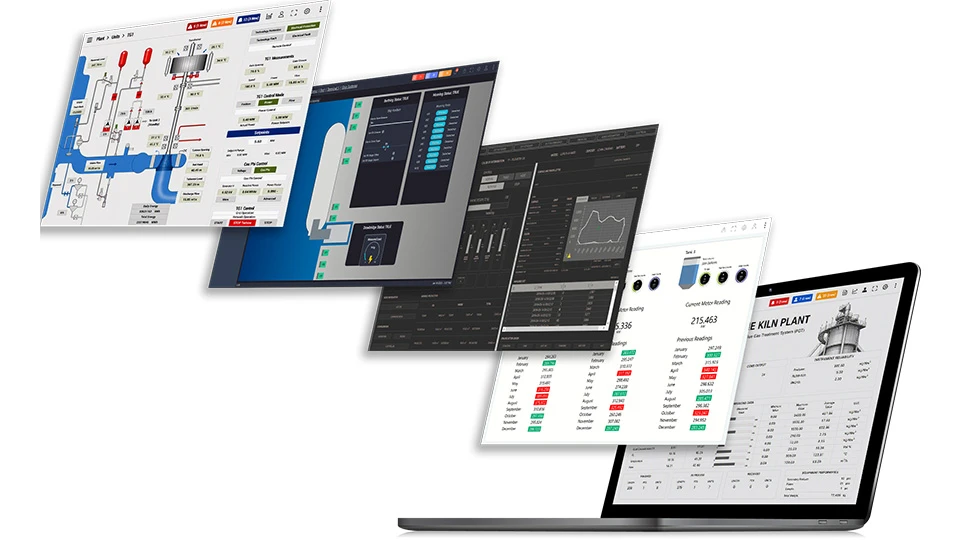
Open connectivity helps bring disparate systems, equipment, and data sources into a common operational environment. Instead of information remaining isolated within individual assets, facilities, or applications, operations teams can access the data needed to monitor and manage systems across distributed operations.
A connected foundation also allows organizations to modernize infrastructure incrementally, integrating existing and new technologies as operational requirements evolve.
Informed Decisions: See What Is Happening Across Your Operations
Connecting distributed infrastructure creates access to operational data, but teams also need a clear understanding of what is happening across systems, assets, facilities, and locations. For critical infrastructure operations, maintaining this visibility is particularly important because disruptions can affect service availability and operational continuity.
Real-time information provides visibility into current conditions, while historical data helps teams understand how performance changes over time. Together, operational and historical information provides the context needed to investigate events, recognize patterns, compare performance, and respond to changing conditions.
Operations teams can:
- Monitor distributed assets and systems in real time across facilities and locations
- Capture and store operational data to create a historical record of system conditions and performance
- Visualize complex operations through centralized dashboards and graphical interfaces
- Monitor and prioritize alarms to focus attention on conditions requiring action
- Analyze trends and historical performance to identify patterns and changing conditions
- Identify faults and investigate operational issues using real-time and historical information
- Access reports and operational KPIs to understand system performance
- Provide relevant operational information to operators, engineers, managers, and other teams
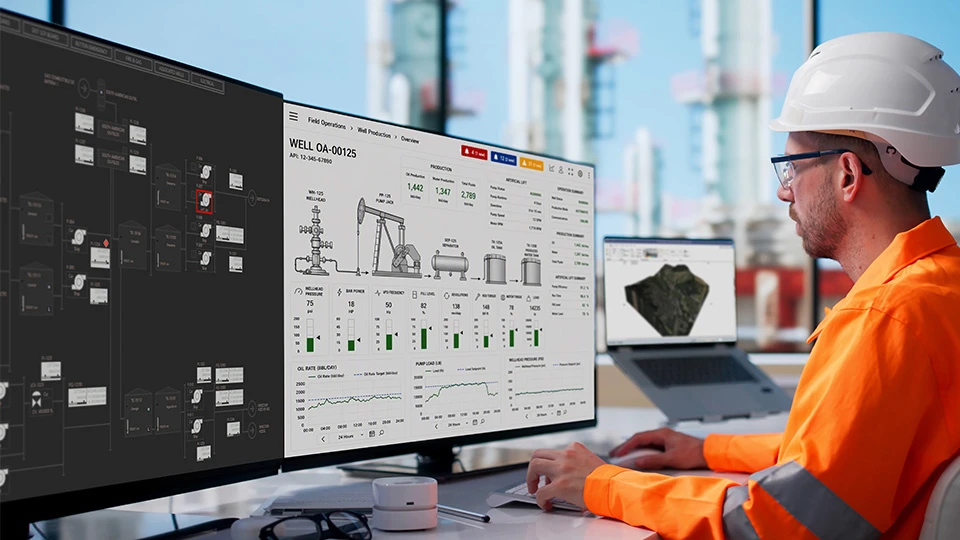
Operational Resilience: Maintain Reliable Operations Across Critical Systems
Critical infrastructure supports services and operations that require continuous availability. Equipment failures, communication interruptions, abnormal conditions, cybersecurity threats, and other operational events can affect system performance and service continuity.
Greater operational visibility helps teams identify and respond to issues earlier, while automation can initiate defined responses when specific conditions occur. Security capabilities help protect critical operational systems and data, while redundancy and high availability provide additional protection against system failures and help maintain operational continuity.
Operations teams can:
- Identify developing issues earlier using real-time monitoring, alarms, and analytics
- Reduce unplanned downtime and service disruptions through faster detection and response
- Automate operational responses based on defined conditions and requirements
- Support secure operations by helping protect critical operational systems and data
- Improve alarm and incident response by prioritizing critical conditions
- Support predictive and preventive maintenance using asset and performance information
- Improve asset reliability by monitoring equipment health and operating conditions
- Support operational continuity through redundancy and high availability
- Manage distributed operations consistently across facilities, systems, and locations
GENESIS for Smart Infrastructure
One Platform for Distributed, Critical Operations
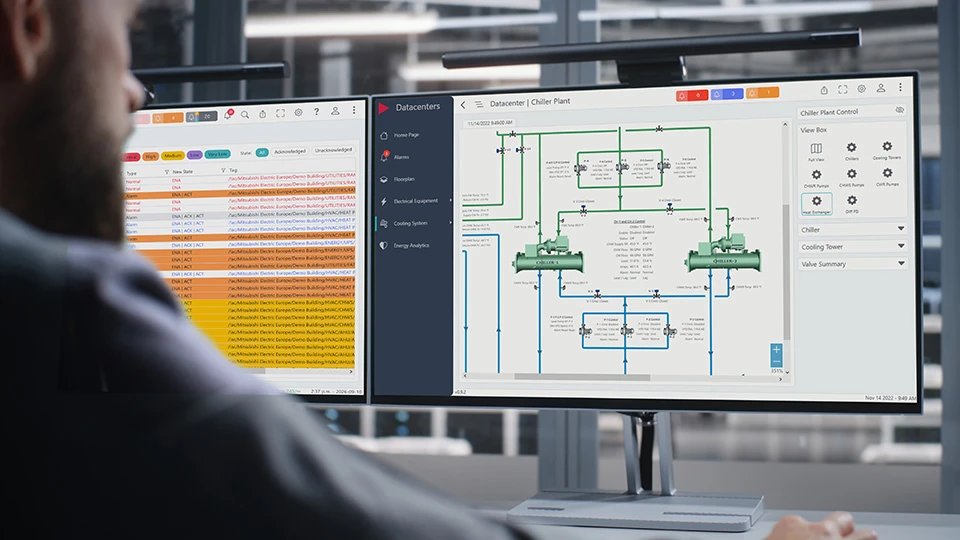
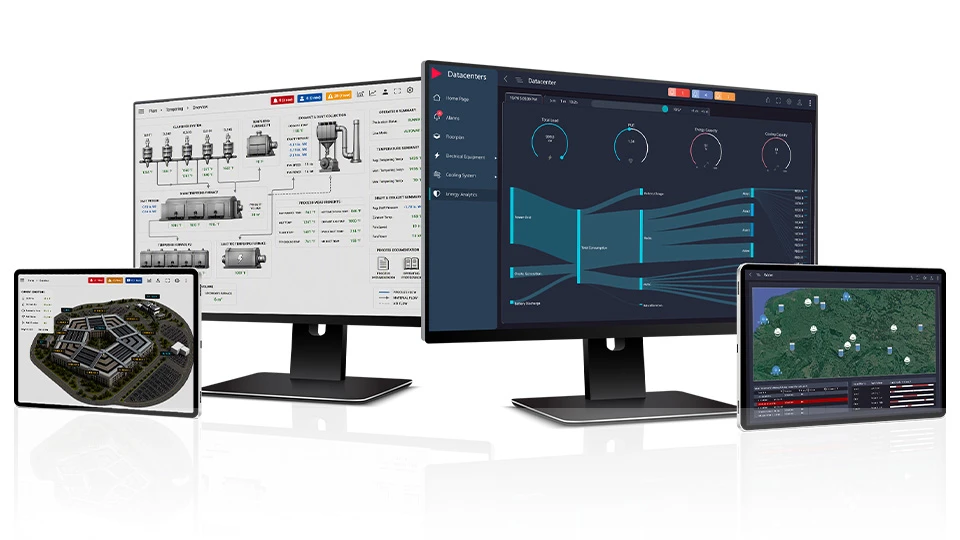
GENESIS brings connectivity, data management, visualization, control, analytics, alarming, reporting, and automation together within a unified software platform. Open connectivity provides access to operational information across diverse equipment and systems, while a data-centric architecture organizes and contextualizes information from across distributed operations.
The integrated historian captures and stores operational data over time, providing a reliable historical record for trending, analysis, reporting, and investigation. Built-in redundancy and high-availability capabilities help maintain operational continuity if individual system components become unavailable.
Centralized visualization gives teams visibility across geographically distributed systems and facilities while allowing operators to monitor conditions, investigate issues, and manage operations from a common environment.
GENESIS can scale as infrastructure networks, assets, applications, and operational requirements expand, providing a consistent software foundation for ongoing modernization
Smart Infrastructure Across Industries
Critical infrastructure sectors have distinct operational requirements, but many share the need to connect distributed systems and assets, maintain visibility across operations, and support reliable, continuous service.
Data Centers →
Centralize monitoring across critical facility infrastructure to support availability, operational resilience, and consistent management across individual sites and global portfolios.
Energy and Utilities →
Connect generation, transmission, distribution, and other operational systems to monitor performance, manage distributed assets, and support reliable energy delivery.
Government and Defense →
Connect and monitor critical facilities, systems, and assets to improve operational visibility, support continuity, and manage complex environments from a unified operational view.
Materials and Mining →
Connect remote and distributed equipment, systems, and operational assets to monitor conditions, improve visibility, and support reliable operations across geographically dispersed sites.
Transportation and Infrastructure →
Centralize visibility across transportation networks and infrastructure systems to monitor conditions, manage alarms, coordinate response, and support reliable operations.
Water and Wastewater →
Connect treatment facilities, pumping stations, distribution networks, equipment, and remote assets to monitor and manage water operations across geographically distributed systems.
Strengthen Your Infrastructure Operations
Connect distributed systems and assets, maintain visibility across operations, and give teams the information and tools needed to support reliable performance across critical infrastructure.