
 English
 Czech
Czech
 German
 French
 Italian
 Japanese
 Polish
 Spanish
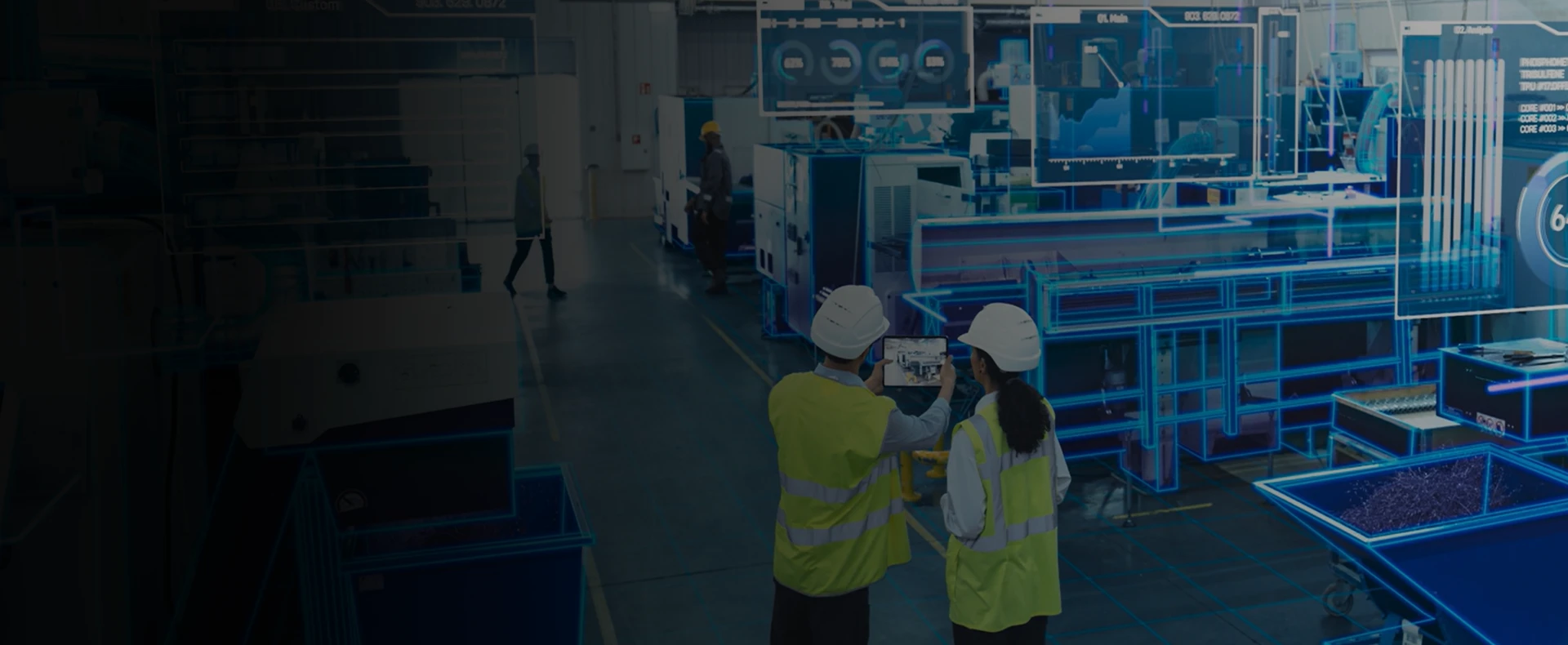
Smart Manufacturing
From Connected Production to Smart Manufacturing
What is Smart Manufacturing?
Smart manufacturing brings machines, production systems, operational data, and enterprise information together within a connected environment. Production data can then be captured, contextualized, analyzed, and applied across operations, giving manufacturers a more complete understanding of production and the information needed to continuously improve performance.
The progression from connected production to smart manufacturing can be understood in three stages: Connect, Understand, and Optimize.
Connect
Connect machines, equipment, control systems, and business applications so production data can move across the systems and teams that need it.
Understand
Capture and store operational data over time with an integrated historian to create a historical record for analysis.
Optimize
Apply operational insight, analytics, and automation to improve production performance, asset reliability, energy use, and productivity.
Connect: Connect Machines, Systems, and Production Data
Modern production environments often combine equipment and systems from different vendors, generations, and technology platforms. Smart manufacturing starts by connecting data from across this diverse production environment, including:
- Machines and production equipment
- PLCs and control systems
- Robots and CNCs
- Sensors and IoT devices
- MES and other manufacturing systems
- ERP and other business systems
Connecting these sources makes operational data accessible beyond individual machines and systems. Production teams gain a common foundation for sharing information across equipment, applications, and business systems without requiring manufacturers to replace existing technology simply to make data available.
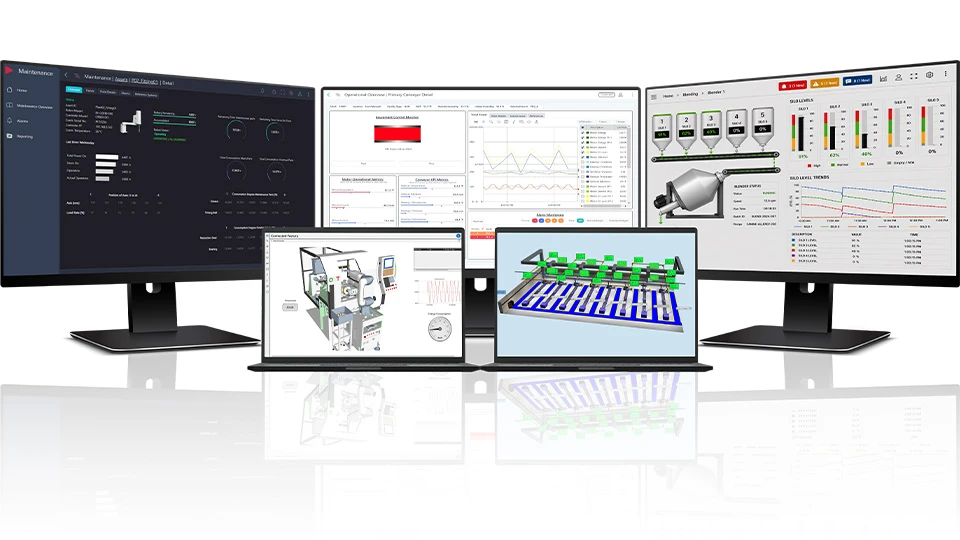
Open connectivity helps bring legacy and modern equipment into the same connected production environment, enabling manufacturers to modernize existing operations while preserving investments in operational technology.
Understand: See Production in Context
Connecting production data is only the beginning. Manufacturers also need to understand what the data represents, how conditions change over time, and how equipment, processes, and production activities affect one another.
Contextualizing operational data establishes relationships among assets, equipment, production lines, processes, and facilities. Capturing and storing that information over time provides the historical context needed to analyze trends, investigate events, compare performance, and understand how production is changing.
Manufacturing teams can:
- Capture and store operational data with an integrated historian
- Visualize production conditions in real time across equipment, processes, and production lines
- Analyze trends and historical performance to identify patterns and changes over time
- Track OEE and other production KPIs to understand availability, performance, and quality
- Monitor alarms and abnormal conditions and focus attention on issues requiring action
- Identify faults and investigate root causes using operational and historical information
- Compare performance across assets, production lines, and facilities
- Integrate operational and business information to provide greater context for production decisions

Optimize: Improve Performance Across Production
A clearer understanding of production gives manufacturers the information needed to identify where performance can improve and where action can have the greatest operational impact.
Manufacturing teams can use operational insight, analytics, and automation to:
- Reduce unplanned downtime by identifying developing equipment and process issues
- Improve OEE by understanding the factors affecting availability, performance, and quality
- Improve production quality and consistency through greater visibility into process conditions
- Optimize energy consumption by monitoring how energy is used across equipment and production
- Support predictive and proactive maintenance using equipment condition and performance data
- Automate workflows and operational responses based on defined conditions and requirements
- Increase productivity by reducing manual processes and improving access to production information
- Support continuous improvement with historical data and measurable performance insight
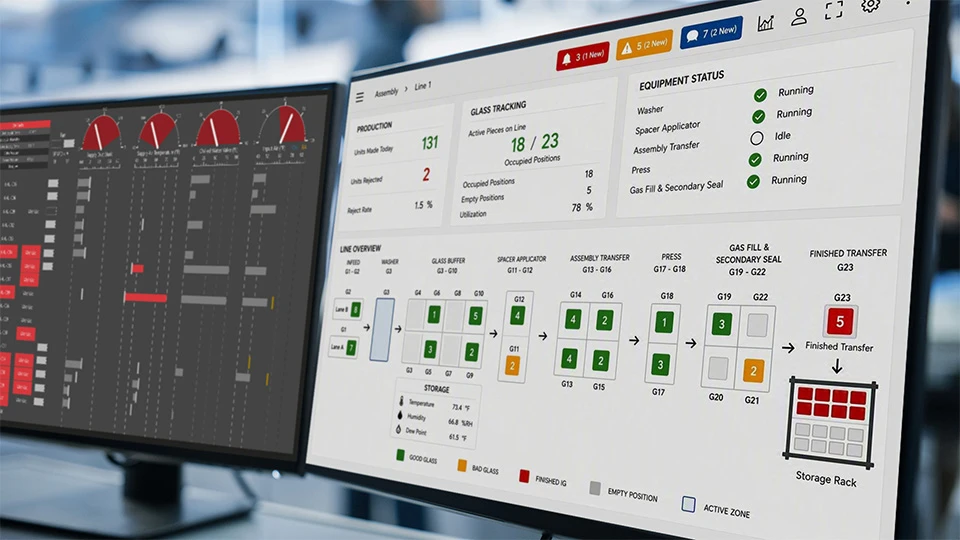
GENESIS for Smart Manufacturing
One Platform From Connectivity to Optimization
GENESIS brings the capabilities behind smart manufacturing together within a single software platform. Open connectivity provides access to data across diverse production equipment and systems, while a data-centric architecture connects and contextualizes operational information. The integrated historian captures and stores operational data over time, providing a reliable historical record for trending, analysis, reporting, and performance comparisons.
Visualization, analytics, alarming, reporting, and automation capabilities help manufacturing teams monitor production, investigate issues, understand performance, and improve operations. Built-in security capabilities help protect critical applications, systems, and operational data across connected production environments.
The same platform can support operations from individual machines and production lines to multiple facilities, providing a consistent foundation for manufacturers to expand digital capabilities as operational requirements evolve.
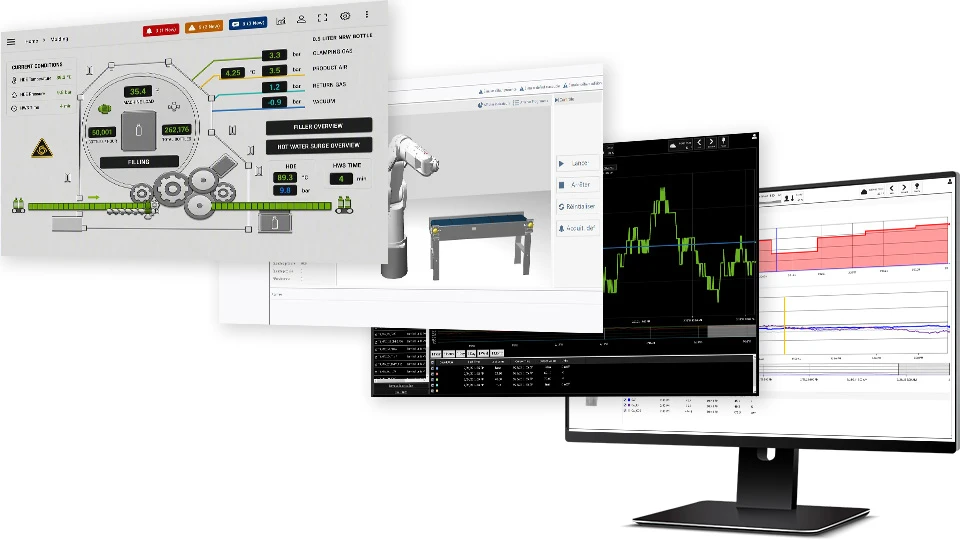
Smart Manufacturing Across Industries
Manufacturing environments vary by industry, but many share the need to connect production equipment and systems, improve visibility across operations, and continuously improve productivity, quality, and reliability.
Automotive and Tire →
Connect production systems across assembly, component manufacturing, and tire production to monitor performance, improve OEE, support quality and traceability, and reduce unplanned downtime.
Food and Beverage →
Connect production lines, equipment, and process data to monitor performance, improve efficiency, support product quality, and maintain visibility across production.
Life Sciences →
Connect production, quality, and facility systems to improve operational visibility while supporting traceability, reporting, and regulatory requirements.
Manufacturing →
Connect machines, production lines, quality systems, and enterprise applications across discrete, hybrid, and process manufacturing environments.
Materials and Mining →
Connect extraction, processing, and production operations to improve visibility, equipment performance, energy management, and operational coordination
Oil, Gas, and Chemicals →
Connect process equipment, control systems, and operational data to monitor production, analyze performance, and improve process reliability.
Ready to Advance Your Manufacturing Operations?
Connect your production environment and give your teams the visibility, insight, and tools needed to improve performance across machines, lines, and facilities.