English
 Czech
Czech
 German
 French
 Italian
 Japanese
 Polish
 Spanish
Hôpital Privé du Confluent
Key points
- Centralized supervision of hospital building systems using GENESIS, integrating more than 100 controllers across multiple protocols including BACnet IP and Modbus IP.
- Continuous monitoring of technical alarms and critical facility systems supporting operating rooms, imaging areas, and hospital infrastructure.
- Enhanced energy monitoring and system optimization through real-time data collection, trend analysis, and long-term performance monitoring.
Challenges
- Replace two legacy supervision platforms without disrupting critical hospital operations.
- Integrate 100+ controllers from multiple manufacturers and protocols into one monitoring environment.
- Improve visibility into alarms, equipment performance, and energy use while supporting future expansion.
Outcomes
- Centralized monitoring, control, and energy management across 100+ building automation controllers.
- Enabled 24/7 alarm monitoring and faster fault diagnosis, improving visibility and maintenance efficiency.
- Established a scalable, redundant architecture supporting reliable operations and future expansion.
“GENESIS is a monitoring solution renowned for its quality and reliability, particularly suited to projects with high technical requirements.”
Smart Building Supervision and Energy Monitoring for a Modern Healthcare Facility
Hôpital Privé du Confluent, located in Nantes, France, is a leading healthcare provider in the Pays-de-la-Loire region. The hospital offers more than 50 medical and surgical specialties and operates with a team of approximately 210 practitioners and 1,100 employees. The facility manages significant patient volumes, including approximately 33,000 emergency visits and 78,000 hospital stays each year. Daily operations remain equally intensive, with around 280 procedures performed in operating rooms each weekday. To support this level of activity, the hospital maintains a capacity of 254 beds and treatment spaces.
The establishment joined the Vivalto Santé Group in 2019. As the third-largest private hospital group in France, Vivalto Santé is recognized for its innovative governance model and its commitment to patient-centered care across the entire healthcare journey.
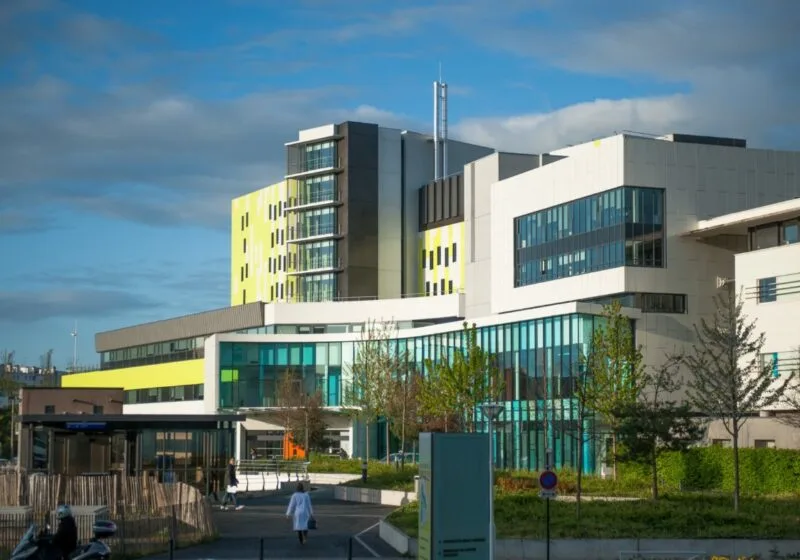
Hôpital Privé du Confluent, located in Nantes, France
The Challenge
Operating a modern hospital requires reliable technical infrastructure capable of supporting critical healthcare environments. Spaces such as operating rooms and imaging facilities depend on strict temperature control, precise air quality management, and continuous monitoring of building systems to ensure safe clinical operations.
Given these requirements, the Hôpital Privé du Confluent needed a centralized building supervision platform capable of integrating a wide range of building automation controllers while maintaining uninterrupted monitoring of alarms and equipment performance. The hospital also sought improved visibility into energy consumption and technical system performance to support operational efficiency and long-term energy optimization.
The project required a solution capable of:
- Integrating building automation controllers from multiple manufacturers
- Supporting communication across multiple industrial protocols
- Providing centralized supervision of building systems and alarms
- Improving visibility into energy consumption and technical system performance
- Supporting future system expansion and infrastructure integration
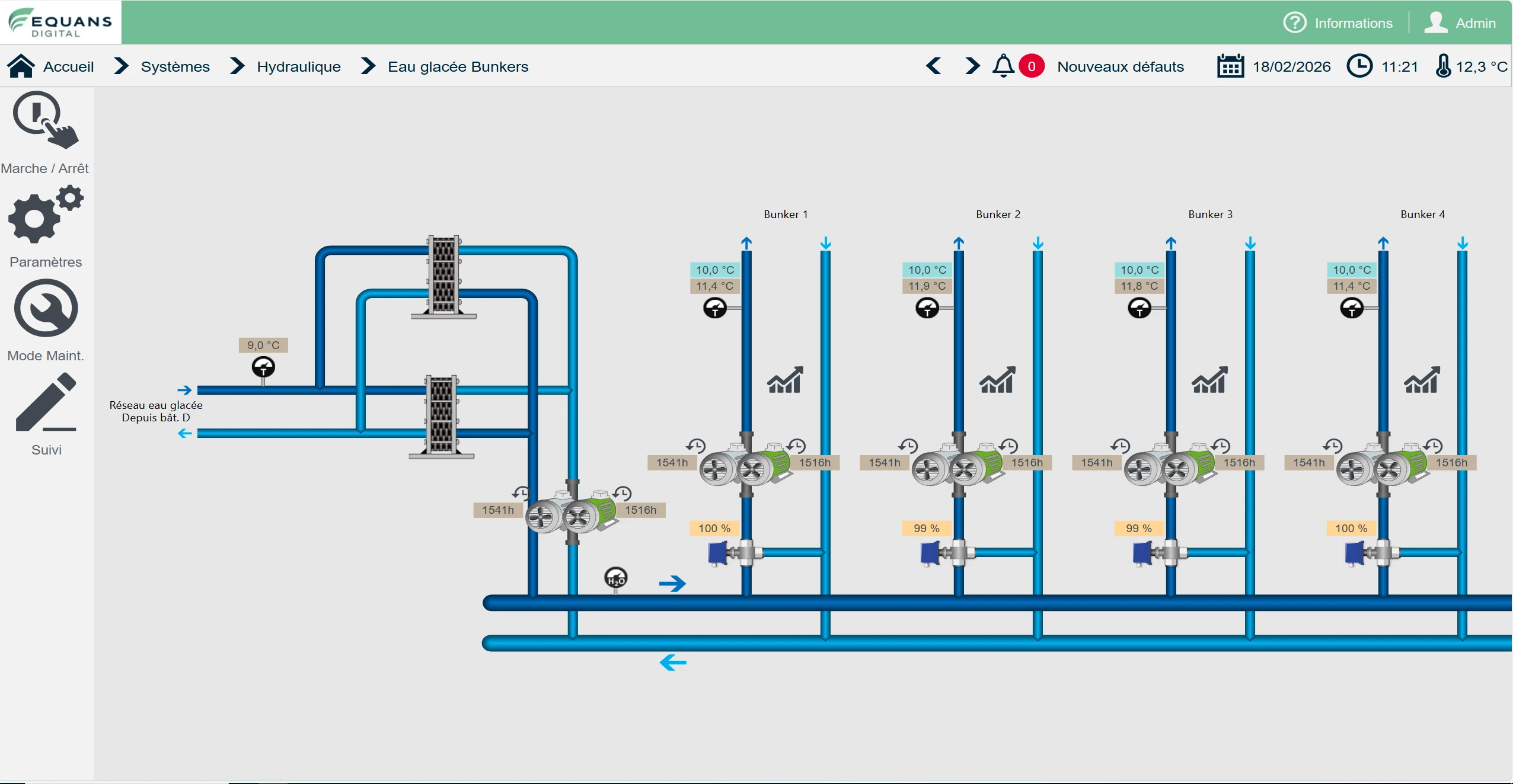
Chilled Water Process
To support this modernization effort, the hospital partnered with Equans Digital, a global digital systems integrator specializing in automation, information and communication technologies (ICT), and infrastructure performance. Working closely with the hospital’s technical teams, Equans Digital evaluated solutions capable of replacing two legacy supervision platforms while integrating the diverse range of controllers installed throughout the facility.
The GENESIS automation and smart building platform from Mitsubishi Electric Iconics Digital Solutions was selected for its ability to communicate across multiple industrial protocols and integrate equipment from different manufacturers. This capability was essential because the hospital’s infrastructure includes a wide variety of PLC brands deployed over time. The platform’s scalability also enables the integration of additional technical systems in the future, including cooling units and operating room air handling systems as the hospital continues to expand.
The Results
Deployment of the GENESIS automation and smart building platform modernized supervision of the hospital’s building infrastructure and created a centralized environment for monitoring, control, and energy management across the facility.
The platform now communicates with more than 100 controllers across the hospital site using BACnet IP and Modbus IP protocols. Controllers include equipment from multiple manufacturers, including Beckhoff, Honeywell (SAIA), Sofrel, Carel, and Siemens. The new platform replaced two legacy Siemens supervision systems, DESIGO CC and DESIGO Insight, establishing a unified environment for monitoring and managing technical infrastructure. The system architecture includes:
- One primary virtual machine
- One redundant server to enable load balancing and improve reliability
- Five client workstations to provide access to monitoring and supervision tools
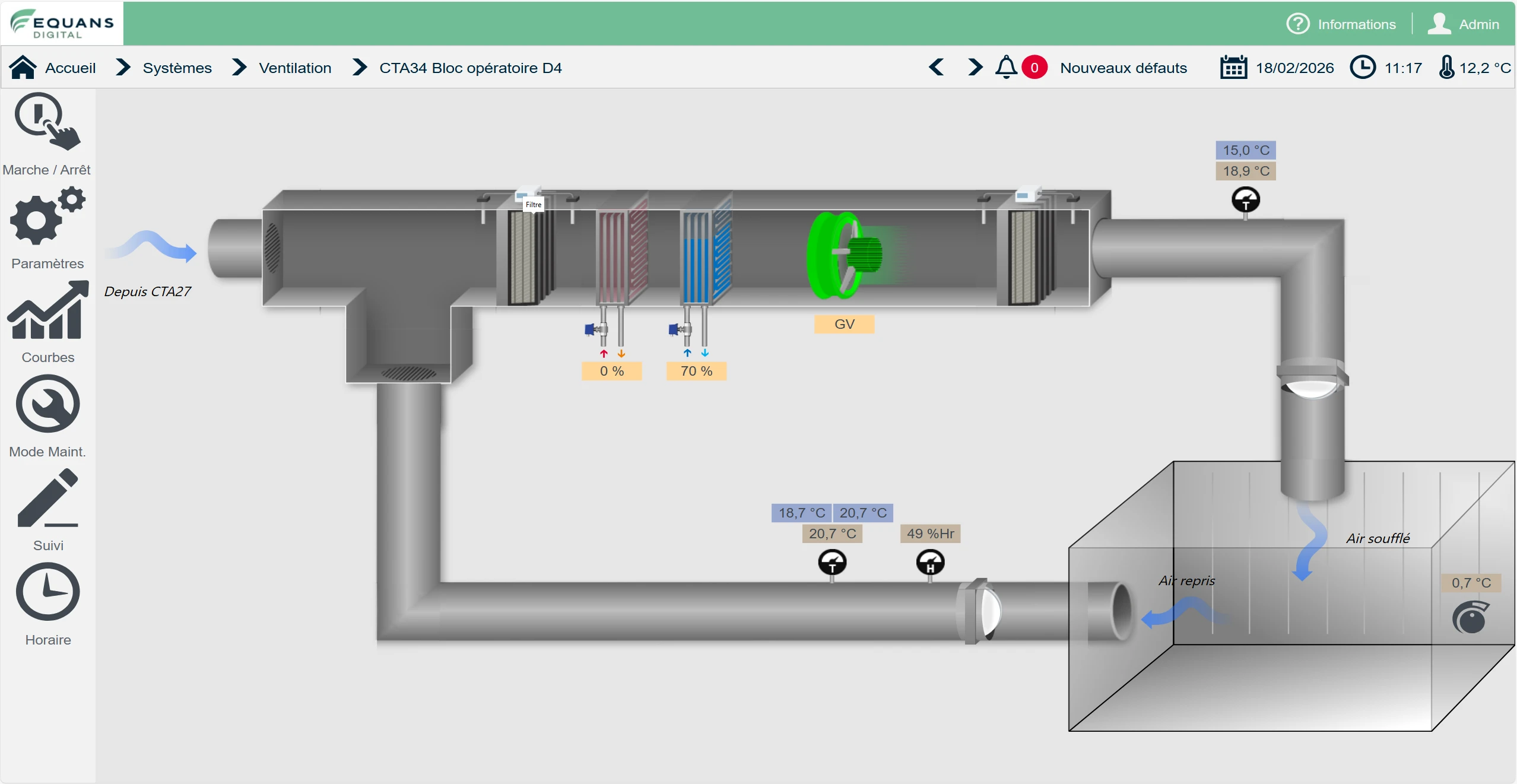
Air Handling Unit Dashboard
With this architecture in place, GENESIS supports key operational capabilities across the hospital’s building infrastructure:
- Continuous 24/7 monitoring of technical alarms across building systems
- Supervision of technical systems and control parameters, including PID settings and operating times
- Energy monitoring of equipment, including consumption tracking and domestic hot water temperature
Following deployment, the system delivered measurable improvements in operational visibility, system monitoring, and maintenance efficiency. The platform provides reliable data collection, logging, and long-term storage of operational data across technical systems.
Localized alarms displayed directly on building plans enable maintenance teams to identify and diagnose faults quickly. Historical data and trend analysis tools support long-term optimization of heating control strategies and temperature management, particularly in sensitive environments such as operating rooms.
Additional benefits include:
- Improved monitoring of building systems and technical alarms across the facility
- Faster diagnosis of equipment issues through contextualized alarm visualization
- Integrated access to technical documentation within the system interface
- Simultaneous multi-user access to system data without service interruption
- Enhanced monitoring of energy consumption and technical system performance
The resulting environment enables consistent, data-driven management of building systems across the hospital’s complex operational landscape.
Conclusion
By deploying the GENESIS automation and smart building platform, the Hôpital Privé du Confluent successfully modernized supervision of its building infrastructure while maintaining uninterrupted hospital operations.
The platform now provides a scalable and reliable foundation for monitoring technical systems, optimizing energy consumption, and supporting facility teams responsible for maintaining the hospital’s complex building environment.
Looking ahead, the system architecture will continue to evolve as new projects are integrated. A second hospital in the region is currently under development. The organization plans to use the GENESIS Hypervision architecture to enable centralized supervision of both hospital sites from a single monitoring environment.
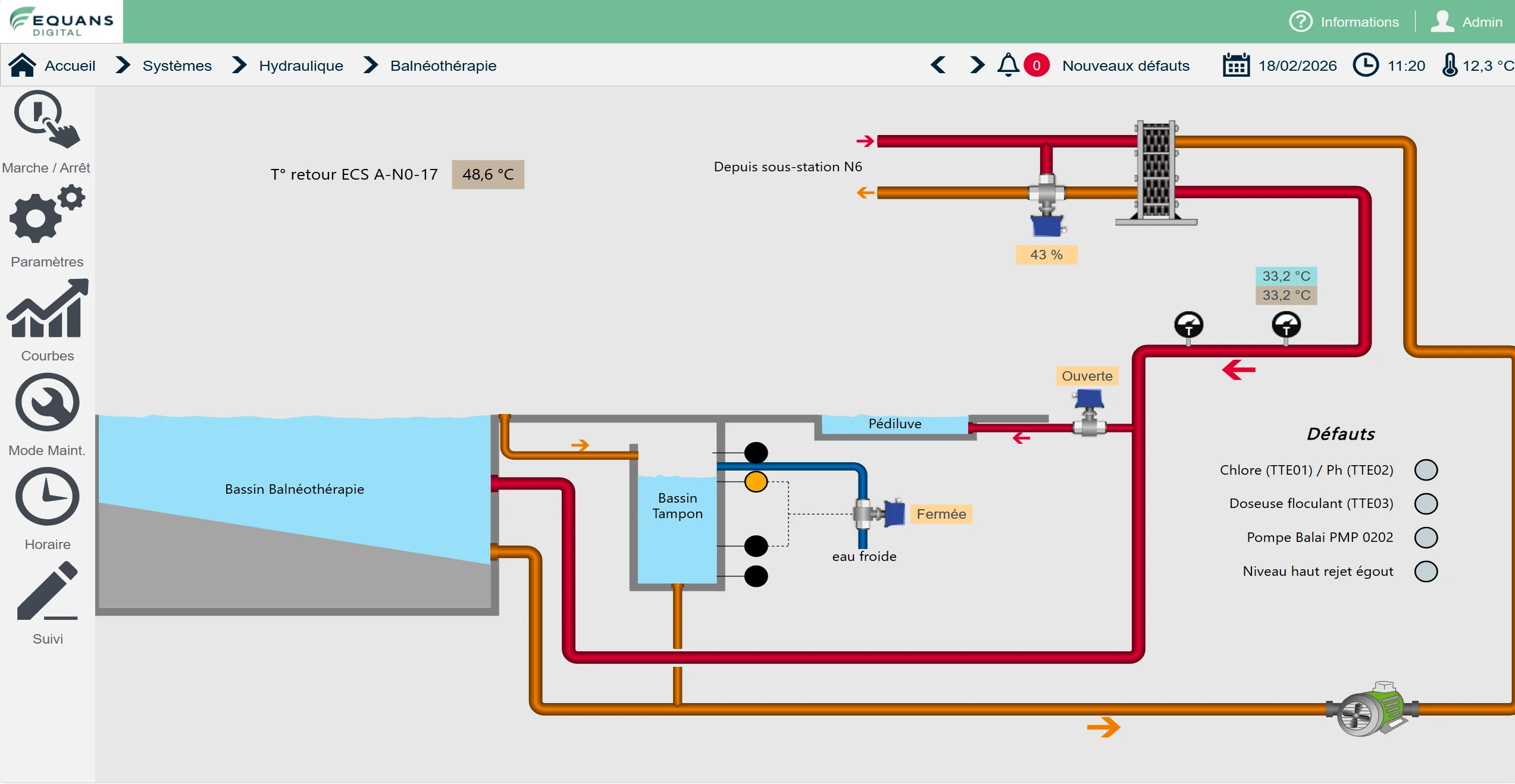
Balneotherapy Pool Monitoring
GENESIS Hypervision allows multiple GENESIS systems operating at different facilities to be connected under one supervisory layer. This architecture enables technical teams to monitor alarms, energy performance, and equipment status across several buildings or sites through a unified interface. By consolidating operational data from multiple facilities, Hypervision supports faster incident response, improved system oversight, and more consistent management of building infrastructure across the hospital network.