English
 Czech
 German
 French
 Italian
 Japanese
 Polish
 Spanish
Rabobank
Key points
- Replaced fragmented, end-of-life building management systems with a unified GENESIS platform, eliminating vendor lock-in and establishing a scalable, future-ready architecture
- Standardized data structures and system design across multiple legacy environments, improving data consistency, analysis, and long-term operational flexibility
- Established a secure, compliant foundation aligned with strict IT requirements, supporting future integration, sustainability initiatives, and advanced data-driven applications
Challenges
- Replace fragmented, end-of-life building management systems from multiple vendors while reducing operational risks and avoiding continued vendor lock-in.
- Align building operations with strict IT security and compliance requirements while maintaining uninterrupted operations during migration.
- Standardize inconsistent data structures and establish a scalable architecture to support evolving sustainability, regulatory, and business requirements.
Outcomes
- Unified legacy building management systems on GENESIS, improving operational visibility, consistency, and control while eliminating vendor lock-in.
- Established a secure architecture aligned with IT governance requirements and completed a phased migration without disrupting building operations.
- Standardized data structures to improve data quality and analysis, creating a scalable foundation for future integrations, energy optimization, and AI applications.
“The project delivered far more to Rabobank than just a replacement of their building management systems. What now stands is a foundation that combines security, simplicity, and agility. And that is truly future-proof.”
Secure, Scalable Building Operations Platform for Future-Ready Infrastructure
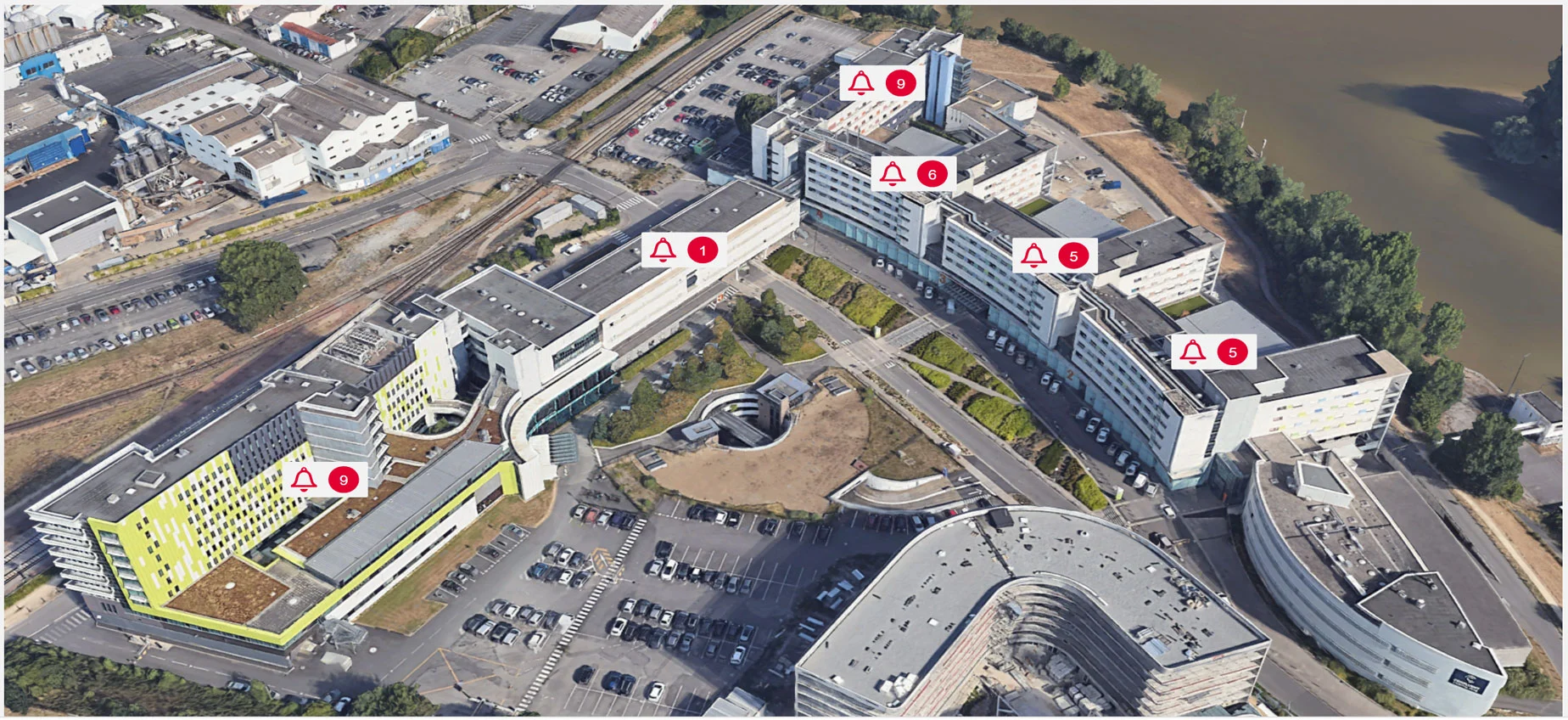
Rabobank is a leading global financial services organization headquartered in Utrecht, the Netherlands. As one of the largest banks in the Netherlands and a key player in the global financial sector, Rabobank focuses on food, agriculture, and energy industries.
A cooperative heritage and global presence support Rabobank’s mission of “Growing a better world together.” Continuous investment in secure, efficient, and future-ready infrastructure supports evolving business and regulatory demands.
About Rabobank
Rabobank faced a critical transformation challenge across building operations. Multiple legacy building management systems from different vendors operated in parallel across key locations, creating fragmentation, inefficiencies, and increased operational risk.
Existing systems had reached end of life and ran on outdated software no longer supported by IT. Mitigation measures were required to maintain security in an environment with rapidly increasing cybersecurity requirements.
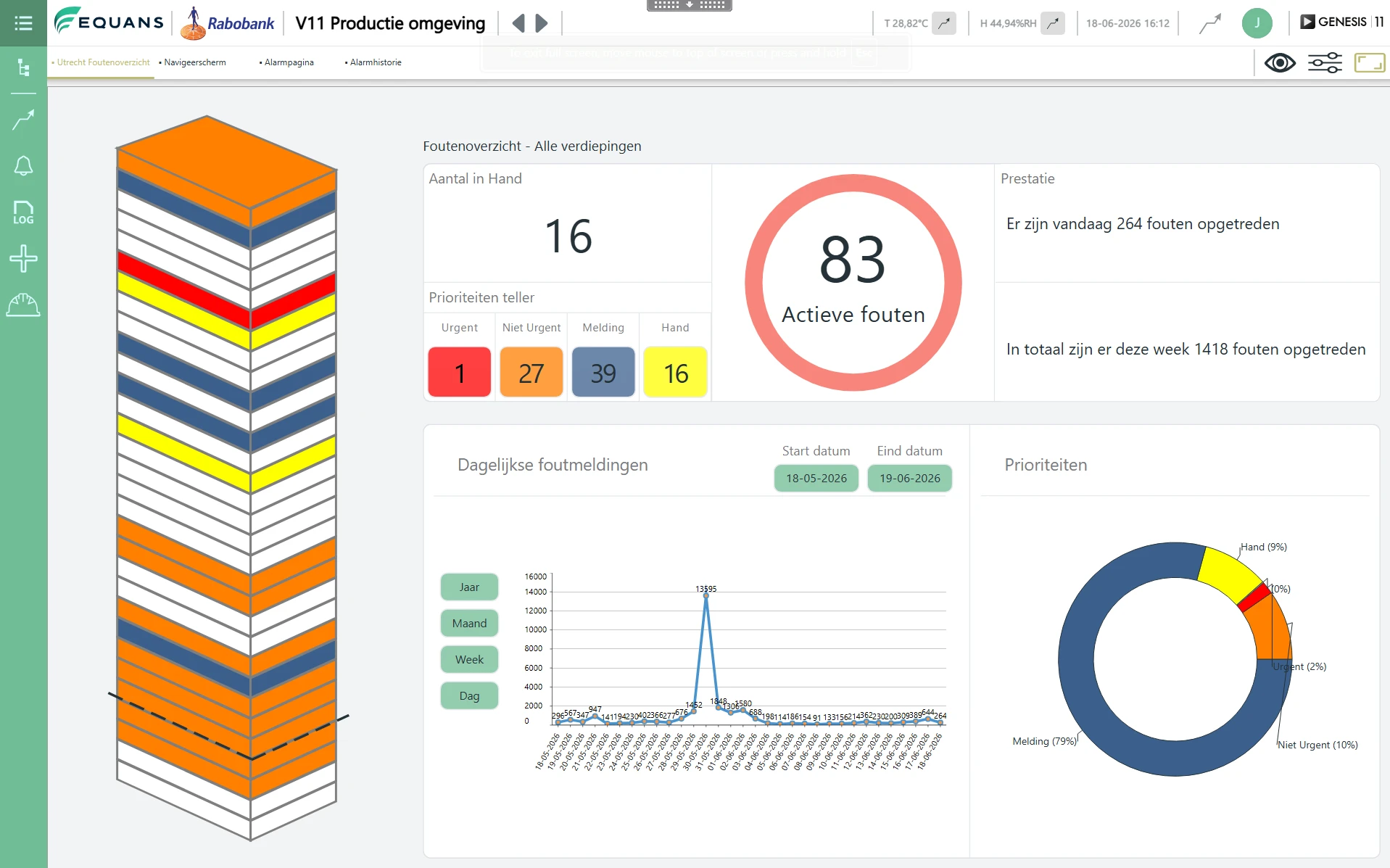
Alarm System Overview
The Challenge
Several strategic challenges shaped the transformation:
- Aligning building systems with strict IT security and compliance requirements
- Gaining control over fragmented systems, data, and operational visibility
- Supporting evolving sustainability and regulatory frameworks such as GACS and EPBD
- Avoiding long-term dependency on a single vendor
- Establishing a flexible, future-ready architecture capable of adapting to changing business needs
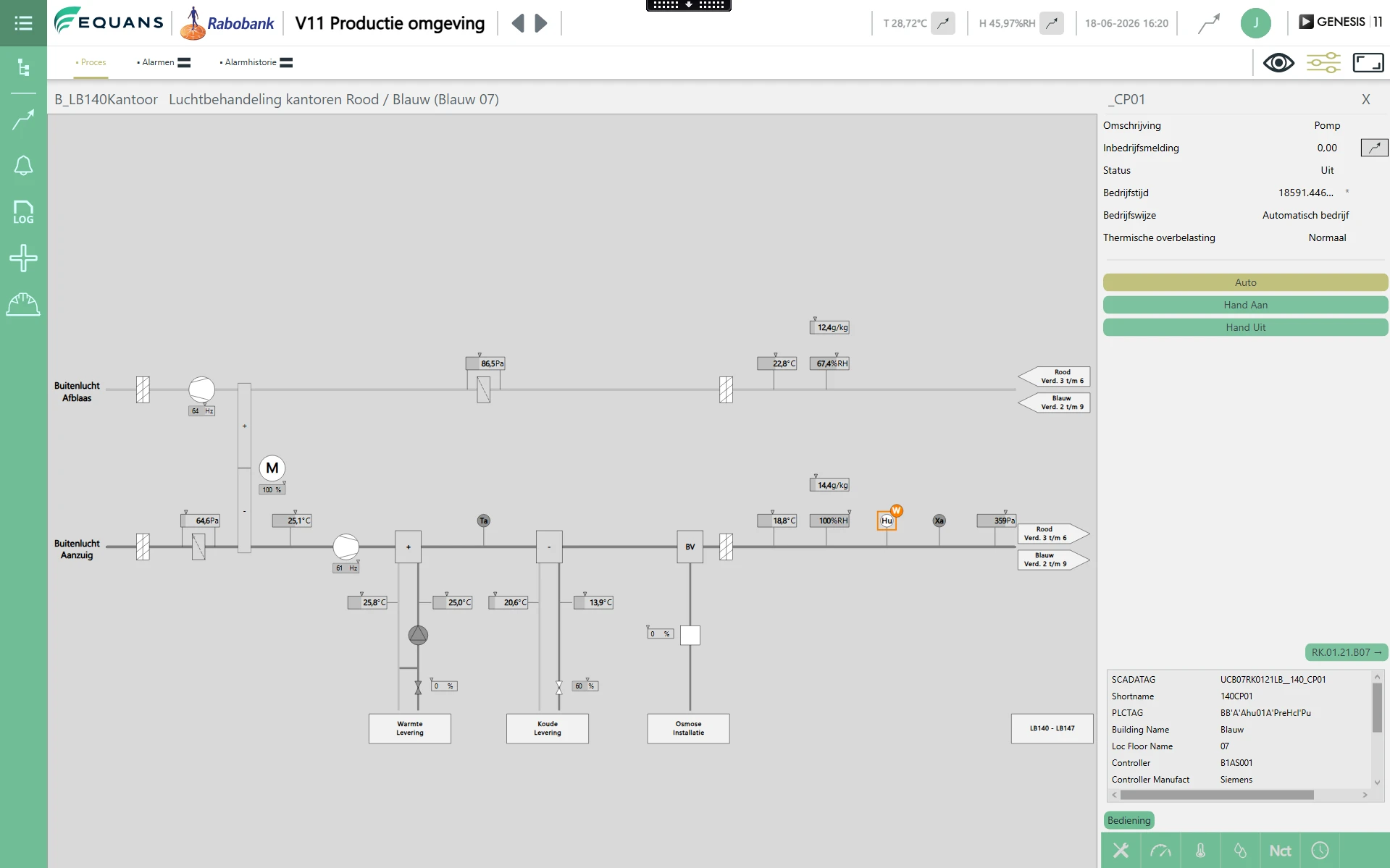
Airhandling Unit Dashboard
Replacing systems one-to-one would not resolve these challenges. That approach would reinforce vendor dependency and limit long-term flexibility. Rabobank instead initiated a broader investigation based on a clear principle: as simple as possible, as complex as necessary, with a focus on long-term scalability and compliance.
To support this transformation, Rabobank worked in close collaboration with EQUANS, an industrial automation and master system integration (MSI) specialist and Mitsubishi Electric Iconics Digital Solutions Certified system integrator partner. Drawing on extensive experience integrating complex hardware and software environments, the team helped Rabobank transition from fragmented legacy systems to a scalable, future-ready architecture. Prodek, the local distributor of Mitsubishi Electric Iconics Digital Solutions in the Benelux, also supported the project.
This collaboration ensured that both IT and operational requirements were addressed from the outset, enabling Rabobank to define a structured and future-oriented path forward.
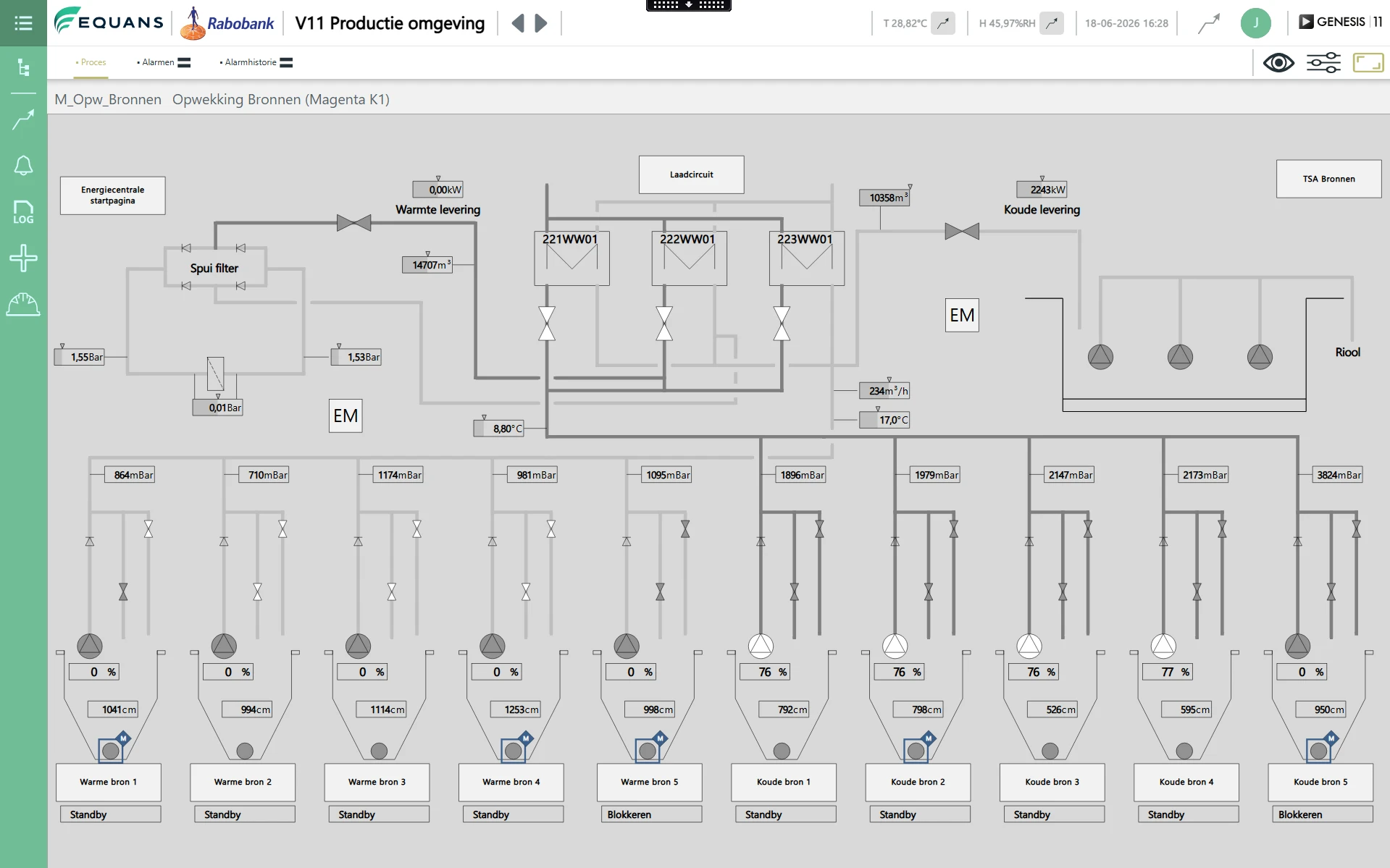
Thermal Energy Storage Dashboard
The Results
The transformation delivered benefits beyond system replacement. By modernizing its building operations platform and establishing a standardized, secure architecture with GENESIS, Rabobank improved operational consistency, strengthened compliance readiness, reduced vendor dependency, and created a scalable foundation for future innovation.
Key Technical Improvements
- Standardized Data Structure (GBS 4.0)
A uniform approach to structuring objects, tags, and visualizations replaced previously inconsistent configurations. This standardization improved data quality, comparability, and reusability, enabling more effective analysis and long-term scalability. - Architectural Alignment Using the Purdue Model
A clear separation between IT and operational environments established controlled communication between layers. This architecture improved system availability and ensured security by design. - Agile Migration with Zero Operational Disruption
Migration was executed step by step using OTAP environments (development, testing, acceptance, and production). Each component was validated before deployment, ensuring uninterrupted operations throughout the transition.
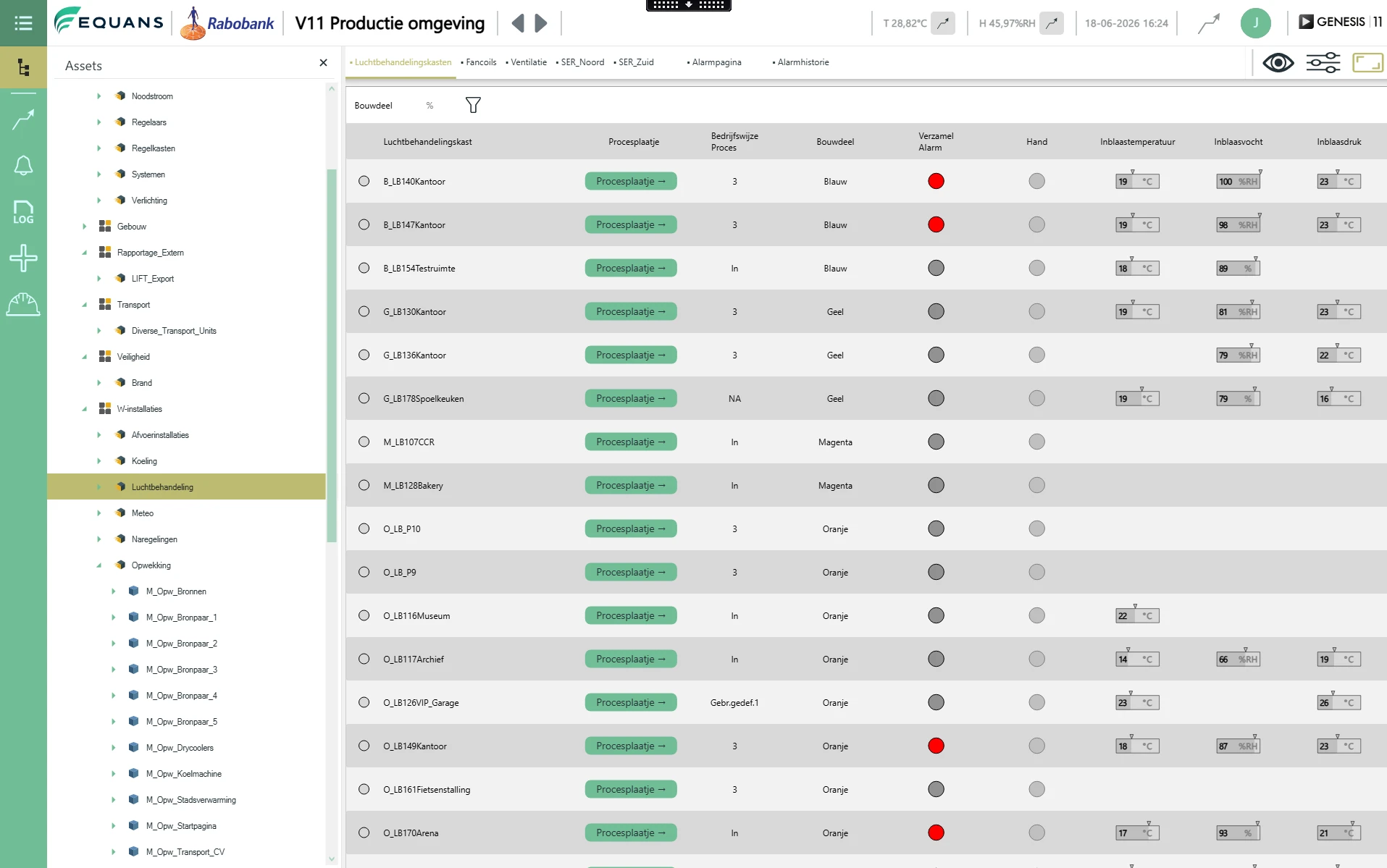
Airhandling Units Overview
Strategic Business Benefits
- Improved Operational Control and Visibility
Standardized data structures and a unified platform improved consistency across building operations, providing better visibility and supporting more informed decision-making. - Stronger Security and Compliance Alignment
The new architecture aligns with strict IT governance requirements while creating a foundation for future regulatory compliance initiatives, including Building Automation and Control Systems (BACS) requirements under the Energy Performance of Buildings Directive (EPBD) and the Smart Readiness Indicator/GACS framework. - Elimination of Vendor Lock-In
An open platform approach ensures systems and vendors remain interchangeable, providing long-term flexibility and reducing dependency on a single supplier. - Foundation for Advanced Data Use
The standardized data structure supports improved analysis and creates opportunities for future applications including machine learning, AI, and advanced operational optimization. - Scalable Foundation for Future Growth
The platform provides a flexible architecture capable of supporting future integration, sustainability initiatives, and evolving business requirements without requiring fundamental redesign.
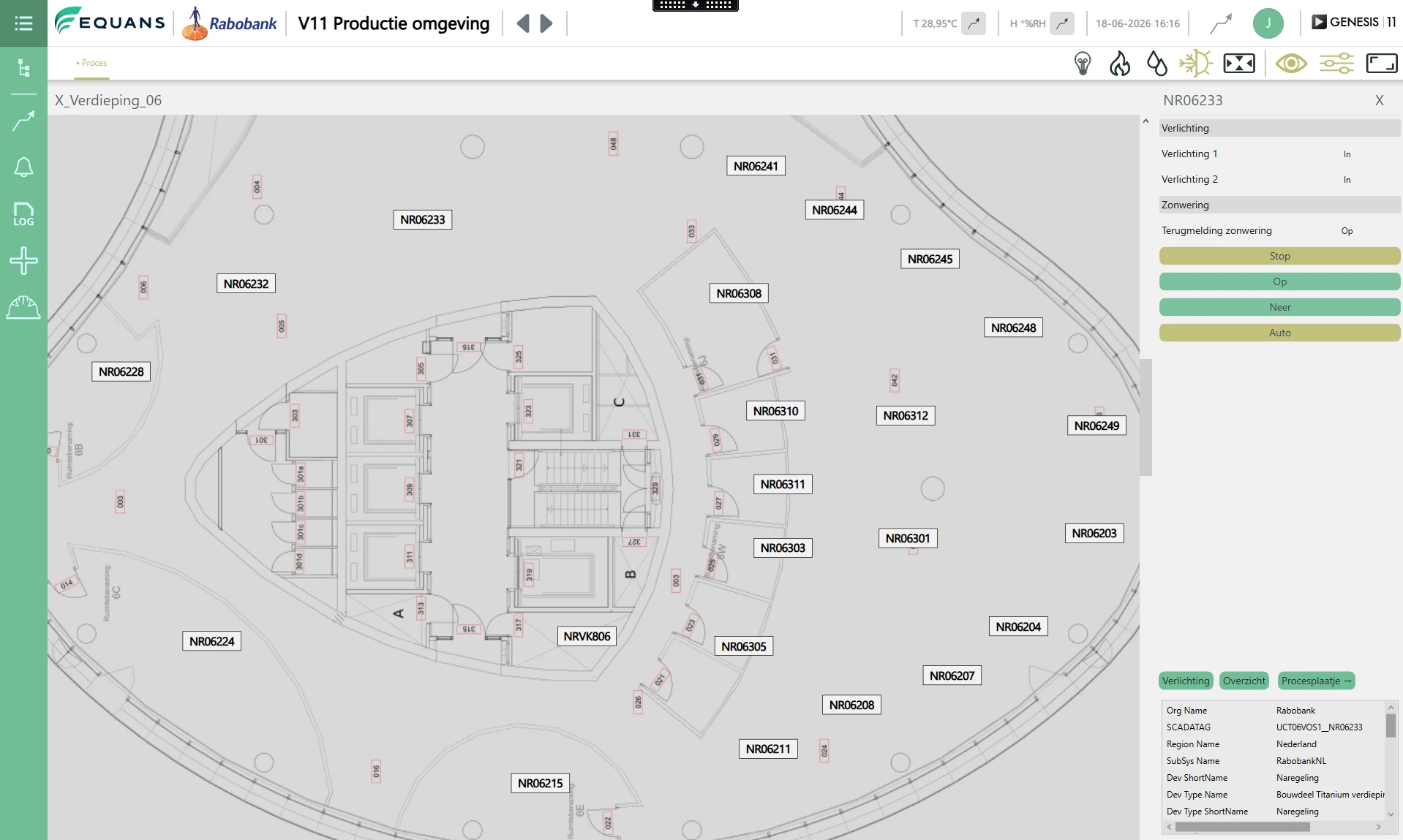
Floor 6 Operations
Conclusion
Rabobank moved beyond a traditional system replacement approach to establish a secure and scalable foundation for building operations aligned with long-term business and regulatory requirements.
Standardized architecture and data structures provide a strong basis for future development, including expanded data analysis, energy optimization, and smart building functionality. Regulatory European frameworks such as EPBD and GACS will continue to drive further advancements.
The GENESIS platform also creates a foundation for scaling across Rabobank’s evolving portfolio. Changing building strategies, regulatory requirements, and sustainability goals require flexibility. The platform supports expansion and integration of new capabilities without requiring fundamental redesign.
Collaboration across IT, operations, EQUANS, and Prodek enabled a solution that addresses current challenges while supporting long-term growth. The result is a resilient building operations platform designed to adapt as business needs, technologies, and regulatory expectations continue to evolve.
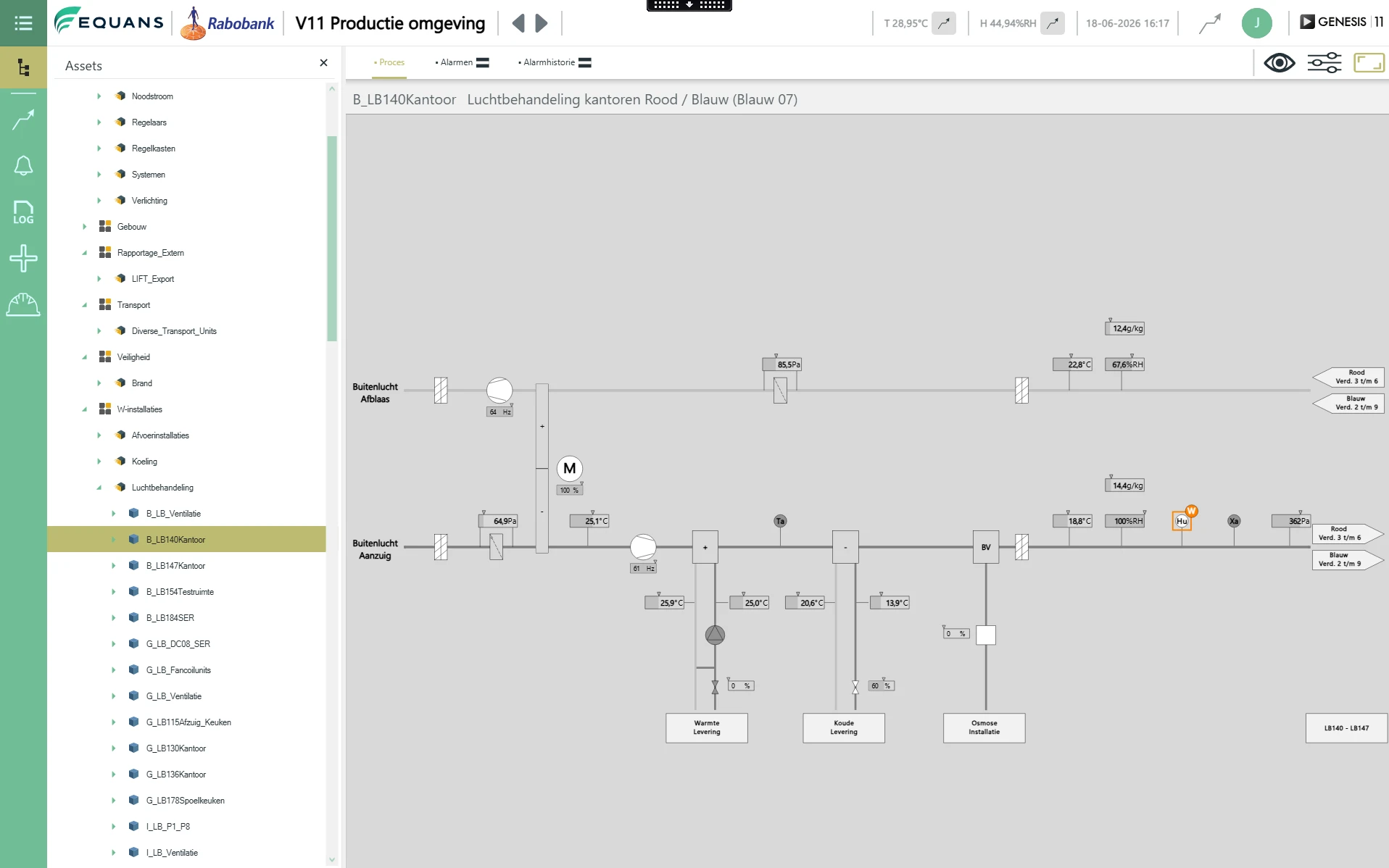
Airhandling Units Overview