 English
 Czech
Czech
 German
 French
 Italian
 Japanese
 Polish
 Spanish
Category: Transportation
Tunnel Učka

Učka Mountain Range, Republic of Croatia

Category: Transportation
Učka Mountain Range, Republic of Croatia

“The biggest benefit is that our operators can monitor and manage everything in one place. All systems are integrated into a single GENESIS/EPSIMAX interface, which makes workflows smoother and enhances tunnel safety.”
BINA-Istra d.d. is a leading infrastructure development and concession management company overseeing major transportation projects in Croatia’s Istria region. The company manages, maintains, and expands critical road and tunnel infrastructure, playing a key role in enhancing road safety, improving traffic flow, and supporting sustainable infrastructure development.
As part of its mission, BINA-Istra has delivered numerous projects, including the construction and modernization of key tunnels and highways across the region.
One of its most significant recent initiatives is the construction of a second tube for the Učka Tunnel—a critical segment of Croatia’s A8 motorway and the Istrian Y network. Operated un- der a long-term concession (1995–2041), the tunnel serves as the primary connection between the Istria region and the rest of the country.
Construction of the new tube began with full excavation and development, followed by the comprehensive installation of electrical and mechanical systems.
Inaugurated in September 2024, the second tube spans over 5.6 kilometers, making it the third longest tunnel in Croatia. This new tube complements the original tube, opened in 1981, and significantly increases capacity, safety, and traffic flow.
As the only suitable route for vehicles over 5 tons between Istria and central Croatia, the Učka Tunnel is a critical link for freight logistics and regional connectivity. In 2022 alone, the tunnel supported nearly two million vehicles, reinforcing its importance as one of the country’s most heavily trafficked transportation corridors.
“The biggest benefit is that our operators can monitor and manage everything in one place. All systems are integrated into a single GENESIS/EPSIMAX interface, which makes workflows smoother and enhances tunnel safety.”
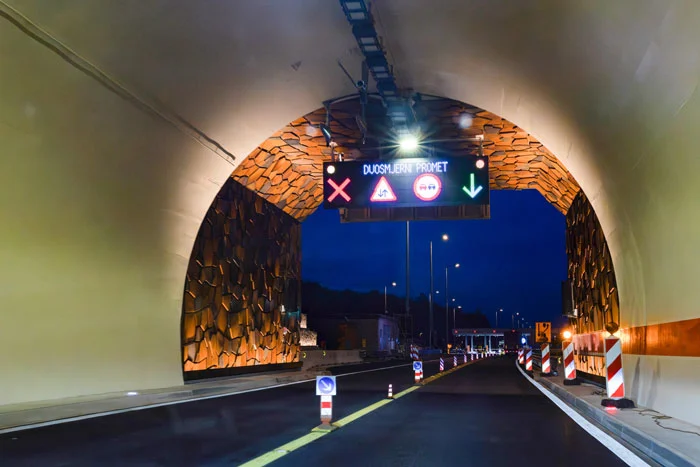 Učka Tunnel Exit
Učka Tunnel Exit
Učka Tunnel Exit
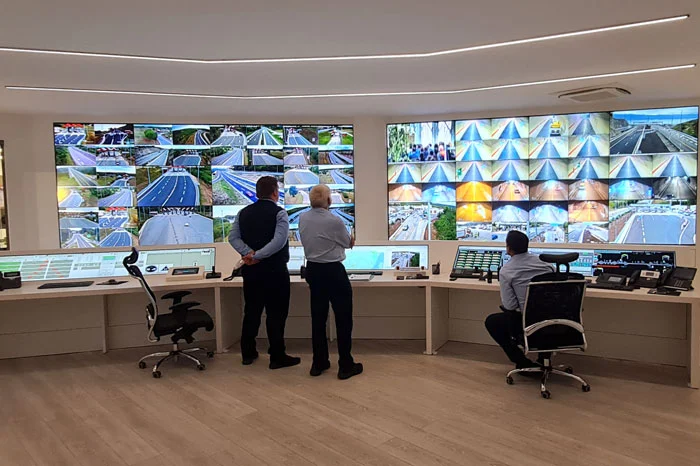 Control Center for the Integrated Situational Awareness and Centralized Control for Tunnel Operations
To ensure the safety, efficiency, and operational readiness of the newly constructed second tunnel tube, BINA-Istra required a modern automation software solution capable of monitoring, visualizing, and controlling a wide range of tunnel systems.
The organization’s goal was to centralize operations and provide real-time visibility across all critical infrastructure—including ventilation, lighting, surveillance, traffic management, emergency systems, and power distribution—while ensuring compliance with stringent European safety standards and preparing for future scalability.
To achieve this, BINA-Istra turned to ECCOS-INŽENJERING d.o.o. (ECCOS), a system integrator with deep expertise in automation and security for large-scale infrastructure projects.
Selected as a subcontractor to Bouygues Travaux Publics, the main contractor, ECCOS was tasked with equipping the tunnel with a full suite of integrated systems, including:
A long-time partner of Mitsubishi Electric Iconics Digital Solutions, ECCOS chose the GENESIS automation and digitalization platform, confident in its flexibility, advanced capabilities, and ability to scale with evolving operational needs.
While the technical demands of the project were significant, an equally critical objective was to create a functional and intuitive environment for tunnel operators. The addition of a second tunnel tube fundamentally altered the dynamics of tunnel management, requiring not only robust system integration but also a user experience that aligned with the established habits and workflows of personnel familiar with the original system.
This project posed a unique challenge for engineers: delivering a powerful new toolset while preserving operational continuity for the teams who rely on it every day.
To meet these demands, the project team implemented a redundant SCADA environment using GENESIS64 licenses for 50,000 data points—ensuring high system reliability, fast performance, and continuous availability. Because the system’s primary role was control—not just monitoring—it had to operate seamlessly under all conditions.
Control Center for the Integrated Situational Awareness and Centralized Control for Tunnel Operations
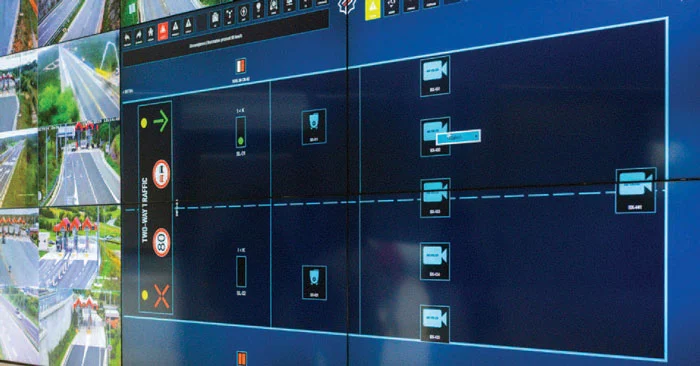 Control Center SCADA Dashboards
EPSIMAX is an advanced integration platform developed by ECCOS for centralized monitoring and management of all physical security and fire protection systems.
Control Center SCADA Dashboards
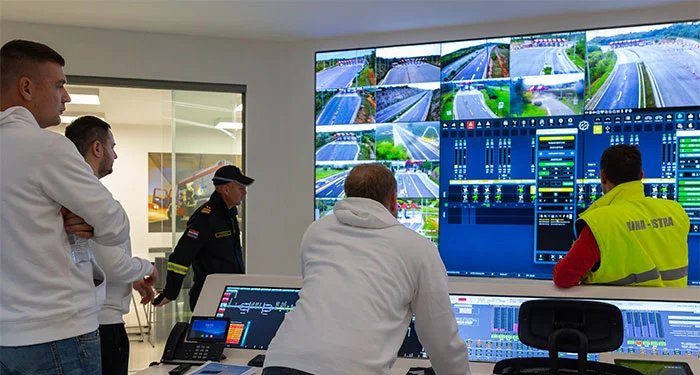 Control Center Team
The operational management team of Tunnel Učka realized substantial benefits with the integrated GENESIS/EPSIMAX advanced SCADA system. The integration of automation and digitalization technology has led to the following outcomes:
These advancements have greatly enhanced Tunnel Učka’s operational capabilities, setting a new benchmark for safety, efficiency, and compliance.
Control Center Team
Following the successful deployment of the GENESIS/EPSIMAX platform in the new tunnel tube, plans are now underway to evaluate its implementation in the reconstruction of the original tunnel.
ECCOS continues to collaborate with Mitsubishi Electric Iconics Digital Solutions as a trusted partner on critical infrastructure projects across Croatia. By centralizing and streamlining complex operations through real-time data integration, GENESIS has proven to be an essential tool for large-scale transportation infrastructure—delivering long-term value, scalability, and operational confidence.