English
 Czech
Czech
 German
 French
 Italian
 Japanese
 Polish
 Spanish
 10 min read
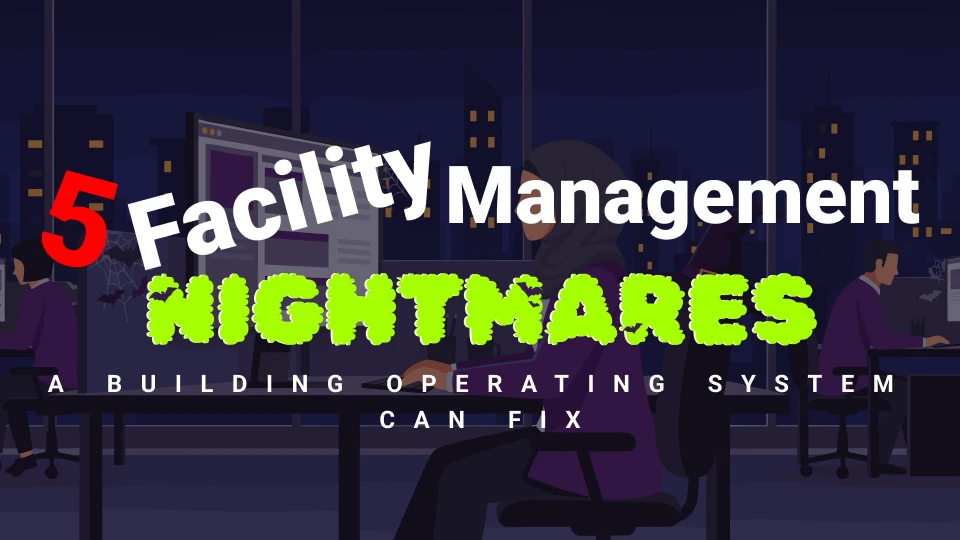
What You’ll Learn in This Blog
By the end of this post, you’ll learn how to:
- Recognize the five most common technology failures in facility management
- Understand the operational and financial impact of poor integrations, weak data, alarm floods, and cybersecurity gaps
- Apply practical fixes that combine process changes, validated data, and a modern Building Operating System (BOS)
- See how GENESIS provides a unified, extensible backbone for building operations
- Create resilient, sustainable, and compliant facilities that perform reliably over time
The Reality Behind Facility Management Challenges
Facility management has reached a turning point. Rising energy costs, tightening net-zero mandates, and new Building Performance Standards are forcing organizations to operate with greater efficiency and accountability. At the same time, skills shortages and an aging workforce are stretching operational capacity to the limit.
As Verdantix notes in its Green Quadrant: IoT Digital Platforms for Building Operations 2024 report:
“FM teams face increasing pressure to operate with fewer staff while managing more complex systems.”
These converging pressures demand smarter, data-driven infrastructure and tools that deliver the same reliability expected from critical building systems. Yet as technology expands, managing daily operations often becomes more complicated.
The root cause is not technology itself but the lack of a unified layer tying everything together. Disconnected systems create data silos, fragmented insights, and missed opportunities for optimization. Advanced Building Operating System technology addresses this challenge.
The Power of a Unified Building Operating System
Facility leaders expect technology to simplify operations, improve reliability, and cut waste. Fragmented systems often do the opposite. A BOS provides an independent, interoperable data layer that connects HVAC, lighting, power, security, and analytics across vendors and protocols.
This software ensures that data, whether real-time, historical, or contextual, is validated, accessible, and actionable. This foundation transforms operations from reactive to predictive, giving organizations the visibility, control, and confidence needed to meet performance, resiliency, and sustainability goals.
Organizations without this foundation encounter the same operational problems repeatedly. The most common and preventable failures include the five issues below.
Fail #1: Siloed Systems and Integration Sprawl
Many facilities still operate with a patchwork of independent systems such as HVAC, lighting, power monitoring, and security. Each performs its own function, but without unified integration, these systems create duplication, inefficiency, and costly blind spots.
As portfolios expand, so does integration sprawl. What begins as a manageable network in one building becomes ungovernable across multiple sites. The result is reactive operations, limited visibility, and higher maintenance costs.
The Fix
A Building Operating System built on open standards consolidates disparate systems into one operational backbone. This unified data layer streamlines monitoring, improves collaboration, and provides the visibility required to manage assets at scale.
Fail #2: Bad or Missing Data
Every decision in facility management depends on data accuracy. Faulty sensors, incomplete historians, or the absence of fault detection and diagnostics (FDD) tools lead to unreliable information. When operators cannot trust dashboards, optimization stops, and credibility suffers.
The Fix
A BOS with built-in FDD and historian functionality validates data at the source and secures it for real-time and historical analysis. This ensures confidence in every metric used for energy optimization, maintenance scheduling, and compliance reporting.
Fail #3: Alarm Floods and Operator Fatigue
Alarm fatigue is one of the most persistent challenges in facility operations. Thousands of alerts that are often redundant or irrelevant overwhelm operators and slow response times. Important warnings can be missed, compromising safety and compliance.
The Fix
Advanced alarm management tools within a BOS normalize and prioritize events, showing operators only what requires attention. Streamlined visibility improves focus, shortens response times, and restores operational control.
Fail #4: OT and IoT Cybersecurity Blind Spots
As operational and IoT devices multiply, the cybersecurity attack surface expands. Unpatched controllers, legacy protocols, and flat network structures leave buildings vulnerable to intrusion. For organizations that rely on continuous uptime, this risk is unacceptable.
The Fix
A secure, standards-based BOS reduces exposure by segmenting operational networks, encrypting data exchange, and continuously monitoring for anomalies. Embedding cybersecurity at the architecture level strengthens resilience and aligns operations with modern security frameworks.
Fail #5: Limited Scalability and Vendor Lock-In
Many legacy building systems are rigid, difficult to update, and dependent on proprietary integrations. These constraints prevent organizations from adapting to new regulations, technologies, or business models.
The Fix
An extensible BOS built on open, interoperable standards scales with the organization. Whether expanding to new facilities, integrating renewable energy assets, or complying with emerging standards, an open architecture eliminates lock-in and future-proofs the investment.
Addressing these five challenges requires more than piecemeal fixes. A unified foundation that simplifies management, strengthens data integrity, and supports continuous improvement is essential. The GENESIS Building Operating System delivers this foundation with the flexibility and reliability facility managers need.
Why GENESIS Is the Building Operating System for Modern Facility Management
Not every platform can meet today’s operational and compliance challenges. However, GENESIS from Mitsubishi Electric Iconics Digital Solutions is designed as a Building Operating System that combines flexibility, reliability, and security within one architecture. Some of its key capabilities include:
- Extensible architecture: Scales seamlessly as portfolios grow or standards evolve, reducing rework and cost.
- Universal connectivity: Supports virtually any protocol or vendor, creating a unified data and control framework.
- Trusted data foundation: Includes FDD and historian tools to validate, contextualize, and preserve data accuracy.
- Smart alarm management: Filters noise and prioritizes critical alerts to improve situational awareness.
- Cybersecurity by design: Delivers standards-based segmentation, encryption, and continuous monitoring for resilient operations.
- Open, standards-based integration: Eliminates vendor lock-in and ensures compatibility across evolving systems.
GENESIS transforms facility management from reactive control to proactive optimization, enabling teams to operate efficiently, confidently, and securely across any scale.
For a deeper look into GENESIS and its Building Operating System capabilities, download the GENESIS brochure to explore its architecture, features, and benefits for modern facility management.
From Building Tech Failures to Operational Resilience
Facility managers face mounting pressure to meet energy, safety, and compliance goals while operating with fewer resources. The failures that slow progress such as siloed systems, poor data, alarm floods, cybersecurity risks, and rigid legacy platforms are solvable with the right foundation.
A modern, extensible Building Operating System like GENESIS provides that foundation, empowering facility leaders to anticipate issues before they escalate, ensure data integrity, and maintain resilience across portfolios. Operational excellence begins when technology stops getting in the way and starts working as intended.
As facility leaders explore ways to modernize their operations, a few practical questions often come up. The following FAQs address some of the most common concerns about overcoming facility management technology failures.
FAQs: Overcoming Facility Management Technology Failures
What are the most common facility management technology failures?
The most frequent failures include siloed systems, poor data quality, alarm fatigue, cybersecurity gaps, and limited scalability in legacy platforms.
How can bad integrations affect building operations?
Disconnected systems lead to inefficiency, data errors, and unnecessary costs. A unified BOS provides a single operational view that improves accuracy and control.
How can facility teams reduce alarm fatigue?
Intelligent alarm management tools within a BOS rank alerts by priority, ensuring operators focus on the events that truly impact safety and performance.
Why is OT cybersecurity essential in modern buildings?
As IoT adoption grows, vulnerabilities increase. A secure, segmented BOS protects critical systems from intrusion and strengthens compliance with standards such as IEC 62443.
How can facilities future-proof technology investments?
Choose an open, scalable, standards-based BOS that adapts to new technologies and regulations without requiring major re-engineering.
Turn Tech Failures into Building Management Wins
Facility technology failures do not have to define operations. With GENESIS as the backbone of building management, organizations can eliminate inefficiencies, safeguard systems, and ensure facilities perform reliably day after day and year after year.
Ready to optimize your facility operations? Visit the GENESIS webpage to explore its Building Operating System capabilities or contact an expert to discuss your specific project needs.

Written By:
Recent Posts
Smart Building Automation for Multi-Site Restaurants: How Centralized Operations Support Growth
Scaling Data Center Infrastructure Requires a New Approach to Monitoring
Why Retro-Commissioning Should Come Before Energy Efficiency Investments in Commercial Buildings

Why Connected Buildings Begin with Digital Signage
Modern Mining Requires More Than Traditional SCADA