English
 Czech
Czech
 German
 French
 Italian
 Japanese
 Polish
 Spanish
 9 min read
Key Takeaways
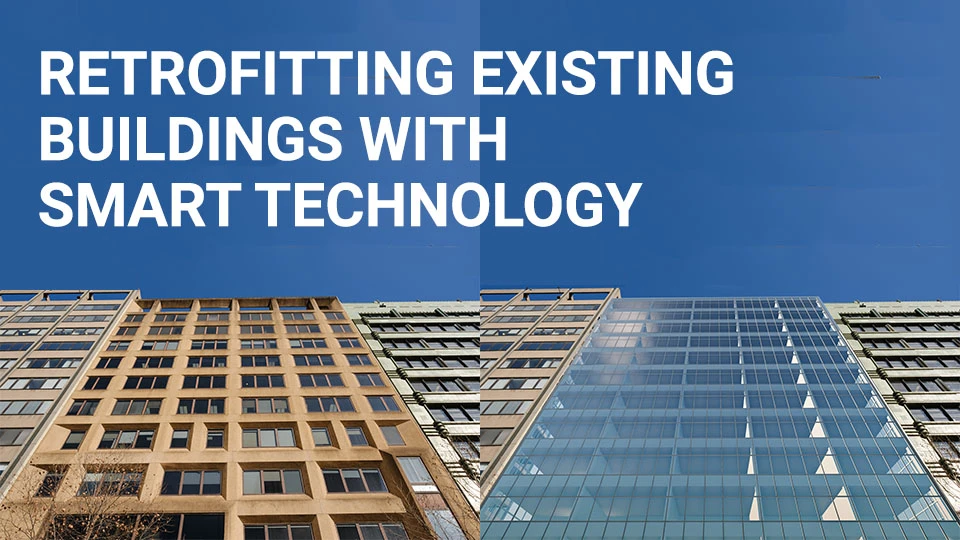
- Around 80% of the buildings expected to be in use by 2050 are already standing, making retrofit one of the most important strategies for improving building performance, sustainability, and long-term asset value.
- Retrofitting existing buildings can increase asset value, reduce operating costs, support regulatory compliance, and extend building lifespan without the cost and disruption of new construction.
- Successful retrofit projects require more than equipment upgrades. Lasting value depends on the ability to connect building systems, contextualize data, and support informed decision-making through a unified building data layer.
- Building performance and building experience technologies help organizations transform connected data into operational insight, workplace intelligence, and continuous improvement without requiring complete system replacement.
Existing Buildings Represent the Greatest Opportunity
The greatest opportunity to improve building performance is not found in the next generation of buildings but rather in the buildings that already exist.
Around 80% of the buildings expected to be in use by 2050 are already standing, making retrofit one of the most important strategies for improving operational performance, sustainability, and long-term asset value.
As organizations face increasing pressure to reduce energy consumption, meet sustainability commitments, improve occupant experiences, and maximize the value of existing real estate, retrofitting has become a strategic investment rather than simply a facilities upgrade.
Modernizing existing buildings allows organizations to improve operational performance, extend asset lifespan, unlock new business value, and enhance occupant experiences while avoiding the financial cost, operational disruption, and environmental impact associated with demolition and new construction.
The Reality: Many of Tomorrow's Buildings Already Exist
Retrofitting existing buildings has become one of the most important strategies for improving operational performance, sustainability, and long-term asset value.
While new construction remains important, many organizations will depend on existing buildings for decades to come. Improving operational efficiency, sustainability, and occupant outcomes therefore requires a strong focus on modernization and retrofit strategies.
Growing pressure to reduce energy consumption, meet sustainability commitments, comply with evolving regulations, and improve occupant experience is forcing organizations to rethink how existing buildings perform.
For many building owners, retrofitting existing assets with smart technology has become the most practical and cost-effective path to achieving these goals. Rather than starting over, organizations can modernize existing infrastructure, unlock new business value, and extend the lifespan of their real estate portfolios.
The Business Case for Retrofitting
The decision to retrofit is rarely driven by technology alone. Investment decisions are typically evaluated through factors such as asset value, operating performance, tenant expectations, regulatory requirements, and long-term portfolio strategy.
For many organizations, the value of retrofit extends well beyond energy efficiency, delivering measurable benefits across financial performance, operations, sustainability, and asset management. These benefits include:
Lower capital investment: Retrofitting avoids the high costs associated with demolition and new construction. Projects can be phased, reducing financial risk and enabling incremental upgrades aligned with budget cycles.
Increased asset value: Modernized buildings attract tenants, command higher rents, and remain competitive in evolving markets. Retrofitting allows ageing assets to be repositioned without full redevelopment.
Operational savings: Improving energy and water efficiency translates directly into lower operating costs while reducing operational waste and supporting long-term building performance.
Carbon and compliance advantages: Retaining and upgrading existing structures can significantly reduce embodied carbon compared to demolition and new construction while helping organizations support sustainability objectives and evolving regulatory requirements.
Retrofitting aligns financial performance, regulatory compliance, and sustainability outcomes without the disruption of starting over.
The Challenge: Why Retrofit Is Complex
Successful retrofit projects must address significant technical and operational complexity. Existing buildings typically contain a mix of legacy systems from multiple vendors, often deployed over decades.
Lack of integration between building operations and workplace systems further complicates decision-making. Facility teams may monitor energy and HVAC performance, while workplace teams manage occupancy and space usage through separate platforms. Without a unified view, optimization remains limited.
Effective retrofitting relies on connected systems, aligned data, and coordinated decision-making across operational and workplace domains. A connected building data layer brings together information from operational and workplace systems.
A technology layer built on this shared data environment can then deliver the visibility, intelligence, and optimization needed to improve building performance, workplace experience, and overall building efficiency.
The Building Data Layer: The Foundation for Modernization
Successful retrofit projects require a common data environment that links building operations, workplace environments, and business functions. Often referred to as the building data layer, this connected environment brings together information from building systems, workplace applications, sensors, equipment, and other operational technologies.
Rather than remaining isolated in silos, information becomes accessible, contextualized, and available to support better decision-making. This integrated approach enables two critical outcomes.
- Organizations gain visibility into operational efficiency, energy consumption, equipment health, and environmental conditions to support building performance.
- Workplace services, occupancy insights, and tenant interactions can be combined with operational information to enhance the building experience.
Without a connected building data layer, optimization remains fragmented. With a unified view of building and workplace information, organizations can transform existing assets into intelligent, high-performing environments that continuously adapt to operational and occupant needs.
The Technology Layer: Enabling Smart Retrofit
Smart technology provides the framework for transforming existing buildings into connected, high-performing environments. Effective retrofit strategies rely on technologies that integrate systems, deliver real-time insight, and support continuous optimization.
Built upon the foundation of the building data layer, organizations typically invest in technologies that support two critical objectives: Building Performance and Building Experience.
- Building Performance technologies - help improve operational efficiency, energy efficiency, asset reliability, and sustainability outcomes.
- Building Experience technologies - help organizations create more efficient, engaging, and responsive environments for occupants, visitors, tenants, and workplace teams.
Built upon the building data layer, these technologies help organizations transform connected information into operational insight, building performance improvements, and enhanced occupant experiences. The following examples illustrate how these capabilities support retrofit modernization initiatives.
GENESIS: A Building Performance Platform for Retrofit Modernization
GENESIS, the building performance platform from Mitsubishi Electric Iconics Digital Solutions, enables organizations to monitor, control, and optimize building operations across complex environments.
By connecting data from legacy and modern systems through open connectivity, the platform provides a unified view of building operations that supports more informed decision-making and continuous performance improvement.
With GENESIS, organizations can:
- Visualize building operations through unified dashboards that provide real-time visibility into assets, systems, alarms, energy performance, and environmental conditions
- Monitor energy consumption, equipment performance, and environmental conditions in real time
- Identify operational issues earlier through alarm management, analytics, and actionable insights
- Support predictive maintenance strategies and reduce unplanned downtime
- Improve operational performance while extending the value of existing assets
- Scale modernization initiatives without replacing existing infrastructure
This approach is particularly valuable in retrofit projects, where full system replacement is neither practical nor cost-effective. GENESIS enables phased modernization strategies that improve building performance while maintaining operational continuity.
IBSS: Workplace Management, Tenant Experience, and Operational Context
Intelligent Building Software Stack (IBSS), the building experience platform by Mitsubishi Electric Iconics Digital Solutions, helps organizations manage workplaces more effectively while enhancing the experience of occupants, employees, and visitors.
The platform supports a wide range of workplace and tenant-focused functions, including room and desk booking, visitor management, workplace services, occupancy analytics, and workplace planning.
For owner-occupiers, IBSS provides visibility into how people use spaces and workplace resources, supporting more informed decisions around workplace operations, utilization, and planning.
For building owners and property management organizations, the platform extends these capabilities through tenant-facing services that improve engagement, convenience, and the overall building experience.
With IBSS, organizations can:
- Provide occupants and tenants with a unified digital experience for accessing workplace and building services
- Streamline room booking, desk reservation, visitor management, and workplace service requests
- Monitor occupancy patterns and space utilization across workplaces, campuses, and multi-tenant environments
- Support hybrid work strategies through data-driven workplace planning and resource management
- Improve employee, visitor, and tenant experiences through convenient self-service capabilities
- Provide operational context that helps align building performance with workplace demand and occupancy patterns
By combining workplace activity data with operational information, organizations gain a more complete understanding of how buildings are used, how spaces perform, and how workplace services are consumed. These insights support more effective workplace management.
This capability is particularly valuable in retrofit projects, where understanding how people use a building is just as important as understanding how building systems perform. IBSS helps organizations connect workplace activity, tenant services, and operational decision-making, enabling smarter space management, improved occupant experiences, and more effective use of existing assets.
Aligning Building Operations and Workplace Experience
The combination of building performance software like GENESIS and building experience software like IBSS creates a unified environment where operational data and workplace activity align.
Building systems therefore no longer operate in isolation from occupant behavior. Instead, decisions can be informed by both real-time conditions and planned usage. This alignment enables:
- More accurate space utilization strategies
- Reduced energy consumption based on actual occupancy patterns
- Improved occupant comfort and productivity
- Better-informed investment and operational decisions
Successful retrofit strategies depend on this level of integration. Visibility alone is not sufficient. Alignment across systems and domains is essential.
Building Retrofitting as a Strategic Imperative
The buildings that create the greatest long-term value are no longer defined by their age or construction date. These assets are defined by their ability to adapt, operate efficiently, support occupants, and respond to changing business and sustainability requirements.
As organizations face growing pressure to improve efficiency, reduce carbon emissions, optimize space utilization, and enhance workplace experiences, retrofit strategies are becoming an increasingly important component of long-term real estate planning.
Lasting value depends on the ability to connect building systems, workplace technologies, and operational data to create environments that support continuous improvement and informed decision-making.
Building performance and building experience technologies help organizations transform connected data into operational insight, workplace intelligence, and continuous improvement. These capabilities support the modernization of existing assets while enhancing building performance and workplace experiences.
Build Greater Value from Existing Building Assets
Retrofitting with smart technology enables organizations to improve operational performance, enhance occupant experiences, and increase the value of existing real estate assets.
Discover how GENESIS and IBSS help organizations improve building performance, enhance occupant experiences, optimize space utilization, reduce operating costs, and unlock greater value from existing real estate assets
Frequently Asked Questions
The following questions address common considerations organizations face when evaluating retrofit strategies for existing buildings.
What is building retrofit?
Building retrofit involves upgrading existing structures, systems, and technologies to improve performance, efficiency, sustainability, and occupant experience without complete reconstruction.
Why should building owners retrofit existing buildings?
Retrofitting enables building owners to improve asset value, reduce operating costs, support regulatory compliance, extend asset lifespan, and enhance competitiveness without the cost and disruption of new construction.
How does retrofitting increase property value?
Modernized buildings are often more attractive to tenants and occupants, support higher occupancy rates, improve operational efficiency, and remain competitive in evolving real estate markets.
How does smart technology support building retrofit projects?
Smart platforms integrate data from multiple systems, provide real-time visibility, and enable continuous optimization, allowing organizations to improve performance without replacing entire systems.
What is a building data layer and why is it important?
A building data layer connects information from building systems, workplace applications, sensors, equipment, and other operational technologies within a unified data environment. By providing a trusted foundation for building performance and building experience initiatives, a building data layer supports more informed decision-making, operational optimization, and improved occupant experiences.
Can retrofitted buildings perform as well as new buildings?
Many retrofit projects achieve significant improvements in energy efficiency, sustainability, operational performance, and occupant experience. With the right strategy and technology, existing buildings can often meet or exceed modern performance expectations.

Written By:
Recent Posts
What Is a Data Historian in OT? Definition, Architecture, and Applications
What Is a Digital Workplace? Definition, Components, and Benefits
The High-Performance Office: Turning Data, AI and Smart Tech into Measurable Asset Value
Why Master Systems Integrators and Digital Enablement Decide Whether a “Smart” Building Is Actually Smart