English
 Czech
Czech
 German
 French
 Italian
 Japanese
 Polish
 Spanish
Fribourg Public Transport Infrastructure
Challenges
- Old system end-of-life - Previous automation system had reached its end of life and needed replacement
- Integration requirements - Needed open communication protocols to interface with existing sub-systems and comply with railway standards
- User interface needs - Required intuitive interface with customizable views and organization-specific symbol library
Outcomes
- Massive time savings - New station deployment reduced from 2 weeks to just 1 working day
- Operational efficiency - Centralized control of 3 railway lines from single location with advanced operator training simulator
- System scalability - Modern, scalable solution now being implemented for trolley bus systems and offered to other railway companies
“Understanding and learning the GENESIS suite is surprisingly easy. The new generation and methodology of object-oriented programming are highly appreciated. The only limit is your imagination!”
About Fribourg Public Transport Infrastructure
Fribourg Public Transport Infrastructure (TPF INFRA) is the public transport organization of the canton (district) of Fribourg, Switzerland and resulted from a merger between Fribourg Public Transport and Fribourgeois Gruyere Fribourg-Murten Railroad in 2000. The canton of Fribourg is one of 26 cantons that make up Switzerland and is shared between the French-speaking part and the German-speaking part of the country.
The TPF INFRA is the key player in mobility in the canton of Fribourg with a network that covers the entire area with trains, regional buses, and urban bus routes. In addition to operating and maintaining these lines, the organization also renews all rail sections and access points, which have been granted concessions by the Swiss Confederation.
Fribourg Public Transport is one of the few public transport companies in Switzerland that serves both road and rail. Furthermore, the organization researches and invests in innovative transport solutions, an example of which was their decision to be close to users by transforming stations into places of activity and residence. To add, this regional network is complimentary and therefore is available to all commuters wishing to use it.
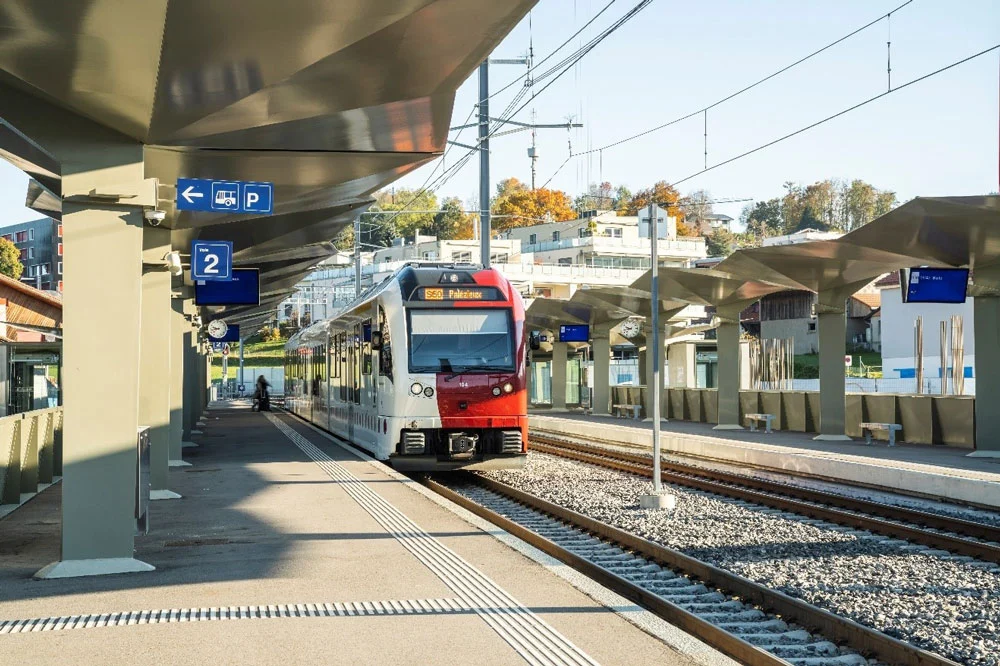
A TPF INFRA Train Station
Project Summary
TPF INFRA’s legacy automation system had reached end-of-life and could no longer meet the operational demands of a modern rail network. The company launched a search for a new automation software platform—one that would support centralized remote monitoring and control across its traction power generation and distribution infrastructure, as well as low-voltage systems in railway stations.
The new SCADA solution needed to be high-performance, open, and easy to use. To guide the procurement and deployment process, TPF INFRA defined a set of key requirements:
- Remote monitoring and control for traction power facilities and station-level electrical systems
- Open communication protocols for seamless interfacing with third-party subsystems
- User-friendly, intuitive interface that adapts information display by context
- Customizable graphical views and applications, including:
- Alarm management
- Trend visualization
- Graphs and dashboards
- Energy monitoring
- Tailored symbol libraries designed specifically for the organization’s needs
- Easy integration into the existing automation architecture
- Compliance with FMDS standards, the French specification for:
- Maintainability (M)
- Demonstration of reliability and availability (D)
- Safety (S)
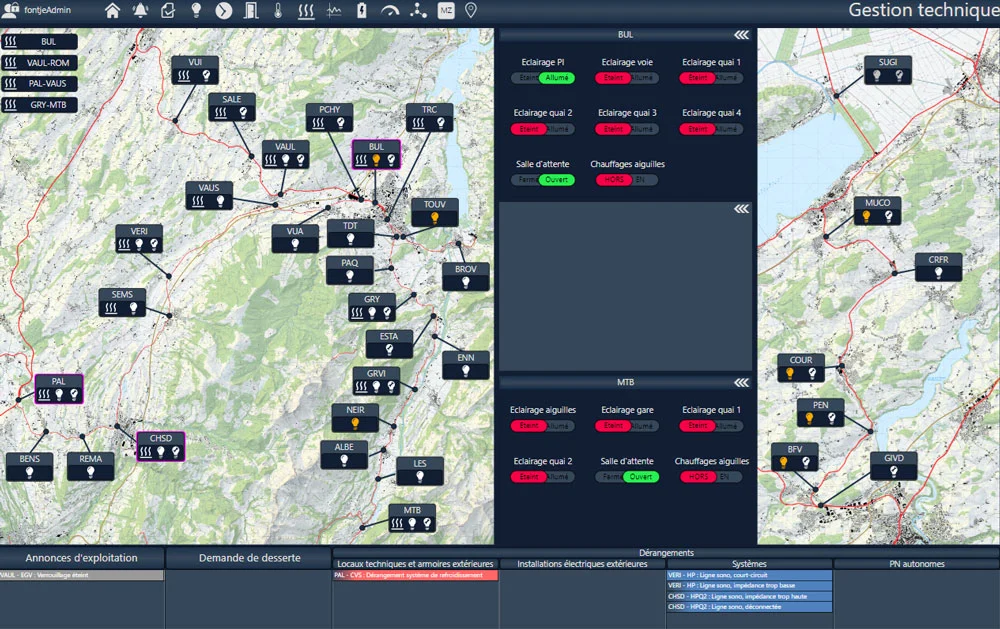
Operations Overview Map
Realized Benefits
TPF INFRA successfully deployed a modern, scalable SCADA system that centralized monitoring and control for its three railway lines and related infrastructure. The new system meets the needs of both operations and maintenance centers and is built to evolve with future technological advancements.
Key benefits include:
- Centralized control of three railway lines from the operations center in Givisiez (Fribourg), covering:
- FMA Line (15 kVAC AC, normal track)
- Romont–Bulle–Broc Line (15 kVAC AC, normal track)
- Palézieux–Bulle–Montbovon Line (900 VDC, metric track)
- Full remote management of stations and traction power sites via PLCs and switchboard interfaces
- Ergonomic design with redundant servers and triple-screen graphic workstations
- Operator-friendly tools, including:
- A newly developed “fiche reflex” feature, which guides users through alarm processing
- A simulator used for operator training and developing safety procedures
- Increased self-sufficiency, as TPF INFRA’s internal team led the deployment and now manages the system with support from Mitsubishi Electric Iconics Digital Solutions
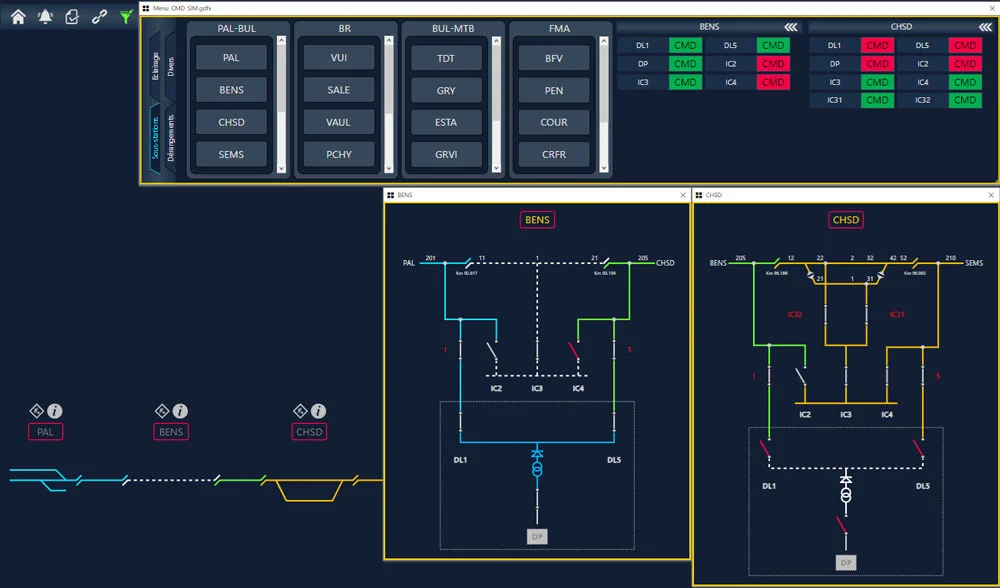
Simulator Used for Operator Training
These capabilities ensure more responsive operations, greater efficiency, and improved safety and preparedness across TPF INFRA’s railway network.
Conclusion
The project is now 100% operational and functional. The TPF INFRA highly rates the Mitsubishi Electric Iconics Digital Solutions' automation software suite, especially since the solution is so easy and quick to program. And because GENESIS is so extremely efficient, they realized significant engineering savings.
As another example of the software’s ease and quick programming, the TPF INFRA team can deploy a new station or installation in just one working day. Whereas before, their team would have needed two weeks to complete this deployment with the old system. In addition, the organization greatly appreciated the responsiveness of Mitsubishi Electric Iconics Digital Solutions’ technical teams.
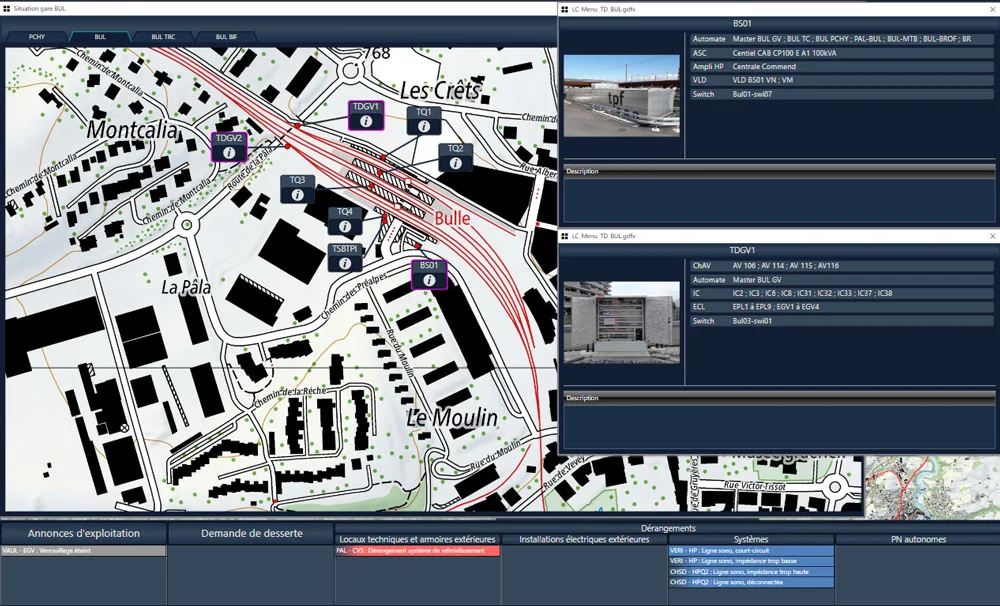
Train Station Overview
The TPF INFRA will be implementing the same solution on behalf of TPF TRAFIC to remotely manage and control the trolley bus traction power generation and distribution facilities in Fribourg. The organization also aims to offer this solution to other railway companies in French-speaking Switzerland.