English
 Czech
 German
 French
 Italian
 Japanese
 Polish
 Spanish
Odense University Hospital (NyT OUH)
Key points
- Replaced a recently deployed building automation platform that proved unstable in a virtualized IT environment with GENESIS to deliver secure, reliable hospital operations.
- Centralized monitoring and control across a large healthcare campus while creating an automation foundation for future regional expansion.
- Built a secure enterprise platform capable of supporting highly complex infrastructure, including more than 2,300 PLCs.
Challenges
- Disparate systems - Old buildings had outdated, separate automation systems that were difficult to manage
- Decentralized monitoring - Operations team had to track multiple monitors across different building locations
- Nighttime staffing - Required personnel to work on-site at Svendborg location during night shifts for monitoring
Outcomes
- Centralized control - All building environments now monitored from single system in one location
- Improved efficiency - Unified templates make operations easier for staff and external maintenance teams
- Better optimization - Consolidated data logging enables easier energy consumption analysis and management
“With GENESIS, we have an open system based on open standards which allows our own staff to maintain and expand the use of the system. We are continuously adding assets and buildings to our Mitsubishi Electric Iconics Digital Solutions BMS solution suite.”
Modernizing Hospital Infrastructure with Secure, Scalable Building Automation
Odense University Hospital (OUH), one of Denmark’s leading university hospitals, plays a critical role in healthcare delivery, education, and research across the Region of Southern Denmark.
To support future healthcare needs, the region is developing the new Odense University Hospital campus (Nyt OUH), one of Denmark’s largest healthcare infrastructure projects. Designed to support modern patient care through advanced, efficient, and resilient building operations, the new campus will bring together highly specialized healthcare services within a modern, integrated environment.
Spanning more than 800,000 m² of site area with approximately 300,000 m² of total floor space, the campus includes the main hospital, psychiatric care facilities, and the Steno Diabetes Center. Managing such a large and complex healthcare environment requires a secure, enterprise-grade automation platform capable of delivering reliable real-time monitoring and control.
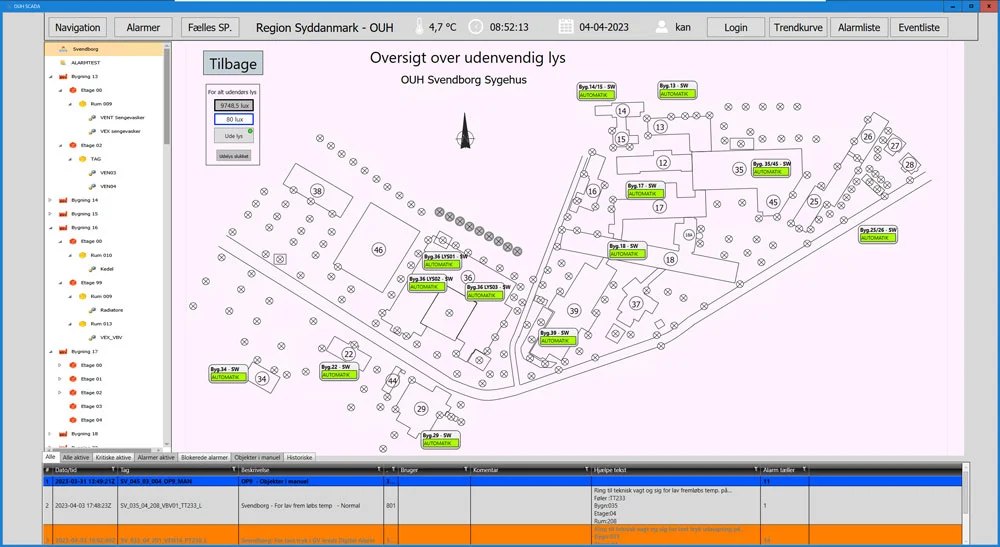
Outdoor Light Management
The Challenge
Modern hospitals depend on stable, secure, and continuously available building automation systems to maintain safe, efficient environments for patients, staff, and clinical operations.
For Odense University Hospital, the existing building management software presented a significant operational challenge. The previous platform proved unstable within the hospital’s virtualized IT environment, creating reliability concerns in an infrastructure where uninterrupted performance is essential.
The hospital needed a modern automation platform capable of:
- Delivering stable performance within the hospital’s enterprise IT infrastructure
- Integrating diverse infrastructure systems including HVAC, PLC-based controls, and solar systems
- Providing centralized visibility and control across a large healthcare campus
- Meeting demanding cybersecurity requirements
- Scaling to support highly complex infrastructure environments
- Supporting future expansion across additional healthcare facilities in the Region of Southern Denmark
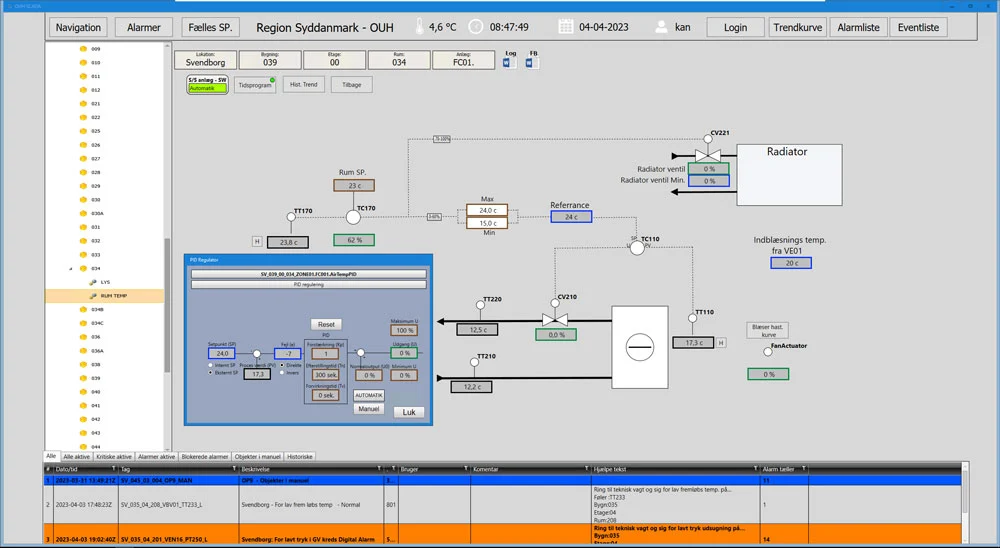
HVAC Overview
To identify a platform capable of meeting these requirements, the hospital initiated a proof-of-concept evaluation process.
The POC was conducted by Heptagon, a Mitsubishi Electric Iconics Digital Solutions distributor in Denmark. With decades of expertise in automation, digital transformation, and building systems integration, Heptagon has extensive experience supporting customers across smart buildings and industrial environments. As a trusted regional partner, Heptagon worked closely with the hospital to evaluate potential solutions and identify a platform aligned with the hospital’s technical, operational, and security requirements.
As a result of the successful POC, Odense University Hospital selected the GENESIS smart building automation platform. Following platform selection, the hospital’s engineering team completed GENESIS training and then implemented the solution independently.
This approach accelerated knowledge transfer, reduced reliance on external resources, and demonstrated the platform’s intuitive configuration, ease of deployment, and ability to support rapid knowledge transfer in complex healthcare environments.
The Results
Realized Benefits
The monitoring and control of most Svendborg Hospital buildings are now centralized into a single system at one location. This setup provides the hygienic, temperature-controlled environments essential for patient wellbeing and recovery.
Key benefits include:
- Simplified monitoring: The operations team no longer needs to track multiple monitors. They can quickly assess overall building status from a single screen.
- Streamlined nighttime operations: Alarms from OUH Svendborg Sygehus are now transferred to Odense University Hospital, eliminating the need for overnight staff at the Svendborg location. Reception personnel monitor alarms instead.
- Improved maintenance visibility: External maintenance teams can better understand building operations through the centralized system and its standardized, unified template.
- Consolidated data logging: All data is now captured in one place, making it easier to access and use for alarm management and analytics.
- Optimized energy use: Greater visibility into operations allows the team to improve energy efficiency through better-informed decisions.
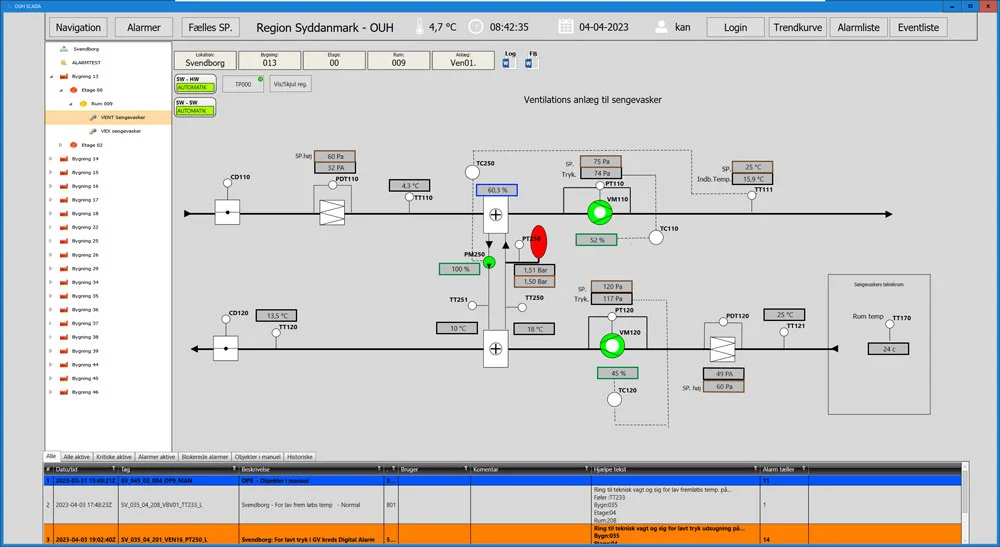
Ventilation Overview
Conclusion
The hospital made a deliberate decision to select an open system based on open standards—one that enables staff to maintain and expand the system independently. The centralized GENESIS platform has delivered several benefits:
- Simplified building operations through easier, unified control
- Greater clarity with consistent templates for equipment like air handling units
- A standardized interface across assets for improved benchmarking
- Better maintenance and operational efficiency
The hospital plans to continue expanding the system to additional buildings and systems, replacing legacy BMS platforms along the way.
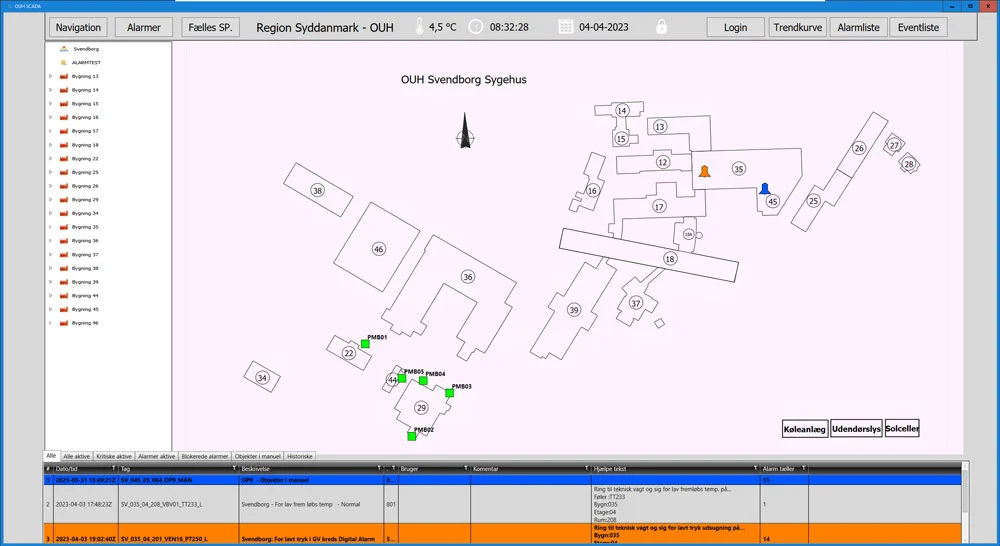
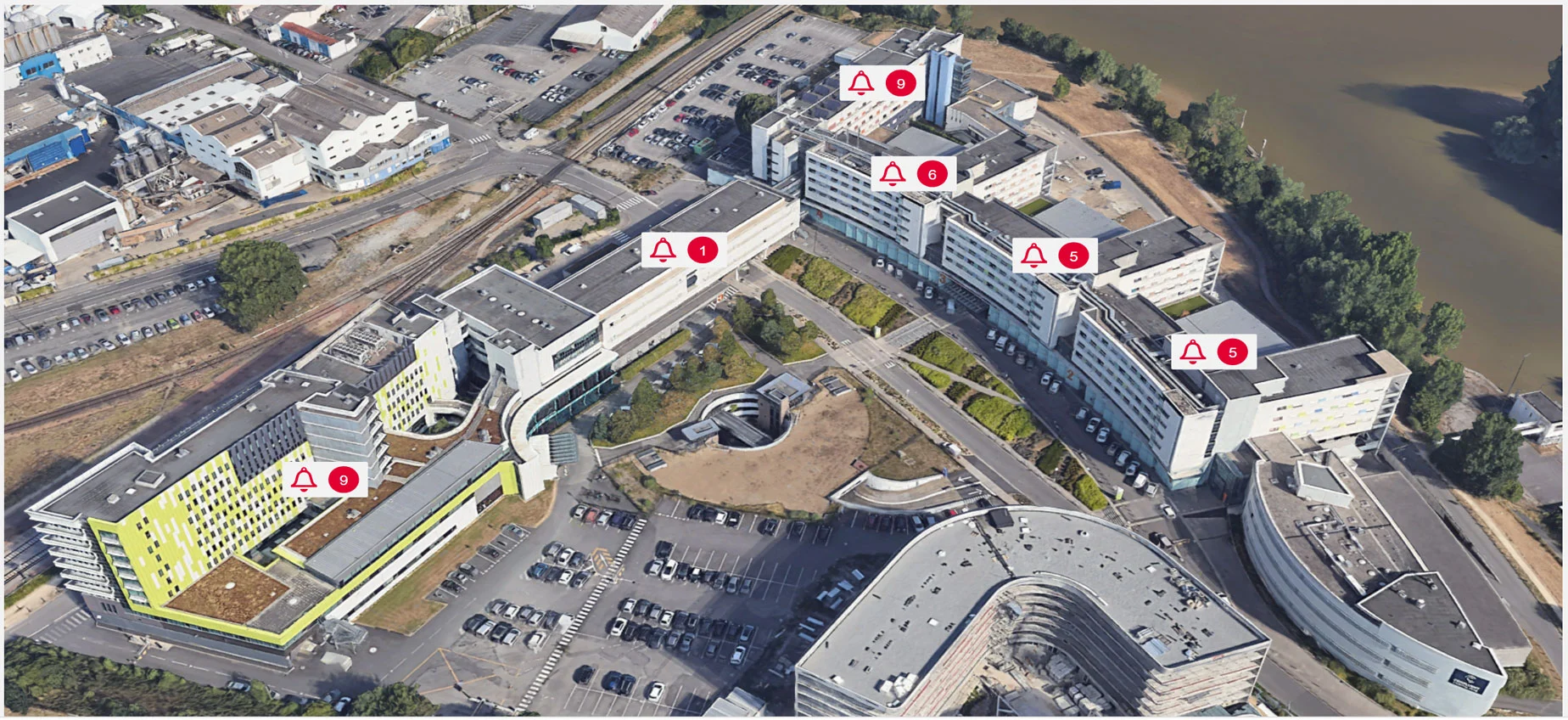
OUH Svendborg Overview