English
 Czech
Czech
 German
 French
 Italian
 Japanese
 Polish
 Spanish
 7 min read
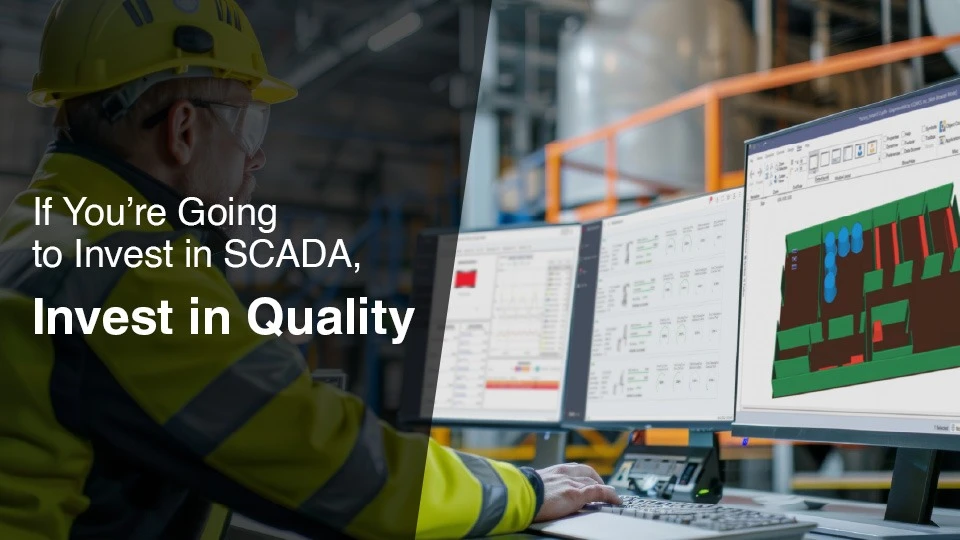
What You’ll Learn: Key Considerations in Selecting the Best SCADA Software
- Why SCADA platforms should be treated as long-term operational infrastructure rather than short-term software purchases
- How lower-quality or heavily customized SCADA platforms introduce long-term operational, financial, and security risk
- What distinguishes a top-tier SCADA platform from “good enough” alternatives
- Why platform architecture determines scalability, maintainability, and lifecycle value
- How GENESIS supports durable, secure, and repeatable automation outcomes over time
Why SCADA Product Quality Becomes Critical After Deployment
SCADA sits at the heart of industrial operations. Visualization, control, alarms, reporting, cybersecurity, compliance, and system integration all run through the platform. Once a system goes live, the expectation is simple. The platform works and continues working. For many organizations, that means relying on the same SCADA foundation for years, often decades.
Despite this reality, SCADA selection often gets treated as a short-term project decision. Feature checklists, immediate requirements, and upfront cost tend to dominate the conversation. In a crowded market where many platforms look similar at first glance, “good enough” can feel like a safe choice.
That confidence usually holds at the beginning.
The real test comes later. Scaling across sites. Integrating new assets. Adapting to regulatory change. Strengthening security. Supporting new use cases that nobody anticipated during the original deployment. Architectural decisions start to matter at that point, and shortcuts quickly become expensive.
SCADA quality is not defined by basic features or a powerful scripting engine. Quality reveals itself over time. It appears in how systems scale using native capabilities, how reliably operations perform, how securely environments remain protected, and how much effort integrators and customers must invest to maintain and evolve the platform. Treating SCADA as long-term operational infrastructure rather than short-term software fundamentally changes the lifecycle outcome.
SCADA Functions as Long-Term Infrastructure, Not Short-Term Software
Industrial automation systems are rarely replaced on a regular software refresh cycle. Once deployed, these systems become embedded in daily operations, supporting core processes that organizations depend on for continuity, safety, and performance. If you have SCADA software today, the chances are good that you are still dealing with your initial vendor.
Research published by McKinsey highlights that core operational technologies often become deeply embedded in business processes over time, making replacement costly, complex, and disruptive. As a result, decisions made during initial SCADA selection have long-lasting effects, shaping operational behavior and system constraints for many years.
This reality reinforces the need to evaluate SCADA platforms as long-term infrastructure rather than short-term software investments. According to Gartner research on enterprise applications strategy, organizations should plan platform investments around long-term scalability, interoperability, governance, and maintainability rather than focusing solely on initial deployment objectives.
Many SCADA evaluations continue to prioritize short-term functional fit. When platforms appear similar at a surface level, deeper architectural differences are easy to overlook. A SCADA platform selected primarily for immediate requirements may lack the structural foundation needed to support future growth, standardization, and secure operation.
The central and highly relevant question then becomes whether a “good enough” SCADA platform continues to deliver operational value ten or twenty years after deployment, or whether it becomes a long-term liability.
Why “Good Enough” SCADA Becomes a Long-Term Risk
When a SCADA platform is expected to operate for a decade or two and sometimes even longer, the selection decision extends far beyond initial project success. The critical question becomes whether a SCADA platform can continue to deliver operational, financial, and competitive value over its full lifecycle.
"Good enough" SCADA platforms are typically characterized by architectural limitations that require extensive project-specific customization to meet core operational needs. These platforms may appear to offer the same capabilities on the surface, but lack a strong, unified foundation to support scalability, governance, and long-term maintainability. As a result, system behavior is often defined through custom logic, scripts, and integrations rather than through shared, industry proven platform-level structures.
During early deployment phases, skilled engineers and system integrators can deliver solutions that meet immediate requirements. Over time, however, reliance on bespoke development introduces compounding complexity. Guidance from the International Society of Automation highlights that excessive customization increases lifecycle cost, complicates validation, and raises cybersecurity risk in industrial automation systems.
Organizations operating heavily customized SCADA environments commonly encounter the following challenges:
- Operational knowledge becomes embedded in custom code rather than shared system architecture
- System modifications require increasing effort for testing, documentation, and validation
- Standardization across sites, projects, and teams becomes difficult to sustain
- Cybersecurity governance weakens as implementation patterns diverge
- Total cost of ownership rises as complexity accumulates
Flexibility achieved through customization often produces long-term fragility. Organizations struggle to maintain consistency, reliability, and security across environments built on project-specific logic as systems expand, regulations evolve, and personnel change.
The Characteristics of Top-Tier SCADA Automation Software
The SCADA market is mature, with PC-based systems emerging in the 1980s and evolving continuously through successive technology shifts. Over decades, platforms have either adapted to changing operational, security, and scalability demands or become obsolete.
Top-tier SCADA solutions reflect sustained product maturity. These solutions demonstrate architectural discipline, standards compliance, and corporate commitment to long-term development rather than short-term feature accumulation.
Top-tier SCADA platforms deliver:
- Native functionality that minimizes reliance on custom scripting for core operational requirements
- Composable, scalable architecture that supports cost-effective growth across sites and systems
- Interoperability through open standards such as OPC, MQTT, and modern industrial protocols
- Alignment with operational standards including ISA-95, ISA-18.2, and Unified Namespace models
- Compliance with recognized quality and cybersecurity frameworks such as ISO 9001, IEC 62443, and CMMC
- Proven deployments across industries, demonstrating repeatable, enterprise-grade performance
- Disciplined product development roadmap that ensures relevance, security, and maintainability over time
Top-tier SCADA is defined not by feature volume, but by architectural integrity, standards alignment, and sustained operational performance across decades.
Why Investing in a Top-Tier SCADA Platform Delivers Long-Term Value
A top-tier SCADA platform differs from lower-quality alternatives in architectural design, not simply in feature availability. High-quality SCADA platforms share several defining characteristics:
Architectural Consistency
A top-tier SCADA platform provides a consistent architectural foundation across applications, sites, and industries. Architectural consistency enables standardization while still supporting flexible application design.
Embedded Engineering Expertise
Top-tier SCADA platforms embed engineering knowledge directly into core platform functionality. Core functionality undergoes centralized testing, documentation, and maintenance. This approach reduces dependency on individual developers and supports knowledge continuity over time.
Configuration Over Custom Development
Configuration-driven platforms allow system behavior to be adapted through structured parameters rather than repeated software development. This design reduces long-term maintenance effort and simplifies validation and compliance processes.
Lifecycle Resilience
Top-tier SCADA platforms absorb operational change without destabilizing existing systems. Lifecycle resilience supports system expansion, modernization, and ongoing cybersecurity improvement over extended time horizons. Rather than requiring disruptive redesigns, resilient platforms allow organizations to strengthen security posture, integrate new assets, and respond to regulatory or operational change while preserving system stability.
Research published by ARC Advisory Group highlights that standardized, platform-based automation architectures deliver lower lifecycle costs and improved operational resilience compared to heavily customized automation systems.
Investing in SCADA quality at the platform level allows organizations to repeat successful outcomes instead of rebuilding foundational logic for each project, making this approach a solid and smart business and operational decision.
GENESIS: a Recommended Top-Tier SCADA Platform
GENESIS by Mitsubishi Electric Iconics Digital Solutions was designed with architectural quality and long-term sustainability as core design principles.
GENESIS provides a configurable, parameter-driven SCADA platform where core automation functionality is engineered, tested, documented, and maintained centrally by Mitsubishi Electric Iconics Digital Solutions. Application behavior is defined through configuration rather than extensive custom development.
This architectural approach enables organizations to:
- Scale automation systems without increasing complexity
- Maintain consistent behavior across projects and sites
- Support validation and regulatory compliance more efficiently
- Reduce long-term maintenance and operational risk
- Strengthen cybersecurity through standardized, governable design
GENESIS supports a broad range of applications, including HMI, SCADA, building automation, energy management, manufacturing execution, and data center infrastructure management. The same architectural foundation applies to small deployments, large enterprise systems, and redundant, high-availability environments.
Programming capabilities remain available when required. Configuration serves as the primary method for building and maintaining automation solutions, allowing system integrators and end users to focus on operational and domain expertise rather than software complexity.
Investing in SCADA Quality Is a Strategic Decision
SCADA platforms shape how organizations operate, scale, and adapt over extended periods. Platform-level quality determines whether automation systems remain assets or become constraints.
Organizations that invest in top-tier SCADA platforms benefit from lower total cost of ownership, reduced operational risk, and improved resilience to organizational and regulatory change. These benefits become critical in regulated and mission-critical environments where reliability, security, and compliance remain non-negotiable.
SCADA investment decisions influence operational performance for decades. Quality belongs at the center of those decisions.
Frequently Asked Questions
The following questions address common concerns organizations raise when evaluating SCADA platforms as long-term operational infrastructure rather than short-term software solutions.
Is this approach advocating for single-vendor lock-in?
No. The objective is to reduce unnecessary complexity while preserving flexibility. High-quality SCADA platforms support open standards and interoperable architectures, allowing organizations to avoid excessive customization and integration fragility without becoming locked into proprietary ecosystems.
Does investing in a top-tier SCADA platform limit flexibility?
No. Architectural quality increases flexibility over time. Platforms designed around configuration, standardization, and embedded engineering expertise adapt more easily to new assets, regulatory requirements, and operational changes than heavily customized systems.
Why is architectural quality more important than feature parity?
Feature parity often masks deeper architectural differences. Architectural quality determines how well a SCADA platform scales, how easily systems are maintained, and how reliably operational knowledge is preserved as environments grow and evolve.
How does customization increase long-term risk?
Extensive customization embeds operational knowledge in project-specific code. Over time, this increases testing effort, complicates validation, weakens cybersecurity governance, and raises dependency on individual developers or system integrators.
Is this approach relevant for regulated or mission-critical industries?
Yes. Regulated industries benefit significantly from standardized architectures that simplify validation, documentation, and compliance. Platform-level consistency also strengthens cybersecurity posture and lifecycle resilience.
When is custom development appropriate?
Custom development can be valuable for specialized requirements. However, relying on configuration-driven functionality for core operations reduces long-term maintenance burden and supports repeatable, governable automation outcomes.
Make the most informed decision about your SCADA investment
Learn how GENESIS delivers high-quality, scalable, and future-ready SCADA through architectural design. Download our brochure.
Visit the GENESIS product page to see how a top-tier SCADA platform supports long-term operational success and delivers measurable return on investment.

Written By:
Recent Posts
What Is a Data Historian in OT? Definition, Architecture, and Applications

What Is a Digital Workplace? Definition, Components, and Benefits

The High-Performance Office: Turning Data, AI and Smart Tech into Measurable Asset Value
Why Master Systems Integrators and Digital Enablement Decide Whether a “Smart” Building Is Actually Smart