English
 Czech
Czech
 German
 French
 Italian
 Japanese
 Polish
 Spanish
 7 min read

Key Takeaways
- Static operating schedules cannot adapt to changing occupancy, weather, or building conditions, leading to unnecessary energy use, comfort issues, and hidden operational inefficiencies.
- Fault Detection and Diagnostics (FDD) helps identify equipment issues early, reducing energy consumption and improving maintenance prioritization.
- Building data becomes significantly more valuable when information from IT, OT, and IoT systems is unified within a single operational layer.
- Integrated building operations enable real-time optimization across HVAC, lighting, occupancy, workplace systems, and other connected services.
- A unified building platform helps organizations manage complex portfolios by normalizing data, prioritizing faults, and supporting consistent operations across diverse building environments.
- Intelligent building operations replace static, calendar-driven decision-making with continuous, data-driven optimization.
The Problem with Static Building Operations
Walk into almost any commercial building and the way it runs has been decided in advance. The air handling units start at 5am and ramp to a fixed setpoint. Zone temperatures reset to the same baseline every morning. Plant follows a sequence of operations written at handover, tuned twice a year at seasonal commissioning, and largely left alone in between.
Maintenance follows the same logic: a technician works through a calendar-based checklist - inspect the cooling towers in spring, the boilers in autumn - verifying that each asset is doing what it was designed to do.
It's an orderly model, and for decades it was the only practical one.
The problem is that building operations continue to follow fixed schedules and predefined logic, even as conditions change. A schedule cannot respond when the building is half-empty on a Friday, the weather turns mild overnight, a damper becomes stuck, or CO₂ levels rise in a packed meeting room.
The schedules and sequences run as written. The checklist comes due regardless.
And the gap between how the building was designed and commissioned and how it is actually behaving on any given day is where energy, comfort, and money quietly leak away.
Closing that gap is the goal.
The Conventional Building Operating Model
The conventional operating model rests on three fixed pillars.
- Time-based control. Start/stop times, occupied and unoccupied setpoints, and seasonal changeover are set on a clock and a calendar. They assume a predictable, repeating day - the same occupancy, the same loads, the same weather pattern - which real buildings rarely deliver.
- Static sequences of operation. The control logic that governs how plant responds is written at commissioning and validated against design intent. It is rarely revisited unless something breaks, and over time it drifts: overrides are left in place, setpoints are nudged and never reset, sensors fall out of calibration.
- Calendar-based maintenance. Inspections happen at fixed intervals - weekly, monthly, quarterly -whether or not the asset needs attention. A perfectly healthy chiller is inspected on schedule while a failing one waits its turn, or worse, announces itself through an occupant complaint.
Each pillar is reactive by design. A building management system will raise an alarm when a value breaches a threshold, but it offers little context - no root cause, no cost, no sense of which of this month's faults actually matters.
Technicians become very good at firefighting: triaging hot and cold calls, adjusting a Variable Air Volume (VAV) box, moving to the next ticket. Field teams will tell you they spend more time working out what broke and why than actually fixing it. Experienced engineers compensate with hard-won intuition - the sense that a valve is sitting wrong, or a fan sounds off.
But intuition doesn't scale across a portfolio of aging, mismatched buildings, and it walks out of the door when people retire.
Why Static Building Operations Reduce Efficiency and Increase Energy Costs
Occupancy patterns have become far less predictable as hybrid working has become the norm. At the same time, outdoor and indoor environmental conditions continue to change throughout the day, including weather, daylight, internal heat loads, humidity, and air quality.
Fixed operating schedules cannot respond to any of these changes. They heat and cool spaces that are unoccupied, run plant harder than conditions require, and leave genuine faults - such as a damper stuck open in winter or a supply fan locked at full speed - undetected until they surface as occupant complaints or inflated energy bills.
The scale of the opportunity is well documented. Research from the U.S. Department of Energy's Smart Energy Analytics Campaign, led by Lawrence Berkeley National Laboratory, found that organizations using Fault Detection and Diagnostics (FDD) achieved:
- Approximately 9% median whole-building energy savings
- Up to 25% reduction in HVAC energy use by detecting excessive equipment runtime
- Around 10% increase in HVAC energy consumption from a discharge air temperature error of just 2°C
These are not unusual failures; they are common operational issues that occur when buildings continue to run according to schedules that no longer reflect actual operating conditions.
Building Data Silos: The Missing Link in Smarter Building Operations
Most buildings are not short of data. They are short of a way to bring it together across IT, OT and IoT. Occupancy sits in one system, the BMS in another, lighting often in a third, access control, metering and IT alarms in yet more - each speaking its own language, each blind to the others.
Fault detection on the HVAC system alone is useful, but it can only ever see the HVAC system. The real value appears when these streams are unified into a single operational layer - a building operating system - that normalizes the data against standard ontologies, understands how spaces and assets relate, and turns the combined picture into action.
This is the shift from monitoring individual systems to operating the building as one.
And it's where condition-based operation stops being a maintenance idea and becomes an operating model: the building responds to occupancy, weather, air quality and use, in real time, across every service at once.
Integrated Building Operations in Practice
A recent deployment at a global pharmaceutical firm saw incredible results. The systems weren't exotic; the innovation was that they no longer ran in isolation. Rather than sharing data point-to-point, each system fed a central integration layer for aggregation, analytics and visualization, so insight could be drawn across systems, and command and control pushed back out where it mattered.
From that foundation, ordinary operations became dynamic. Occupancy sensors relaxed HVAC setpoints when a space emptied and restored comfort when people returned - cutting unnecessary runtime and easing strain on terminal units without occupants noticing.
A daily reset returned every zone to a clean baseline each morning, correcting stray manual overrides and sparing the team floor-by-floor intervention. Operators could retune setpoints remotely the moment feedback came in.
The same unified layer opens up workflows no single system could deliver: meeting rooms released back to the booking system when occupancy shows they're empty, spaces preconditioned only when actually booked, and live room-status views shared with catering and front-of-house.
A consolidated set of dashboards and floor plans then gives each team - facilities, energy, IT, workplace - one normalized view to spot outliers and act, from a zone temperature drifting out of range to a water-leak alarm.
Operating Complex Building Portfolios at Scale
Operating this way across a portfolio means absorbing real-world mess: different BMS vendors, inconsistent tags - a fan coil unit labelled "FCU-1" in one building and "FAN1" in the next - miscalibrated sensors, and legacy plant behind restrictive networks. Switch detection on across a neglected estate and teams can be buried; a typical commercial building can generate over 200 faults a month.
GENESIS, the building-performance platform from Mitsubishi Electric Iconics Digital Solutions, is built to manage that complexity: flexible asset hierarchies that mirror how your portfolio is actually structured, self-checking that distinguishes a real fault from a bad sensor by comparing against neighboring equipment, historical trends and weather, and broad protocol support that carries insight from edge to action - including straight into your CMMS, so a diagnosed fault becomes a work order without re-keying.
Faults are rolled up and ranked by frequency, duration and impact, so teams act on what matters first instead of chasing noise.
Crucially, GENESIS does this across systems, not just one - the unifying layer that lets a building be operated as a whole.
From Scheduled Building Management to Intelligent Building Operations
Scheduled maintenance and static control made sense when a building's data was locked inside its BMS and the only way to check an asset was to walk up to it. That constraint is gone.
The buildings that will run efficiently, comfortably and sustainably over the next decade are the ones that stop operating on yesterday's assumptions and start responding to today's conditions - moving from a calendar to a continuous, prioritized view of what the building actually needs, across every system at once.
That is the move from static to intelligent building operations, and from siloed systems to a building that operates as one.
It's no longer the ambitious option; increasingly, it's the baseline.
Ready to Modernize Building Operations?
Static operating models were designed for buildings that rarely changed. Today's commercial environments require continuous visibility, connected data, and intelligent decision-making.
Whether you're modernizing a single facility or managing a complex building portfolio, our intelligent building experts can help you evaluate current operations, identify opportunities for improvement, and develop a strategy for more connected, efficient, and intelligent buildings.
Contact our intelligent buildings experts today to learn how GENESIS can help transform building operations.
Frequently Asked Questions
As organizations transition from static building management to intelligent building operations, common questions arise about building data integration, Fault Detection and Diagnostics (FDD), and unified building platforms. The following answers address some of the most frequently asked questions.
What is the difference between scheduled building management and intelligent building operations?
Scheduled building management relies on fixed operating schedules, predefined control sequences, and calendar-based maintenance. Intelligent building operations continuously respond to occupancy, weather, equipment performance, and real-time operational data to improve efficiency, comfort, and reliability.
Why are building data silos a problem?
When building systems operate independently, valuable operational context is lost. Integrating IT, OT, and IoT data allows organizations to identify issues more accurately, automate workflows, and optimize building performance across multiple systems rather than managing each system separately.
What is Fault Detection and Diagnostics (FDD)?
Fault Detection and Diagnostics (FDD) automatically identifies abnormal equipment behavior, prioritizes faults based on operational impact, and helps maintenance teams focus on the issues that matter most before they become costly failures.
Can existing buildings become intelligent buildings?
Yes. Most intelligent building initiatives focus on integrating existing building systems rather than replacing them. Modern platforms connect building management systems, occupancy data, workplace applications, metering, and other operational technologies to create a unified operational view.
What are the benefits of a unified building platform?
A unified building platform helps reduce energy consumption, improve occupant comfort, streamline maintenance, priorities operational issues, and provide facilities, workplace, energy, and IT teams with a shared view of building performance.
How does GENESIS support intelligent building operations?
GENESIS provides a unified platform that connects data across building systems, normalizes information from multiple sources, supports Fault Detection and Diagnostics, enables real-time operational visibility, and helps organizations operate complex building portfolios more efficiently.

Written By:
Recent Posts
What Is a Data Historian in OT? Definition, Architecture, and Applications
What Is a Digital Workplace? Definition, Components, and Benefits
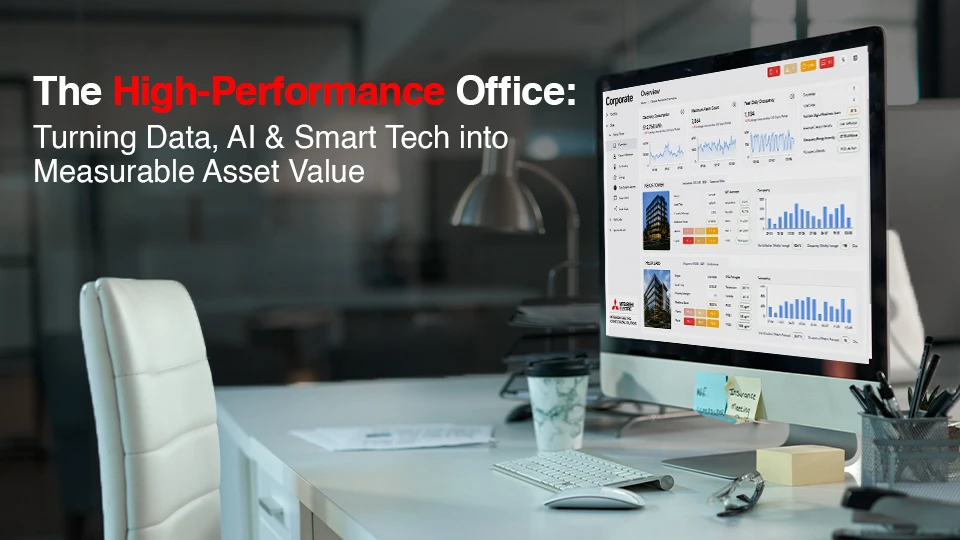
The High-Performance Office: Turning Data, AI and Smart Tech into Measurable Asset Value
Why Master Systems Integrators and Digital Enablement Decide Whether a “Smart” Building Is Actually Smart